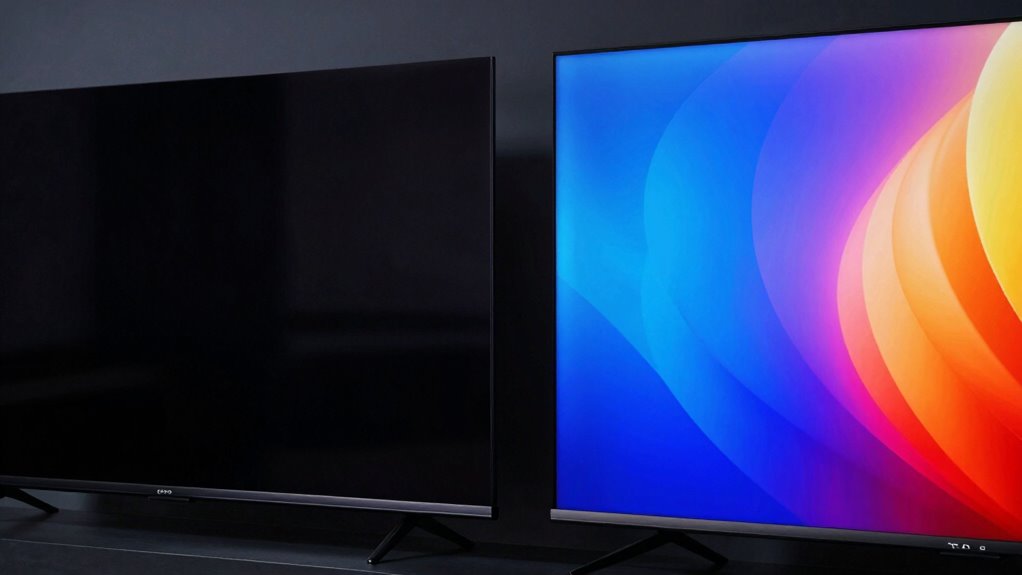

When choosing between OLED and QLED, it’s easy to assume one is always better. OLEDs offer perfect black levels and faster response times, making them great for contrast and gaming, but can risk burn-in. QLEDs provide brighter screens with vibrant colors and excel in well-lit rooms, ideal for HDR content. To avoid the common mistake of focusing on just one feature, understanding their strengths and limitations will help you make a smarter choice—there’s more to learn if you keep exploring.
Key Takeaways
- Don’t assume brighter screens are always better; OLEDs excel in contrast, while QLEDs are brighter for daylight viewing.
- Consider gaming needs: OLEDs have faster response times, but static HUDs may risk burn-in if not managed.
- Evaluate energy efficiency: OLEDs consume less power in dark scenes, making them more eco-friendly for varied content.
- Balance long-term use: QLEDs handle static images better, reducing burn-in concerns for long-term static content.
- Match technology to environment: OLEDs suit dark rooms with superior contrast, QLEDs excel in bright, well-lit spaces.
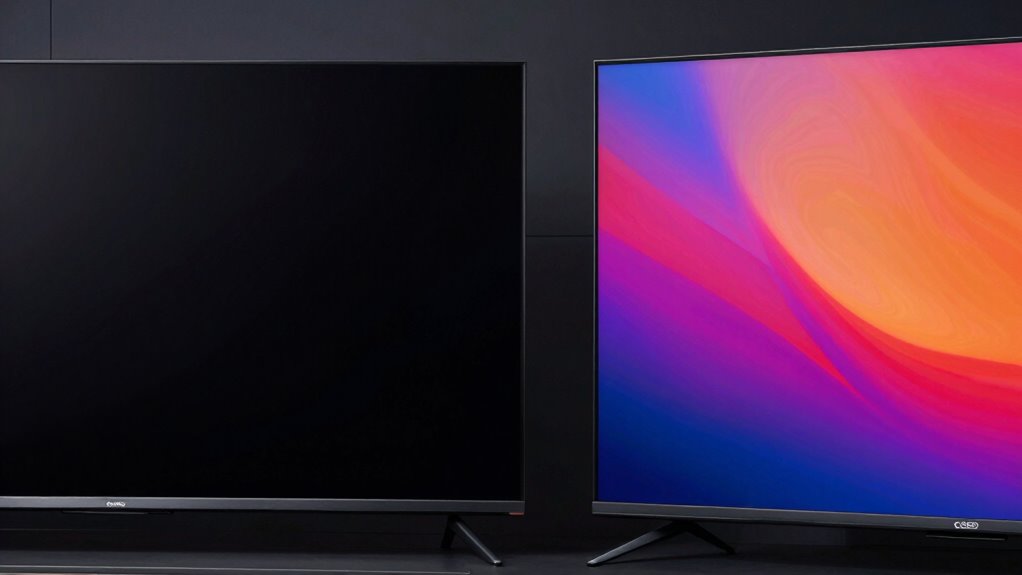
When choosing between OLED and QLED TVs, understanding their fundamental differences can help you make an informed decision. Both types offer impressive picture quality, but they vary considerably in key areas like gaming performance and energy efficiency. If you’re a gamer, you’ll want a TV that minimizes input lag and handles fast-paced scenes smoothly. OLEDs generally excel here because they have faster pixel response times, which means less motion blur and more precise visuals during high-speed gaming. Plus, their perfect black levels enhance contrast, making game environments look richer and more immersive. However, some OLED models can be prone to burn-in if static images are displayed for long periods, so if you play games with static HUD elements, you should consider this factor.
QLED TVs, on the other hand, tend to have slightly higher input lag, which might make them less ideal for serious gamers who need ultra-responsive displays. But they often compensate with brighter screens, making them better suited for well-lit rooms and HDR gaming. Brightness enhances the vibrancy of game visuals, especially in scenes with intense highlights or outdoor environments. Additionally, QLEDs generally handle static images better over time, reducing concerns about burn-in, which can be a plus if you game for many hours daily. Moreover, advancements in QLED display technology continue to improve their energy efficiency and overall performance, narrowing the gap with OLEDs. A further benefit of QLEDs is their ability to display a wider color spectrum, resulting in more vivid and realistic visuals.
Energy efficiency also plays a vital role in your decision. OLED screens typically consume less power when displaying dark images because each pixel emits its own light and can turn off completely when black. This means that during dark scenes or when watching content with deep blacks, OLEDs tend to be more energy-efficient, potentially saving you money on electricity bills. Conversely, QLED TVs use a backlight to illuminate the LCD layer, which can lead to higher energy consumption, especially at higher brightness levels. While QLEDs can reach higher peak brightness, this often comes at the cost of increased power use, particularly in HDR content where bright highlights are prominent. Additionally, considering the regulatory and environmental aspects of TV technology can influence your choice depending on energy standards and sustainability concerns. Consumers increasingly prioritize environmentally friendly options, and choosing an energy-efficient display aligns with a responsible approach to sustainability.
Overall, weighing these factors carefully will help ensure you select a TV that best fits your viewing preferences and values. In addition, understanding the long-term implications of your purchase can help you avoid potential issues related to burn-in or environmental impact, ensuring your choice remains satisfying for years to come. Being aware of the technological advancements in both OLED and QLED displays can also guide you towards a more future-proof investment.
In essence, if gaming performance and energy efficiency during dark scenes are your top priorities, OLEDs might be the better choice. They deliver superior contrast and respond quickly to fast-moving images, all while consuming less power during darker content. But if you prefer a brighter display for daytime viewing, or you’re concerned about static images causing burn-in, then a QLED could serve you better. Understanding these differences ensures you avoid the common mistake of selecting a TV that doesn’t align with your viewing habits, ultimately helping you make a smarter, more satisfying purchase.

LG 48-Inch Class OLED evo AI Super Upscaling 4K C5 Series Smart TV w/Dolby Atmos & Vision, HDR10, Filmmaker Mode, Wow Orchestra, Alexa Built-in (OLED48C5PUA, 2025)
Alpha 9 AI Processor Gen8. This processor is the brains behind a truly unforgettable TV experience. You'll get…
As an affiliate, we earn on qualifying purchases.
As an affiliate, we earn on qualifying purchases.
Frequently Asked Questions
Which Technology Has a Longer Lifespan?
QLED TVs generally have a longer lifespan than OLEDs. This is because QLEDs resist screen burn-in and maintain color accuracy over time, making them more durable for long-term use. OLEDs, while offering better contrast and deeper blacks, are more susceptible to screen burn-in, which can reduce their lifespan. If you’re concerned about longevity and consistent picture quality, QLEDs are usually the safer choice.
Are There Any Health Concerns With OLED Displays?
While OLED displays are generally safe, some users might experience discomfort from prolonged exposure to blue light, leading to eye strain. You might notice subtle fatigue or dryness after long screen sessions, which can be managed with regular breaks or blue light filters. Rest assured, with mindful usage, you can enjoy vibrant visuals without significant health concerns, making OLED a compelling choice for immersive viewing experiences.
How Do OLED and QLED Compare in Outdoor Visibility?
You’ll find that QLED displays perform better outdoors, thanks to higher sunlight readability and better color accuracy in bright conditions. OLED screens can struggle with glare and fading in direct sunlight, making it harder to see details clearly. If outdoor visibility is your priority, QLEDs are the smarter choice because they maintain vibrant colors and clarity even under strong sunlight, ensuring you get a better viewing experience outside.
Can QLEDS Produce True Blacks Like OLEDS?
Can QLEDs produce true blacks like OLEDs? Not quite. While QLEDs offer impressive color accuracy and wider viewing angles, they struggle to match OLEDs’ perfect blacks because they rely on a backlight, which can cause light bleed. This means your black scenes might look more grayish. If deep blacks are your priority, OLEDs deliver the real deal, but QLEDs still excel in brightness and vivid color.
Which Is More Energy-Efficient for Daily Use?
QLEDs generally use less power than OLEDs during daily use, especially when displaying bright scenes, making them more energy-efficient. This lower power consumption also results in a smaller environmental impact over time. If you want a TV that balances good picture quality with energy savings, a QLED could be the better choice. Keep in mind, your viewing habits play a significant role in overall power use.

Hisense 43" E6 Cinema Series Hi-QLED 4K UHD Smart Fire TV (43E6QF, 2025 Model) – AI Light Sensor, Dolby Vision · Atmos, Voice Remote with Alexa, Motion Rate 120, HDR 10+ Adaptive, Game Mode Plus
Hi-QLED Color: Experience a visual treat with Hi-QLED Color. Every frame is rich, vibrant, and true-to-life, ensuring that…
As an affiliate, we earn on qualifying purchases.
As an affiliate, we earn on qualifying purchases.
Conclusion
Think of choosing between OLED and QLED like picking between a vivid painter’s palette and a luminous lantern. Both shine brightly, but each offers a different glow. When you understand their unique strengths, you steer clear of the fog of confusion. You’ll find your perfect match, lighting up your space with clarity and color. So, trust your eye, follow your preference, and let your new screen be the guiding star in your home’s visual journey.

Samsung 65-Inch Class OLED S90F 4K Smart TV (2025 Model) NQ4 AI Gen3 Processor, Upscaling Pro, HDR +, Motion Xcelerator 144Hz, Vision, Alexa Built-in
OUR MOST ADVANCED 4K AI PROCESSOR: Powered by 128 neural networks to deliver AI-enhanced picture and optimized sound,…
As an affiliate, we earn on qualifying purchases.
As an affiliate, we earn on qualifying purchases.

Samsung 65-Inch Class QLED Q7F Series Samsung Vision AI Smart TV (2025 Model, 65Q7F) Quantum HDR, Object Tracking Sound Lite, Q4 AI Gen1 Processor, 4K upscaling, Gaming Hub, Alexa Built-in
POWERS DRAMATICALLY CLEAR COLOR AND SOUND: Enjoy your movies and shows in stunning 4K, regardless of the source…
As an affiliate, we earn on qualifying purchases.
As an affiliate, we earn on qualifying purchases.