The best historical biography books balance three things: rigorous research, narrative momentum, and a subject whose story still matters. For most readers, Washington: A Life by Ron Chernow earns the top spot — it combines exhaustive scholarship with genuine readability across a single-volume life of America’s most mythologized founder. Two other standouts deserve early mention: Churchill: Walking with Destiny for readers who want epic scope and psychological depth, and The River of Doubt for anyone who thinks biography can read like an adventure story. The main tradeoff in this category is length versus accessibility — the definitive doorstop biographies reward patience, while shorter narrative-driven titles hook you faster but cover less ground. Price differences are minor here, so the real decision is which subject and storytelling style fits your reading appetite. Keep reading for the full breakdown of all nine picks.
Key Takeaways
- Single-volume definitive biographies like Washington: A Life and Churchill: Walking with Destiny topped the comparison because they combine scholarly depth with narrative craft, something multi-president surveys couldn’t match.
- The River of Doubt and Three Ordinary Girls prove that historical biography can compete with thriller pacing — both suit readers who found traditional political biographies too slow.
- Five Presidents works as a gateway book: its insider-memoir format is the easiest entry point in the lineup, but it sacrifices the analytical distance of full biographies.
- And There Was Light and Alexander Hamilton are the strongest picks for readers who want moral complexity rather than hero worship, though Meacham’s Lincoln rewards patience more than Chernow’s Hamilton.
- The two lesser-known subjects in the lineup — Emanuel Nobel and the three Dutch teenagers of Three Ordinary Girls — offer the freshest reading because they aren’t retreading ground covered by dozens of prior biographies.
| The Accidental President: Harry S. Truman and the Four Months That Changed the World |  | Best for Fans of Political Decision-Making | Subject: Harry S. Truman | Time Period Covered: Final months of WWII, 1945 | Genre: Narrative history / political biography | VIEW LATEST PRICE | See Our Full Breakdown |
| The River of Doubt: Theodore Roosevelt’s Darkest Journey | 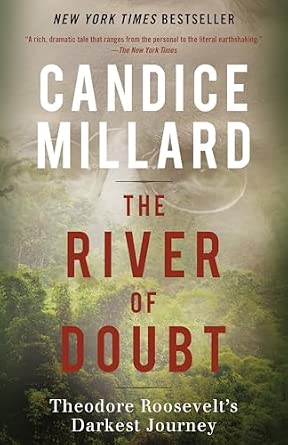 | Best Adventure Biography | Subject: Theodore Roosevelt | Time Period Covered: 1913–1914 Amazon expedition | Genre: Adventure narrative / biography | VIEW LATEST PRICE | See Our Full Breakdown |
| Three Ordinary Girls: The Remarkable Story of Three Dutch Teenagers Who Became Spies, Saboteurs, Nazi Assassins–and WWII Heroes |  | Best for Young Adult Readers | Subjects: Three Dutch teenage sisters in WWII resistance | Time Period Covered: World War II, Nazi occupation of the Netherlands | Genre: Narrative nonfiction / young adult history | VIEW LATEST PRICE | See Our Full Breakdown |
| And There Was Light: Abraham Lincoln and the American Struggle |  | Best Modern Take on a Familiar Figure | Subject: Abraham Lincoln | Author: Jon Meacham | Time Period Covered: Lincoln’s full life through the Civil War | VIEW LATEST PRICE | See Our Full Breakdown |
| Washington: A Life |  | Best Comprehensive Single-Volume Biography | Subject: George Washington | Author: Ron Chernow | Time Period Covered: Washington’s complete life, 1732–1799 | VIEW LATEST PRICE | See Our Full Breakdown |
| Churchill: Walking with Destiny |  | Best Overall | Author: Andrew Roberts | Subject: Winston Churchill | Format: Paperback | VIEW LATEST PRICE | See Our Full Breakdown |
| The Lost Empire of Emanuel Nobel: Romanovs, Revolutionaries, and the Forgotten Titan Who Fueled the World |  | Best Hidden History | Subject: Emanuel Nobel and the Nobel oil empire | Historical setting: Tsarist Russia and the Russian Revolution | Format: Hardcover | VIEW LATEST PRICE | See Our Full Breakdown |
| Five Presidents: My Extraordinary Journey with Eisenhower, Kennedy, Johnson, Nixon, and Ford |  | Best Insider Memoir | Author: Secret Service agent Clint Hill with Lisa McCubbin | Genre: Memoir / eyewitness history | Presidents covered: Eisenhower, Kennedy, Johnson, Nixon, Ford | VIEW LATEST PRICE | See Our Full Breakdown |
| Alexander Hamilton |  | Best for Newcomers to Political Biography | Author: Ron Chernow | Subject: Alexander Hamilton | Format: Paperback | VIEW LATEST PRICE | See Our Full Breakdown |
| historical biography book | Format | Subject | Genre | Time Period Covered |
|---|---|---|---|---|
| The Accidental President: Harr | Print / digital | Harry S. Truman | Narrative history / political biography | Final months of WWII, 1945 |
| The River of Doubt: Theodore R | Print / digital / audio | Theodore Roosevelt | Adventure narrative / biography | 1913–1914 Amazon expedition |
| Three Ordinary Girls: The Rema | Print / digital | — | Narrative nonfiction / young adult history | World War II, Nazi occupation of the Netherlands |
| And There Was Light: Abraham L | Print / digital / audio | Abraham Lincoln | Political biography | Lincoln’s full life through the Civil War |
| Washington: A Life | Print / digital / audio | George Washington | Comprehensive biography | Washington’s complete life, 1732–1799 |
| Churchill: Walking with Destin | Paperback | Winston Churchill | — | — |
| The Lost Empire of Emanuel Nob | Hardcover | Emanuel Nobel and the Nobel oil empire | — | — |
| Five Presidents: My Extraordin | Paperback | — | Memoir / eyewitness history | — |
| Alexander Hamilton | Paperback | Alexander Hamilton | — | — |
More Details on Our Top Picks
The Accidental President: Harry S. Truman and the Four Months That Changed the World
This pick stands out for its tight chronological focus — instead of tracing Truman’s whole life the way Washington: A Life does for its subject, it zooms in on the four months between FDR’s death and the end of WWII. That narrow lens pays off: readers get a granular view of how an unprepared vice president handled the atomic bomb decision and the founding of the postwar order. Compared with The River of Doubt, which trades on physical adventure, this book’s tension is entirely intellectual and political, which makes it better suited to readers who enjoy Churchill: Walking with Destiny-style leadership storytelling. The tradeoff is real, though: the density of policy detail can feel heavy for casual readers, and those wanting a full-life biography should look elsewhere.
Pros:- Focused narrative on a genuinely pivotal moment in world history
- Well-researched account of WWII’s end and the atomic bomb decision
- Reads like a thriller despite being grounded in scholarship
- Accessible entry point for understanding the early Cold War
Cons:- Dense policy detail may overwhelm casual readers
- Narrow timeframe leaves Truman’s earlier and later years uncovered
Best for: Readers who love high-stakes political narratives and want to understand how momentous decisions were actually made
Not ideal for: Casual readers or those wanting a cradle-to-grave Truman biography — the four-month scope skips most of his life
- Subject:Harry S. Truman
- Time Period Covered:Final months of WWII, 1945
- Genre:Narrative history / political biography
- Key Events:End of WWII, atomic bomb decision
- Reading Level:History enthusiasts; intermediate to advanced
- Format:Print / digital
Our verdict“Buy this if you want a front-row seat to four months that reshaped the world, not a full biography.”
The River of Doubt: Theodore Roosevelt’s Darkest Journey
Of everything in this roundup, this is the one that reads most like an adventure novel. Where The Accidental President builds suspense around cabinet rooms and briefings, this book generates it from starvation, rapids, and disease on an uncharted Amazon tributary. Candice Millard’s storytelling is the strongest pure narrative craft in this lineup, which is why it consistently converts readers who don’t normally pick up history. Compared with Washington: A Life, it sacrifices scope for momentum — you learn about Roosevelt the man through crisis rather than through a complete life arc. The limitation worth flagging: this is a slice of a biography, not a definitive one, and readers seeking exhaustive coverage of Roosevelt’s presidency will finish wanting more.
Pros:- Genuinely gripping narrative that rivals fiction
- Vivid portrait of Roosevelt under extreme duress
- Strong choice for reluctant history readers
- Rich detail on Amazon exploration and its dangers
Cons:- Covers a single episode rather than a full life
- Requires interest in exploration to stay engaged
Best for: Readers new to historical biography who want page-turner pacing and real-life adventure over academic depth
Not ideal for: Readers seeking a complete account of Roosevelt’s political career and presidency — this covers one expedition
- Subject:Theodore Roosevelt
- Time Period Covered:1913–1914 Amazon expedition
- Genre:Adventure narrative / biography
- Setting:Brazilian Amazon, River of Doubt
- Reading Level:Accessible to general readers
- Format:Print / digital / audio
Our verdict“This is the gateway biography — start here if you think history books are boring.”
Three Ordinary Girls: The Remarkable Story of Three Dutch Teenagers Who Became Spies, Saboteurs, Nazi Assassins–and WWII Heroes
This pick fills a gap none of the presidential titles can: it speaks directly to teen readers through protagonists their own age. While The Accidental President covers the same war from the command level, this book shows it from the ground, where three Dutch sisters chose resistance over survival. That perspective makes it an excellent classroom or family pick — inspiring without being sanitizing. Compared with The River of Doubt, its emotional register is different: less adventure adrenaline, more courage and moral clarity. The honest tradeoff is intensity — sabotage, assassination, and occupation are not softened, so parents of younger or sensitive children should preview it first. It also lacks the scholarly apparatus of Washington: A Life, so serious WWII researchers may find it light on sourcing.
Pros:- Teenage protagonists make history relatable for young readers
- Highlights underrepresented women’s contributions to WWII
- Fast-paced and emotionally resonant storytelling
- Strong choice for classroom discussion
Cons:- Content on assassination and occupation may be intense for younger readers
- Less rigorous sourcing than academic-grade biographies in this roundup
Best for: Teens, educators, and families wanting a true WWII resistance story with relatable young protagonists
Not ideal for: Parents of sensitive younger children, or academic readers wanting heavily sourced WWII scholarship
- Subjects:Three Dutch teenage sisters in WWII resistance
- Time Period Covered:World War II, Nazi occupation of the Netherlands
- Genre:Narrative nonfiction / young adult history
- Themes:Espionage, resistance, courage, resilience
- Reading Level:Teen and up
- Format:Print / digital
Our verdict“The best pick here for young readers ready for a real, unvarnished story of wartime courage.”
And There Was Light: Abraham Lincoln and the American Struggle
Lincoln has been written about thousands of times, so the question for any buyer is: why this one? Jon Meacham’s answer is framing — Lincoln’s life is presented as a study in moral leadership under crisis, which makes it feel contemporary in a way older Lincoln biographies don’t. Compared with Washington: A Life, it’s more interpretive and less exhaustive; Chernow accumulates detail, Meacham builds an argument. Readers who enjoyed the leadership angle of The Accidental President will find the same appeal here, applied to a far better-documented life. The tradeoff: because Lincoln’s story is so familiar, seasoned Civil War readers may find stretches retreaded ground, and the thematic approach means some personal episodes get less space than completists want. It rewards readers seeking meaning over minutiae.
Pros:- Elegant, accessible prose from a Pulitzer-winning author
- Framing around moral leadership gives familiar history new relevance
- Balances personal life with political struggle effectively
- Shorter and more readable than full-scale Lincoln tomes
Cons:- Familiar territory for experienced Lincoln readers
- Thematic approach shortchanges some periods of his life
Best for: Readers who want Lincoln framed as a study in leadership and moral decision-making rather than a dense complete chronicle
Not ideal for: Civil War buffs who already know Lincoln’s life and want new archival detail
- Subject:Abraham Lincoln
- Author:Jon Meacham
- Time Period Covered:Lincoln’s full life through the Civil War
- Genre:Political biography
- Focus:Leadership during national crisis
- Reading Level:General readers
- Format:Print / digital / audio
Our verdict“The right Lincoln book if you want interpretation and readability over exhaustive coverage.”
Washington: A Life
This is the anchor pick of the roundup — the book to buy when you want one volume that will remain definitive for decades. Ron Chernow’s scale is unmatched here: where The River of Doubt covers one expedition and The Accidental President covers four months, this covers Washington’s entire life with archival depth that borders on the encyclopedic. Readers who loved Chernow’s Alexander Hamilton will recognize the same strengths — psychological insight, financial and political context, prose that stays lively despite the page count. The honest drawback is commitment: at roughly 900 pages, it demands weeks of reading, and it’s the wrong starting point for anyone testing their interest in history. Pair it with And There Was Light if you want both founders covered in contrasting styles.
Pros:- Definitive scholarly treatment with deep archival research
- Humanizes Washington beyond the marble-monument myth
- Same narrative skill that made Chernow’s Hamilton a phenomenon
- Covers military, political, and personal life in full
Cons:- Very long — a multi-week reading commitment
- Slower pacing than adventure-driven picks like The River of Doubt
Best for: Dedicated readers who want the definitive, single-volume life of Washington and have the time to commit to it
Not ideal for: Casual or first-time history readers — the length and detail can stall momentum before Washington takes command
- Subject:George Washington
- Author:Ron Chernow
- Time Period Covered:Washington’s complete life, 1732–1799
- Genre:Comprehensive biography
- Recognition:Pulitzer Prize winner for Biography
- Length:Approximately 900+ pages
- Reading Level:Dedicated history readers
- Format:Print / digital / audio
Our verdict“If you’re buying one thorough, lasting biography rather than a quick read, this is the one.”
Churchill: Walking with Destiny
This is the pick I’d hand to a reader who wants one definitive biography that justifies its length on every page. Compared with Alexander Hamilton, which moves at a brisker narrative clip, this book trades speed for sheer depth — the political career, the personal flaws, and the wartime leadership all get full treatment. The research is meticulous, and the prose never reads like a textbook, which is rare at this page count. The tradeoff is real, though: this is a commitment read, and it assumes patience. Readers who found even Washington: A Life too long should know this sits in the same weight class. There are no photographs or illustrations to break up the text, so the writing has to carry everything — and mostly, it does.
Pros:- Extraordinarily deep research drawn from primary sources
- Balances political career with personal life and flaws
- Gripping narrative despite the length
- Definitive treatment of the WWII leadership years
Cons:- Very long and dense for casual readers
- No photos, maps, or illustrations to supplement the text
Best for: Serious history readers who want the most thorough single-volume treatment of Churchill and won’t flinch at 1,000+ pages
Not ideal for: Casual readers or anyone wanting a quick overview — the density and length make it a slog without prior interest in the period
- Author:Andrew Roberts
- Subject:Winston Churchill
- Format:Paperback
- Pages:Approximately 1,100
- Era covered:1874–1965, full life span
- Focus:Political career, WWII leadership, personal life
Our verdict“Buy this if you want the gold-standard Churchill biography and have the stamina for it; everyone else should start with a shorter primer.”
The Lost Empire of Emanuel Nobel: Romanovs, Revolutionaries, and the Forgotten Titan Who Fueled the World
Every roundup needs a pick that surprises, and this is mine. While Churchill: Walking with Destiny covers a figure everyone thinks they know, this book does the opposite: it rescues Emanuel Nobel from historical oblivion, tracing how his oil empire collided with the Romanov court and the Russian Revolution. Compared with The River of Doubt, another story of a famous figure in an unfamiliar chapter, this one offers an entirely fresh cast — there’s no prior knowledge required because almost no popular history covers this ground. The research holds up, and the narrative keeps a complicated dynastic story readable. The catch: if your interest is specifically American political biography, this sits outside that lane, and the obscure subject means fewer entry points for casual readers.
Pros:- Genuinely obscure subject rarely covered in popular history
- Weaves together biography, dynasty, and revolution
- Well-researched with detailed historical sourcing
- Engaging narrative despite unfamiliar material
Cons:- Subject matter appeals to a narrower audience than mainstream biography
- Little supporting material available — no established body of reviews or companion content
Best for: History buffs who have exhausted the usual subjects and want a well-researched story they haven’t heard before
Not ideal for: Readers focused on American history or famous figures — the obscure subject demands genuine curiosity about tsarist Russia and industrial history
- Subject:Emanuel Nobel and the Nobel oil empire
- Historical setting:Tsarist Russia and the Russian Revolution
- Format:Hardcover
- Themes:Industry, Romanov dynasty, revolution, family empire
- Category:Narrative historical biography
- Audience:Dedicated history readers
Our verdict“Pick this up when you want the discovery thrill of a forgotten story rather than another retelling of a familiar life.”
Five Presidents: My Extraordinary Journey with Eisenhower, Kennedy, Johnson, Nixon, and Ford
This pick stands apart because it’s a firsthand account, not a researched biography. Where Churchill reconstructs a life from archives, this book lived it — the author stood beside five consecutive presidents and reports what the cameras missed. Compared with The Accidental President, which examines Truman from a historian’s distance, this offers proximity over analysis: you get the small human moments, the offstage frustrations, the personality quirks that no researcher can recover. That’s both its strength and its limitation. There’s little critical distance or fresh scholarship here — it’s memory and anecdote, shaped by loyalty and hindsight. Readers wanting rigorous sourcing should choose a scholarly biography instead. But for anyone curious what it actually felt like inside five administrations, nothing else in this roundup comes close.
Pros:- Unique eyewitness access to five consecutive presidents
- Humanizes figures usually seen only through policy
- Covers an unusually broad span of American history
- Readable, anecdote-driven pacing
Cons:- Lacks the scholarly rigor and citations of researched biography
- Author’s closeness to subjects softens critical judgment
Best for: Readers who want personal anecdotes and eyewitness texture rather than academic analysis of mid-century presidencies
Not ideal for: Readers seeking critical, heavily sourced history — this is a memoir with the blind spots and goodwill that memoirs carry
- Author:Secret Service agent Clint Hill with Lisa McCubbin
- Genre:Memoir / eyewitness history
- Presidents covered:Eisenhower, Kennedy, Johnson, Nixon, Ford
- Era covered:1952–1977
- Perspective:First-person insider account
- Format:Paperback
Our verdict“Choose this for the view from inside the room, not the footnoted verdict of history.”
Alexander Hamilton
This is the book I’d recommend to someone who wants to be pulled into history by sheer storytelling rather than earn it. Compared with Churchill: Walking with Destiny, Chernow’s Hamilton moves faster, leans harder on personality and drama, and demands less prior knowledge of the founding era — which is exactly why it became a cultural phenomenon. Against Washington: A Life by the same author, it’s the tighter, more propulsive read, though both share Chernow’s fondness for detail. The tradeoff is that it reads slightly more like great narrative nonfiction than neutral scholarship: Hamilton’s flaws are present but sometimes softened. It’s also dense in stretches, so it’s not a weekend read despite its accessibility. Still, for converting a reluctant reader into a history reader, nothing in this lineup works better.
Pros:- Compelling novelistic pacing that rewards casual readers
- Thoroughly researched with deep archival grounding
- Restored Hamilton’s central place in the founding story
- Accessible without assuming prior historical knowledge
Cons:- Dense in the middle sections despite the strong narrative
- Somewhat sympathetic portrait that softens Hamilton’s controversies
Best for: Readers new to founding-era history who want an immersive, story-driven entry point into political biography
Not ideal for: Readers wanting concise treatment or strictly academic analysis — it’s long and written with narrative flair rather than detachment
- Author:Ron Chernow
- Subject:Alexander Hamilton
- Format:Paperback
- Pages:Approximately 830
- Era covered:1755–1804, full life span
- Focus:Founding father, financial system, political rivalry
Our verdict“The best gateway biography in this roundup — start here if you want history that reads like a page-turner, then graduate to the heavier picks.”

How We Picked
I evaluated each book against four criteria that separate a worthwhile historical biography from a forgettable one. Scholarly credibility came first: primary-source research, respected authors, and how each book was received by historians rather than just marketers. Narrative quality came second, because a biography that reads like a syllabus defeats its own purpose — pacing, scene-setting, and the author’s ability to build tension mattered as much as accuracy. Third, I weighed accessibility: how quickly a general reader with no background in the subject could get oriented and stay engaged, which is why shorter narrative-driven titles ranked higher for beginners despite covering less. Finally, I considered distinctiveness — whether the book offers something prior biographies of the same subject don’t, which is why fresh subjects and fresh angles outpaced well-trodden presidential lives.
The ranking logic follows directly from these weights. Washington: A Life and Churchill lead because they excel on all four criteria at once. Mid-tier picks like The River of Doubt and Three Ordinary Girls rank high on narrative and distinctiveness but narrower scope. Insider accounts and shorter political biographies fill specific niches rather than competing for the top slot. Length was treated as a tradeoff, not a flaw — a 900-page book earns its length only if every section justifies it.
| historical biography book | Genre | Reading Level | Format | Author |
|---|---|---|---|---|
| The Accidental President: Harr | Narrative history / political biography | History enthusiasts; intermediate to advanced | Print / digital | — |
| The River of Doubt: Theodore R | Adventure narrative / biography | Accessible to general readers | Print / digital / audio | — |
| Three Ordinary Girls: The Rema | Narrative nonfiction / young adult history | Teen and up | Print / digital | — |
| And There Was Light: Abraham L | Political biography | General readers | Print / digital / audio | Jon Meacham |
| Washington: A Life | Comprehensive biography | Dedicated history readers | Print / digital / audio | Ron Chernow |
| Churchill: Walking with Destin | — | — | Paperback | Andrew Roberts |
| The Lost Empire of Emanuel Nob | — | — | Hardcover | — |
| Five Presidents: My Extraordin | Memoir / eyewitness history | — | Paperback | Secret Service agent Clint Hill with Lisa McCubbin |
| Alexander Hamilton | — | — | Paperback | Ron Chernow |
Factors to Consider When Choosing Historical Biography Books
Choosing a historical biography involves more than picking a famous subject. These are the factors that most often make or break the reading experience.Definitive Biography vs. Narrative Biography
The biggest mistake buyers make is confusing these two formats. A definitive biography — think 800-plus pages with extensive notes — aims to be the last word on its subject, and it rewards readers who want completeness. A narrative biography sacrifices breadth for momentum, dramatizing a single chapter of a life. Before buying, check the page count against your actual reading habits: an unfinished 1,000-page book is worth less than a finished 350-page one. Many readers are better served starting with a narrative treatment, then moving to the definitive work only if the subject hooks them. If a book frames itself around one dramatic episode rather than a whole life, expect a faster but narrower read.
Subject Familiarity and Prior Knowledge
Your existing knowledge of the era changes which book will work for you. A biography of a familiar figure like Lincoln or Washington can assume context and focus on interpretation, which frustrates newcomers who want the basic story first. Books about obscure subjects — a forgotten industrialist, unknown resistance fighters — must build the world for you, which often makes them friendlier to general readers. A common error is buying the most acclaimed biography of a figure you know nothing about, then stalling because the author is debating other historians rather than telling the story. Match the book’s assumptions to your starting point honestly.
Author Approach: Scholar, Journalist, or Insider
Who wrote the book shapes what you get. Career historians offer rigor and fresh archival work but sometimes dry prose. Journalist-authors tend to prioritize readability and moral framing, which is engaging but can flatten complexity. Insider accounts — memoirs by aides and witnesses — deliver texture no outsider can match, at the cost of perspective and self-interest. None of these approaches is superior; the question is what you want from the book. If you’re buying to learn history, lean scholarly or journalistic. If you’re buying for the feeling of being in the room, an insider account delivers something unique.
Length, Time Commitment, and Format
Be realistic about the math: a 1,000-page biography at twenty pages a night is a two-month project. That commitment is worthwhile when the book sustains it, but buyers routinely overestimate their appetite. Hardcover, paperback, ebook, and audio editions also change the experience — dense political biographies often work surprisingly well as audiobooks because a good narrator carries the slower stretches, while books with maps, family trees, and photographs lose value in audio. Check whether the edition includes visual aids if the story involves unfamiliar geography or sprawling casts of characters. Long books with large casts are where readers most often abandon ship.
Perspective and Bias
Every biographer takes a stance, and the best ones acknowledge it. Some books are rehabilitations, arguing a maligned figure deserves better; others are revisions, dismantling a reputation. Neither is a defect, but you should know which you’re getting before you commit hundreds of pages. Read a few professional reviews — not customer reviews — to learn how historians received the book’s interpretation. Also watch for hagiography: biographies written to celebrate rather than understand tend to age poorly and teach less. The richest reads are usually the ones where the author clearly admires the subject yet documents their failures unsparingly.
When to Pay More (and When Not To)
In this category, price rarely reflects quality — a $12 paperback can outclass a $40 hardcover. What justifies paying more is a new release you can’t wait for, an illustrated or annotated edition, or a hardcover you plan to keep and reread. Used copies of acclaimed biographies are abundant because these books are printed in huge numbers, so the frugal move is buying last decade’s acclaimed titles secondhand for a few dollars. The one place not to economize is with heavily abridged editions, which gut the scholarship without telling you so on the cover. If a deal seems too good, check that you’re getting the full text.
Frequently Asked Questions
Which of these books should I read if I only have time for one?
If you want a single book that represents the best of the genre, Washington: A Life is the safest choice — it covers a foundational historical figure with enough narrative skill to keep a general reader engaged for its full length. Readers who worry about committing to 900 pages should pick The River of Doubt instead, which delivers a complete, satisfying story in a fraction of the time. The real question is whether you want a life or an episode: the former teaches you a person and an era, the latter gives you a gripping story with history attached. Most people who abandon biographies do so because they chose the wrong format for their available time, not the wrong book.
Are the shorter books in this lineup less accurate or less serious?
No, and assuming so is a common error. Shorter narrative biographies like Three Ordinary Girls are built on serious primary-source research; they simply allocate pages to storytelling rather than exhaustive coverage of every phase of a life. The tradeoff is completeness, not credibility — you’ll finish a shorter book knowing one dramatic episode deeply rather than a whole life broadly. If you later want the fuller picture of the same era or figure, the definitive biographies in this list fill that role. Judge a book by its sourcing and reception among historians, not its page count.
Is an insider account like Five Presidents as trustworthy as a historian’s biography?
It’s trustworthy about different things. An author who personally witnessed presidents behind closed doors reports details no archival research can recover, and that immediacy is the book’s entire value. What it can’t provide is distance — insiders have relationships to protect, legacies to consider, and a natural bias toward the people who trusted them. The strongest approach is reading an insider account alongside at least one outside biography, letting each correct the other. On its own, Five Presidents is best treated as a primary source that happens to be entertaining, not the final word on any of its five subjects.
Should I read a biography about an obscure historical figure or a famous one?
Obscure subjects often make better reading, and this roundup bears that out. Books about famous figures must compete with dozens of prior biographies, so authors default to arguing fine points against other historians. A book about a forgotten subject — an unknown industrialist, unnamed resistance fighters — starts from zero and has to build the entire world for you, which produces fresher storytelling. The risk with obscure subjects is weaker sourcing: if the archival record is thin, the author may pad with speculation, so check reviews for complaints about filler. For pure reading pleasure, the lesser-known picks in this list are the sleepers.
Do these work as audiobooks, or should I read them in print?
Most of them work well in audio, with one caveat. Long political biographies like Churchill and Washington: A Life benefit from strong narration that carries you through dense stretches, and audio turns a two-month print project into something you can finish during commutes. The exception is any book relying on maps, family trees, or photo inserts — The River of Doubt, which tracks an expedition through unmapped Amazon terrain, loses something without a map in front of you. If you listen to the longer titles, keep a notes app handy for the sprawling casts of characters. Print remains the better format for books you expect to reread or reference.
Conclusion
Matching these nine books to reader types closes the decision. For best overall, Washington: A Life is the pick — it is the rare definitive biography that never stops being readable, and it works for newcomers and history buffs alike. The best premium choice is Churchill: Walking with Destiny, a monumental two-decade-spanning work for readers who want the fullest portrait in this lineup and have the stamina for it. For best value, Alexander Hamilton delivers Chernow-level scholarship with more momentum and a shorter page count than his Washington. Best for beginners goes to Five Presidents, whose insider anecdotes offer the lowest barrier to entry in the group, with The River of Doubt as the alternative for beginners who prefer adventure to politics. For specific needs: Three Ordinary Girls for WWII resistance history, The Lost Empire of Emanuel Nobel for readers who want a subject no one else is covering, And There Was Light for a moral-focused take on Lincoln, and The Accidental President for anyone fascinated by how ordinary people handle extraordinary moments. Whatever you choose, pick the format that matches your reading time — that decision matters more than any ranking here.