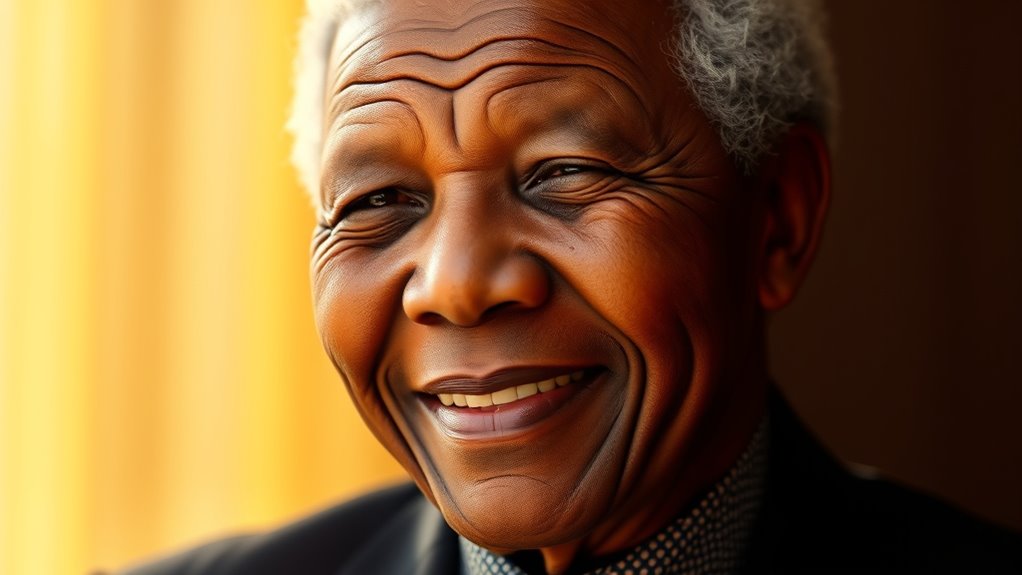

Nelson Mandela was a courageous freedom fighter who challenged apartheid and became a revered statesman. He organized protests and endured 27 years in prison, refusing to give up his fight for justice. After his release, Mandela promoted reconciliation and unity, guiding South Africa peacefully into democracy. His message of forgiveness and resilience made him a global symbol of moral leadership. If you want to discover how Mandela’s vision continues to inspire worldwide efforts for peace, explore further.
Key Takeaways
- Nelson Mandela led peaceful resistance and organized protests against apartheid, becoming a symbol of racial opposition.
- Imprisoned for 27 years, Mandela demonstrated resilience and unwavering commitment to ending racial segregation.
- After his release, he promoted reconciliation and peacebuilding to unite South Africa’s divided society.
- He implemented policies fostering national unity, emphasizing compassion, patience, and dialogue during the transition to democracy.
- Mandela’s legacy embodies forgiveness, resilience, and moral leadership, inspiring global efforts toward justice and reconciliation.
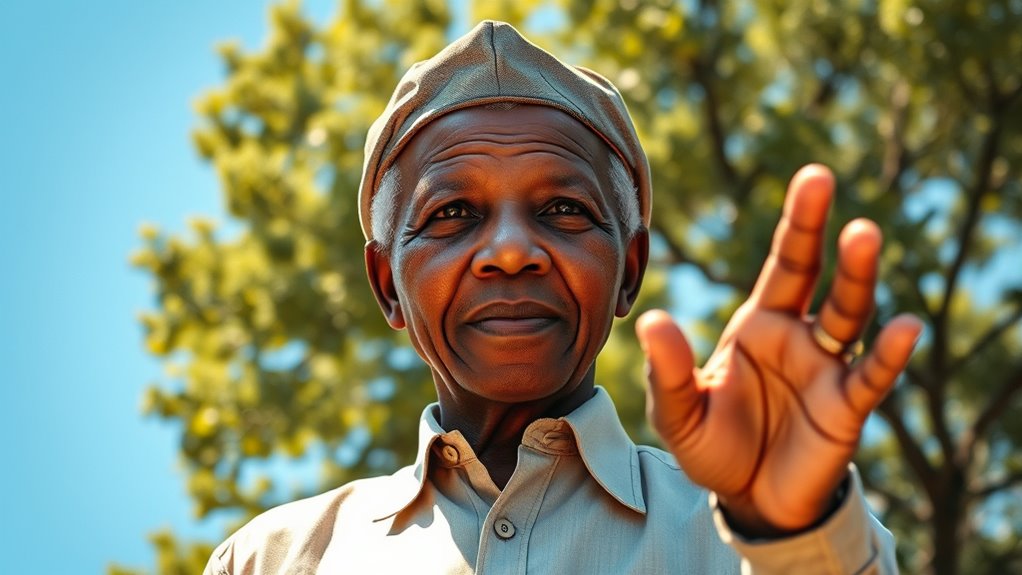
Nelson Mandela was a transformative leader whose unwavering dedication to justice and equality changed South Africa and inspired the world. Throughout his life, he faced immense challenges, especially in fighting against the oppressive apartheid system. As a young man, Mandela recognized that peaceful resistance alone wouldn’t dismantle apartheid, so he became a key figure in the apartheid resistance movement. He helped organize protests, strikes, and acts of defiance that challenged the injustices inflicted by the apartheid government. His actions made him a symbol of resistance, inspiring countless others to stand up against racial segregation and discrimination. Despite being imprisoned for 27 years, Mandela never lost his resolve. His imprisonment only strengthened his commitment to ending apartheid and achieving a democratic South Africa.
When Mandela was released, he knew the fight wasn’t over, but he also understood the importance of reconciliation efforts. Instead of seeking revenge or retribution, he advocated for healing the deep wounds caused by decades of racial oppression. Mandela believed that reconciliation was essential for building a united nation. He pushed for negotiations that would bring together different racial groups, helping to bridge divides that had been entrenched for generations. His leadership during this transitional period was marked by humility and a desire for peace. Mandela’s efforts to foster reconciliation extended beyond words; he promoted policies and initiatives aimed at reconciling a fractured society. His example proved that leadership requires compassion, patience, and the willingness to listen and understand opposing perspectives.
He also emphasized forgiveness and healing as vital components of post-apartheid nation-building, demonstrating that overcoming past injustices involves more than just political change. You can see how Mandela’s approach to reconciliation helped prevent a potential civil war and set the stage for a peaceful transition to democracy. His ability to forgive those who had once oppressed him and his commitment to unity made him a moral compass for the nation. Mandela’s leadership wasn’t just about fighting injustice; it was also about healing and restoring dignity to all South Africans. His work in fostering reconciliation efforts showed the world that true leadership involves more than just resistance—it’s about bringing people together and creating a shared future. By standing firm in his principles while seeking peaceful solutions, Mandela demonstrated that change is possible even in the most difficult circumstances. His legacy continues to serve as an inspiring example of how resilience, forgiveness, and steadfast dedication to justice can transform a nation and inspire generations worldwide.
Top picks for "nelson mandela freedom"
As an affiliate, we earn on qualifying purchases.
Frequently Asked Questions
What Was Nelson Mandela’s Childhood Like?
Your childhood was shaped by rural influences and a strong sense of community, which instilled values of resilience and justice. You received early education at a local missionary school, where you learned the importance of knowledge and leadership. These childhood influences fueled your passion for fighting inequality and inspired your lifelong dedication to activism. Growing up in a humble environment, you developed a deep understanding of social struggles that later motivated your efforts for freedom.
Did Mandela Have Any Hobbies or Interests Outside Politics?
You’d be amazed to learn Mandela’s hobbies outside politics, as they seem tiny compared to his monumental life. He loved artistic pursuits like painting and singing, which gave him a creative outlet, and outdoor activities like brisk walks and gardening, helping him find peace amid chaos. These passions showed his human side and provided balance, proving even a hero needs hobbies to refresh the soul and ignite inspiration.
How Did Mandela’s Family Influence His Activism?
Your family’s support and cultural roots played a significant role in shaping Mandela’s activism. They instilled in him a sense of identity, justice, and resilience, motivating him to fight for freedom. Their encouragement and values provided a strong foundation, helping him stay committed to his cause. You can see how his deep connection to his family and heritage fueled his dedication to equality and human rights throughout his life.
What Was Mandela’s Role During the Early Apartheid Years?
You discover that during the early apartheid years, Mandela actively engaged in apartheid resistance, organizing protests and advocating for equality. His role involved leading efforts against unjust laws, which resulted in his political imprisonment. You learn he became a symbol of defiance and resilience, inspiring others to challenge racial segregation. His unwavering commitment helped ignite broader anti-apartheid movements, laying the groundwork for eventual change in South Africa’s social and political landscape.
Did Mandela Face Any Health Issues Later in Life?
You should know that Mandela did face health concerns later in life. He experienced several health issues, including lung infections and abdominal problems, which required medical treatments over the years. Despite these challenges, he remained active in public life, showing resilience. His health concerns prompted him to step back from some activities, but he continued to inspire many with his strength and dedication to his causes.
Conclusion
You see, Nelson Mandela’s life is like a shining beacon guiding us toward justice and peace. His unwavering resilience and dedication remind you that even in the darkest times, hope can light the way. Just as a strong oak withstands storms, Mandela stood firm against adversity. By embracing his spirit, you can carry forward his legacy of courage and compassion, making the world a better place—bright and full of possibility, just like Mandela’s enduring hope.