
TL;DR

Get art and craft supplies delivered free with Prime
- Fast, free delivery on millions of items
- Prime Video, Amazon Music and more included
- Member-only deals all year
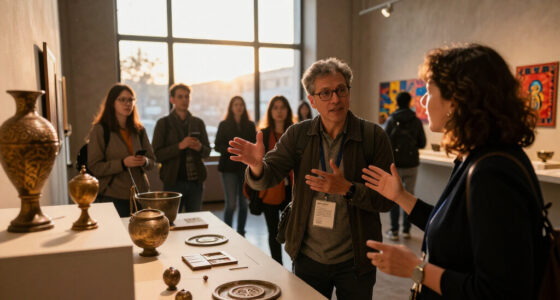
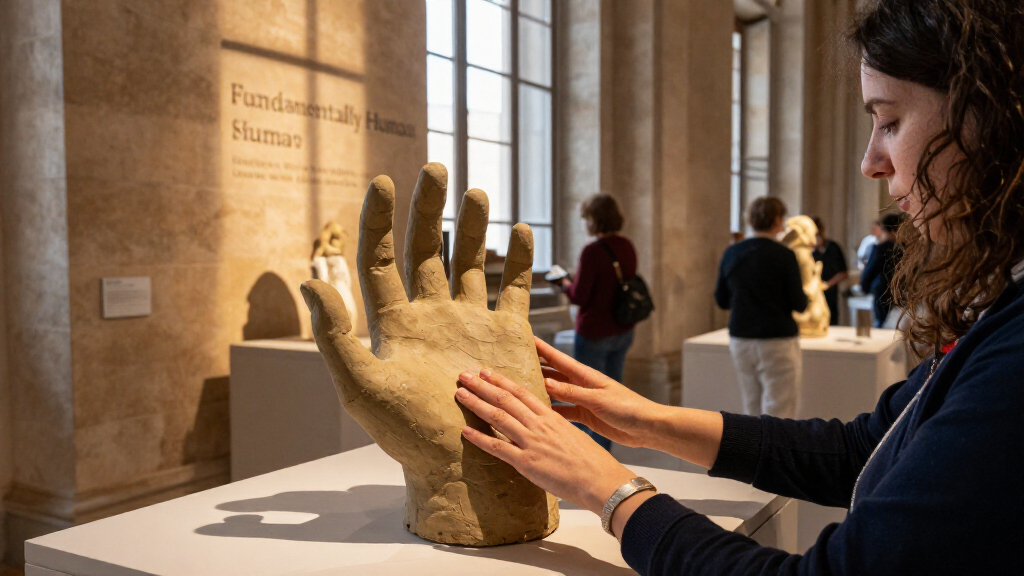
The Vatican-backed Catholic Universities Art Triennale, known as ArtCut, has opened its inaugural series of exhibitions across seven cities, bringing together more than 100 artists. Framed around “Exercises in Empathy,” the project emphasizes human experience and creativity amid debate over AI’s capacity to make art.
The Vatican-backed Catholic Universities Art Triennale, or ArtCut, has launched its inaugural exhibition series across seven cities in seven countries, featuring more than 100 artists and placing human creativity and empathy at the center of its program. The series responds to concerns about artificial intelligence’s role in art and draws on Pope Leo XIV’s argument that AI lacks the human perspectives needed for artistic creation.
Called Exercises in Empathy, the first ArtCut edition brings together artists including Arthur Jafa, Jeremy Frey and Mona Hatoum. The exhibitions are being presented at Catholic universities in Brazil, Chile, Colombia, Italy, Portugal, Angola and the United States. The Vatican’s Dicastery for Culture and Education commissioned the contemporary art program, led by its prefect, Cardinal José Tolentino de Mendonça.
According to the report by Hyperallergic, the exhibitions approach humanity through both physical and intellectual experience. Their shared framework treats empathy and self-reflection as drivers of human progress, offering a perspective distinct from accounts that place technological advancement at the center. The program brings together works by more than 100 artists across the seven venues, rather than presenting a single exhibition in one location.
The series’ stated focus is not simply a rejection of technology. It is an argument about what human beings contribute to art: lived experience, relationships and spiritual understanding. The works and participating artists provide the public-facing program; the Vatican’s statements about AI set out the intellectual frame for interpreting it.
Art’s Human Qualities in Focus
ArtCut arrives as generative AI tools raise questions about authorship, originality and the value of human labor in creative fields. By organizing a multi-country exhibition series around empathy, reflection and human experience, the Vatican-backed project makes those questions part of a public art program rather than treating them solely as a technical debate.
The framing also matters because the exhibitions are hosted by Catholic universities and commissioned through a Vatican department. That gives the project an institutional setting for its discussion of technology, while its international format connects audiences in seven countries to a common theme. The triennale presents a particular position on AI’s limits; the exhibitions themselves do not establish a universal test for what counts as human or machine-made art.
Products Worth Considering

Garmin Instinct E Rugged GPS Smartwatch, 45 mm, Charcoal

Garmin Varia RearVue 820 Cycling Rearview Radar and Tail Light

Solo Stove Bonfire 2.0 Smokeless Wood-Burning Fire Pit with Stand, Silver
As an affiliate, we earn on qualifying purchases.
Pope Leo XIV’s AI Argument
The series builds on Pope Leo XIV’s earlier writing on protecting human life and dignity from potential harms associated with AI. In the account provided by Hyperallergic, the pope argues that AI systems can manipulate people and encourage delusions of omnipotence. ArtCut translates that concern into an art-world setting, asking what forms of understanding and creativity depend on human relationships and experience.
That position is stated as a religious and philosophical argument, not as a technical finding about every AI system or every artwork produced with AI tools. The exhibition framework highlights qualities its organizers regard as distinctively human, while the participating artists and works span a range of contemporary practices. The triennale’s inaugural edition is organized under the theme Exercises in Empathy.
Questions Beyond the Exhibition Frame
The source report does not provide a complete exhibition schedule, opening and closing dates for every venue, or details about public access and programming. It also does not explain how the organizers define the boundary between human and AI-assisted work, or whether any works made with AI tools are included. Those details would help clarify how the series’ stated position is reflected in individual exhibitions.
The pope’s assessment of AI’s capacity for art is a stated viewpoint. The report does not cite technical research or present a consensus among artists, researchers or the institutions involved. Further details about each venue’s interpretation of the shared theme are not specified in the material provided.
Seven Venues Carry the Theme
The immediate next step is the presentation of the exhibitions at the seven participating Catholic universities. Visitors can encounter the shared theme through works by more than 100 artists, though the available report does not specify venue-by-venue dates or associated events. Further information from the organizers or universities would clarify how audiences can attend and what programming accompanies the displays.
As ArtCut is described as a triennale, the inaugural edition establishes a recurring framework for future editions. No specific plans, dates or themes for a subsequent edition are given in the source material. For now, the series’ central development is its coordinated, multi-country presentation of contemporary art around human creativity and empathy.
Key Questions
What is the Catholic Universities Art Triennale?
ArtCut is a Vatican-backed contemporary art program commissioned by the Dicastery for Culture and Education. Its inaugural edition presents exhibitions at Catholic universities in seven countries.
What is the theme of the inaugural exhibition series?
The edition is titled Exercises in Empathy and focuses on aspects of human experience, including empathy and self-reflection, amid discussion about AI and art.
Which artists are included?
The report says more than 100 artists are participating, including Arthur Jafa, Jeremy Frey and Mona Hatoum.
Where are the exhibitions being held?
The exhibitions are at Catholic universities in Brazil, Chile, Colombia, Italy, Portugal, Angola and the United States. The source material does not give a full list of venues or their individual dates.
Does the series prove that AI cannot make art?
No. ArtCut presents a viewpoint, drawing on Pope Leo XIV’s argument that AI lacks affective, relational and spiritual perspectives. The report does not establish that claim as a technical consensus or provide a test for AI-generated art.
Source: hyperallergic.com