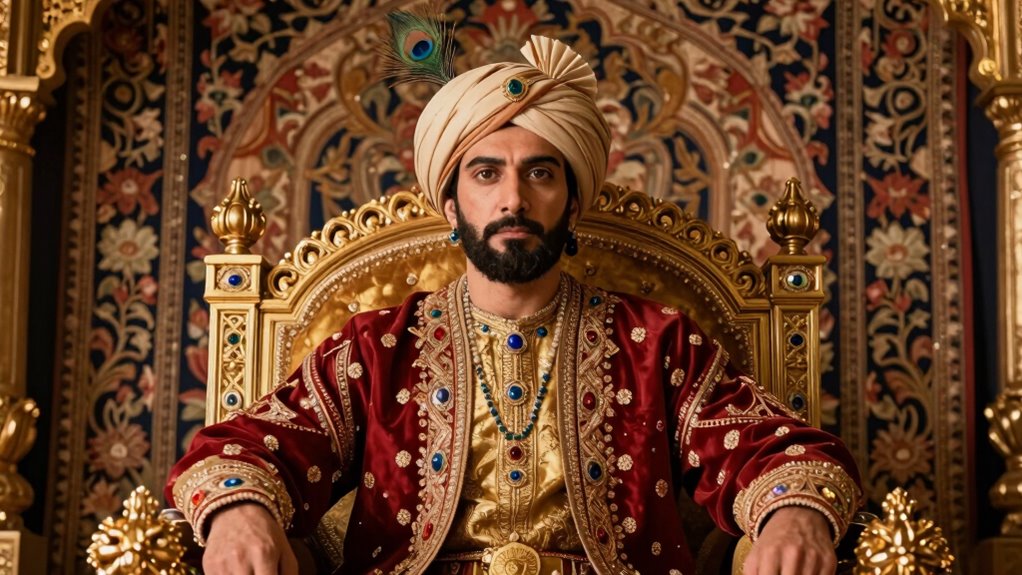

Akbar the Great expanded his empire through strategic military campaigns in Gujarat, Rajasthan, and Bengal, using innovative tactics to secure peace and stability. He promoted religious tolerance by engaging with different faiths, abolishing taxes on non-Muslims, and fostering dialogue among scholars. His cultural policies and architecture reflected harmony and unity, blending strength with wisdom. If you want to discover how his inclusive leadership shaped history, there’s much more to explore about his remarkable legacy.
Key Takeaways
- Akbar expanded his empire through strategic military campaigns across Gujarat, Rajasthan, and Bengal, securing peace and stability.
- He promoted religious tolerance by abolishing taxes on non-Muslims and encouraging interfaith dialogue.
- Akbar created the syncretic religion Din-i-Ilahi, promoting unity among diverse religious communities.
- His inclusive policies fostered internal harmony, loyalty, and a legacy of acceptance and cultural innovation.
- Architectural projects and court culture reflected his ideals of harmony, balance, and integration of strength and wisdom.

Have you ever wondered what made Akbar the Great stand out among Mughal emperors? It’s not just because he expanded the empire through military conquests, but because he transformed the very way the empire thought and felt about diversity and faith. Akbar’s military campaigns were impressive, stretching the empire’s borders and bringing distant regions under Mughal control. He led numerous successful campaigns in Gujarat, Rajasthan, and Bengal, using strategic prowess and innovative tactics. These conquests weren’t just about expanding territory—they also set the stage for a more diverse and interconnected empire. However, what truly set Akbar apart was his approach to religious tolerance. Unlike many rulers of his time who imposed their faiths, he believed in fostering harmony among different religious communities. He actively engaged with scholars, priests, and leaders of various faiths, encouraging dialogue and understanding. This policy of religious tolerance wasn’t superficial; it was a core principle that shaped his reign. You’d see Akbar inviting Hindu, Muslim, Christian, and Jain scholars to his court, where they debated and shared ideas freely. He abolished the jizya tax on non-Muslims, a gesture that underscored his commitment to fairness and respect for different beliefs. His tolerance extended beyond words—he even married women from different faiths, strengthening bonds between communities. This inclusive attitude helped reduce tensions and foster loyalty among his subjects. It also led to the creation of a new syncretic religion called Din-i-Ilahi, which aimed to blend elements of various faiths into a unified spiritual practice. While Din-i-Ilahi didn’t survive long, it symbolized Akbar’s desire for religious unity and mutual respect among different religions. His military conquests, combined with his emphasis on religious tolerance, created an empire that was not only vast but also relatively peaceful internally. Color accuracy and contrast ratio played a significant role in how beautifully his court and architecture reflected his ideals of harmony. You can see how these aspects worked hand-in-hand: military strength secured the empire’s borders, while tolerance kept its people connected. Akbar understood that true power wasn’t just about territory but about uniting diverse communities under a shared sense of purpose and respect. His legacy is one of remarkable balance—using strength to expand, yet wisdom to unify. He built more than a throne; he built a legacy of acceptance, innovation, and leadership that still influences the world today.
Mughal Empire: A History from Beginning to End (History of India)
As an affiliate, we earn on qualifying purchases.
As an affiliate, we earn on qualifying purchases.
Frequently Asked Questions
What Was Akbar’s Favorite Personal Hobby?
Akbar’s favorite personal hobby was hunting, which was a popular royal pastime and allowed him to connect with his personal interests in nature and strategy. You’d find him actively engaging in royal hobbies like falconry and archery, showcasing his love for outdoor pursuits. His personal interests extended beyond politics and warfare, giving him a well-rounded personality that valued recreation and the thrill of the chase, making hunting his favorite pastime.
How Did Akbar Influence Indian Cuisine?
Think of Akbar as a master chef blending flavors from a vast spice trade, creating a culinary fusion that still influences Indian cuisine today. He encouraged the mixing of diverse regional dishes and spices, making food a symbol of unity. His policies promoted experimentation, leading to rich, diverse flavors. You can see his impact in the way Indian cuisine celebrates a harmonious blend of spices and traditions, echoing his innovative spirit.
What Was Akbar’s Relationship With His Successors?
You see, Akbar maintained a relatively stable relationship with his successors by ensuring smooth succession and promoting power shift. He groomed his heir, Jahangir, and implemented policies that fostered loyalty among nobles and officials. This dedication to succession stability helped prevent conflicts over power, allowing his successors to ascend peacefully. As a result, Akbar’s careful planning created a legacy of strong leadership that persisted beyond his reign.
Did Akbar Write Any Poetry or Literature?
You’ll find that Akbar did indeed contribute to poetry and prose, showcasing his literary talents. His literary contributions include composing poetry in Persian and Urdu, reflecting his interest in arts and culture. While he didn’t publish extensive works, his court fostered a vibrant literary scene, and he personally engaged in writing, making him a notable patron of poetry and prose during his reign.
How Did Akbar Impact Indian Art and Architecture?
You see how Akbar’s enlightened vision transformed Indian art and architecture, blending Persian influence with local traditions to create Mughal aesthetics that inspire awe. His patronage fostered masterpieces like Fatehpur Sikri and exquisite miniature paintings, enriching India’s cultural tapestry. By embracing diverse styles, he built a lasting legacy that elevates your appreciation for history’s beauty, demonstrating how leadership can shape art’s enduring spirit.

A Lamp for the Dark World: Akbar, India's Greatest Mughal
As an affiliate, we earn on qualifying purchases.
As an affiliate, we earn on qualifying purchases.
Conclusion
You see, Akbar’s legacy is like a mighty river that forever shapes the landscape of history. His vision and wisdom carved new paths of unity and tolerance, proving that true strength lies in understanding and compassion. As you reflect on his reign, remember that a leader’s influence can be as enduring as the stars—guiding others long after they’ve gone. Akbar’s story reminds us that greatness isn’t just about a throne, but about the lasting impact we leave behind.
As an affiliate, we earn on qualifying purchases.
interfaith dialogue educational kit
As an affiliate, we earn on qualifying purchases.
As an affiliate, we earn on qualifying purchases.