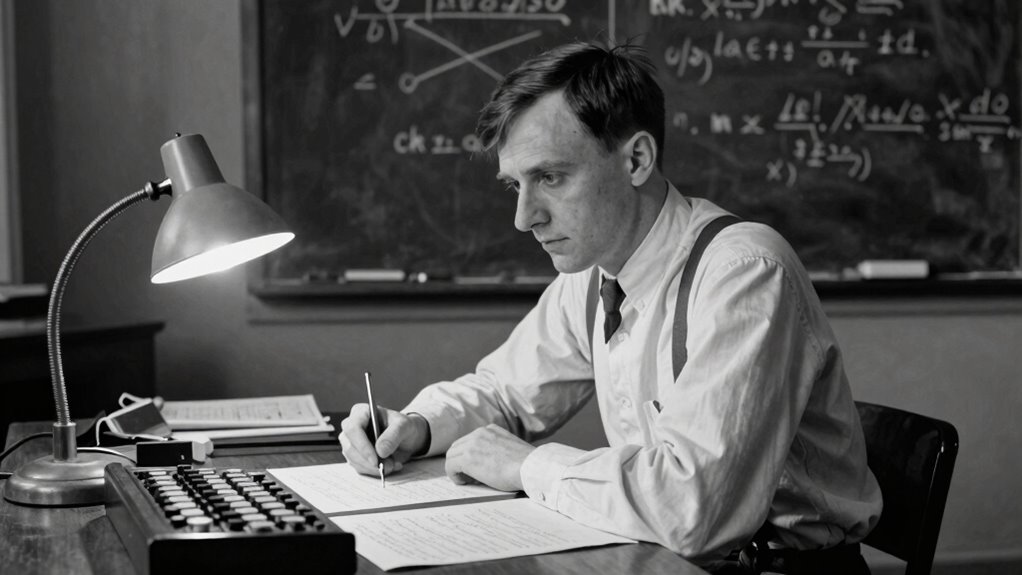

Alan Turing was a genius whose ideas transformed the modern world. He laid the groundwork for computer science, revolutionized cryptography by helping crack enemy codes in WWII, and fueled the development of secure digital communications. His question, “Can machines think?” sparked artificial intelligence, influencing everything from virtual assistants to self-driving cars. His visionary work continues to shape technology’s future—if you want to discover how his legacy still impacts us today, keep exploring.

Get art and craft supplies delivered free with Prime
- Fast, free delivery on millions of items
- Prime Video, Amazon Music and more included
- Member-only deals all year
Key Takeaways
- Alan Turing laid the foundation for modern computer science and cryptography, transforming secure digital communication.
- His question, “Can machines think?” sparked artificial intelligence and the development of intelligent algorithms.
- Turing’s work on machine simulation and problem-solving principles drives today’s AI, machine learning, and cognitive computing.
- His cryptography breakthroughs, notably decrypting the Enigma, fundamentally impacted data security and online privacy.
- Turing’s legacy continues to shape technological innovation, influencing digital security, AI advancements, and the future of computing.
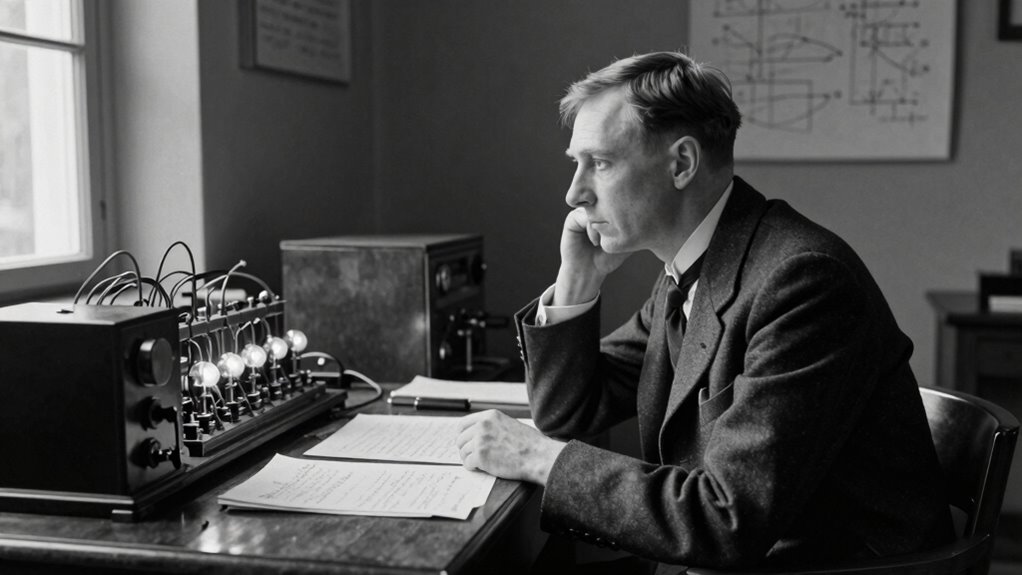
Alan Turing was a brilliant mathematician and logician whose groundbreaking ideas laid the foundation for modern computer science. His work in cryptography breakthroughs during World War II transformed the way we approach secure communication, setting the stage for today’s digital security systems. You might not realize it, but his contributions helped crack the German Enigma code, saving countless lives and shortening the war. This achievement didn’t just end with wartime victories; it also propelled the development of encryption techniques that protect your online banking, messaging apps, and confidential data today.
Alan Turing’s cryptography work revolutionized secure communication, shaping modern digital security and saving countless lives during WWII.
As you explore the evolution of artificial intelligence, you’ll see Turing’s influence everywhere. His famous question, “Can machines think?” sparked an entire field dedicated to creating intelligent machines. His concept of the Turing Test remains a benchmark for measuring a machine’s ability to exhibit human-like intelligence. You could say that his ideas laid the groundwork for AI evolution, inspiring countless researchers to develop smarter algorithms, natural language processors, and autonomous systems. Today’s virtual assistants, recommendation engines, and even self-driving cars owe a debt to Turing’s pioneering concepts.
You may find it fascinating how Turing’s insights into computation and logic extended well beyond cryptography and AI. He envisioned machines that could simulate human thought processes, a notion that continues to drive advancements in machine learning and cognitive computing. His work demonstrated that the power of algorithms could solve complex problems, a principle that underpins much of today’s technological innovation. Without his foresight, the rapid development of intelligent systems might have taken much longer, or perhaps might not have existed at all.
Moreover, Turing’s legacy influences how we understand the potential and limits of machine intelligence. You may not think about it every day, but the algorithms that power your digital world are built on principles he introduced decades ago. His ideas continue to shape the trajectory of technological evolution, pushing the boundaries of what machines can achieve. By recognizing his contributions, you gain a deeper appreciation for the interconnectedness of cryptography breakthroughs and artificial intelligence evolution—both driven by Turing’s groundbreaking work. His legacy isn’t just in history books; it’s embedded in the very fabric of the modern digital age, shaping the future in ways you might not even realize.
As an affiliate, we earn on qualifying purchases.
Frequently Asked Questions
How Did Turing’s Work Influence Artificial Intelligence Development?
Your understanding of artificial intelligence is shaped by Turing’s work, as he laid the groundwork for machine learning and neural networks. His concept of a universal machine demonstrated that computers could simulate human intelligence, inspiring the development of algorithms that learn from data. Turing’s ideas continue to influence AI, enabling machines to recognize patterns, adapt, and improve—core features in today’s AI advancements.
What Awards or Honors Did Turing Receive Posthumously?
Have you ever wondered how society honors true pioneers? After his wartime contributions and cryptography breakthroughs, Turing received posthumous honors like the Turing Award, often called the “Nobel Prize of Computing.” The UK also issued a royal pardon in 2013. These awards recognize his lasting impact on technology and cryptography, celebrating his genius beyond the shadows of past injustice.
Did Turing Have Any Notable Collaborations Outside of His Main Projects?
You’ll find that Turing’s notable collaborations extended beyond his main projects, especially in cryptography breakthroughs during wartime. You might discover his work with other mathematicians and cryptologists at Bletchley Park, where they cracked complex codes like the Enigma. These wartime collaborations played an essential role in shaping modern computing and cryptography, showcasing his ability to work effectively with teams to achieve groundbreaking results.
How Is Turing’s Legacy Preserved in Today’s Technology?
You see Turing’s legacy preserved today through cryptography breakthroughs and his foundational work in computational theory. His pioneering ideas underpin modern encryption, ensuring secure digital communication. Turing’s concepts also form the backbone of computer science, influencing programming languages, algorithms, and artificial intelligence. You benefit from his groundbreaking work every time you use a computer or online, recognizing his lasting impact on technology’s evolution and security in the digital age.
What Were the Key Challenges Turing Faced During His Career?
Imagine you’re steering a maze of cryptography challenges, trying to decode secret messages, while societal discrimination blocks your way like locked gates. Turing faced these hurdles head-on—solving complex cryptography puzzles and battling prejudice from society. His work in cracking codes was like finding hidden doorways, but societal bias made his journey difficult. Despite these challenges, he persisted, leaving a legacy that profoundly shaped modern computing and cryptography.
artificial intelligence development kit
As an affiliate, we earn on qualifying purchases.
As an affiliate, we earn on qualifying purchases.
Conclusion
You’ve seen how Alan Turing’s ideas revolutionized technology, how his ingenuity broke barriers, and how his legacy continues to shape our world. His brilliance challenged norms, his perseverance defied odds, and his vision transformed possibilities. You now understand how one mind can ignite change, inspire progress, and leave a lasting impact. Turing’s story reminds you that innovation begins with curiosity, progress requires courage, and truly great minds change everything.
As an affiliate, we earn on qualifying purchases.
As an affiliate, we earn on qualifying purchases.
Fall Picks
fall essentials
As an affiliate, we earn on qualifying purchases.