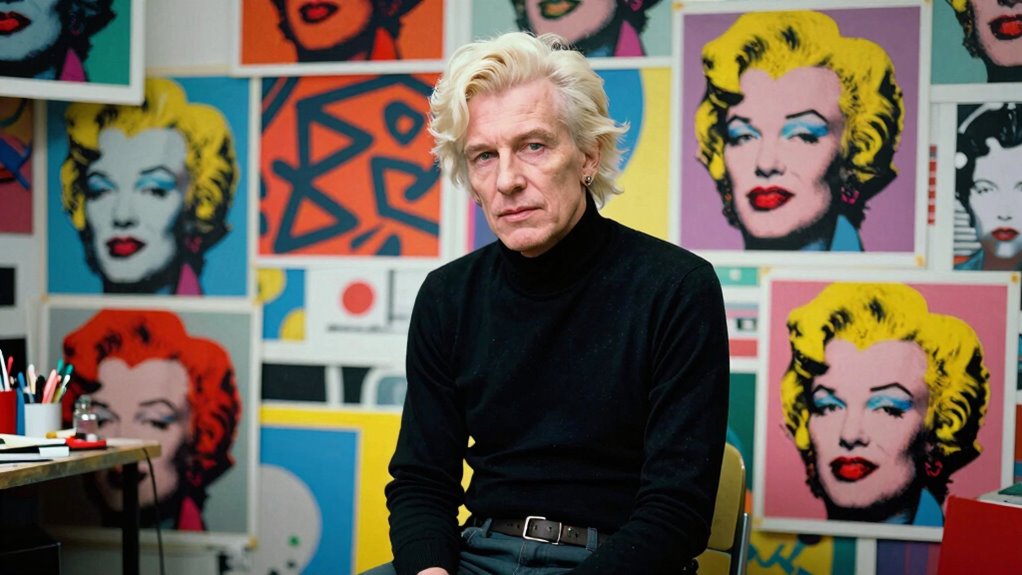

Andy Warhol transformed fame into a creative medium by blending celebrity culture with innovative techniques like silkscreen printing. He elevated familiar images such as Marilyn Monroe and Campbell’s Soup cans into high art, challenging traditional ideas of artistry. His use of bold colors, repetition, and mass production mirrored media saturation, shaping how we perceive fame and packaging consumer goods as art. Keep exploring to discover how his ideas continue to influence the art world today.

Get art and craft supplies delivered free with Prime
- Fast, free delivery on millions of items
- Prime Video, Amazon Music and more included
- Member-only deals all year
Key Takeaways
- Andy Warhol redefined contemporary art by blending celebrity culture with innovative silkscreen techniques.
- He elevated images of fame, like Marilyn Monroe and Elvis, into high art, challenging traditional boundaries.
- Warhol used mass reproduction methods, emphasizing the industrial aesthetic and media influence on perception.
- His work highlighted how media saturation shapes culture, turning fame into a visual and artistic medium.
- Warhol’s approach pioneered the use of mechanical processes, inspiring future artists and transforming art in a media-driven age.
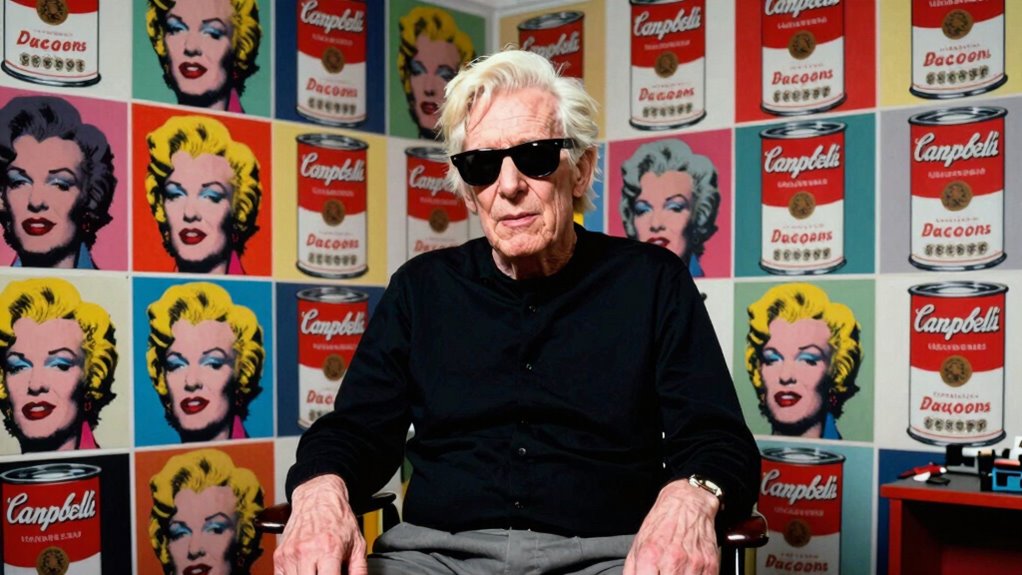
Have you ever wondered how one artist could redefine the boundaries of contemporary art? Andy Warhol did just that, transforming the art world by seamlessly blending celebrity culture with innovative artistic techniques. His work challenges traditional notions of art by elevating everyday images—think Marilyn Monroe, Campbell’s Soup cans, or Elvis Presley—into high art. Warhol understood that in a media-saturated society, fame itself becomes a form of artistic expression. He used celebrity culture not just as subject matter but as a way to explore the nature of fame and consumerism. To him, these images weren’t just portraits; they were symbols of a rapidly changing culture obsessed with celebrities and commercial products. This approach made his art both accessible and provocative, inviting viewers to reconsider the relationship between fame and identity.
Warhol’s artistic techniques set him apart. He popularized the use of silkscreen printing, a method that allowed him to produce multiple versions of the same image quickly and efficiently. This technique wasn’t just about speed; it was about reproducibility—mirroring the mass production of consumer goods and the ubiquity of media images. By using silkscreening, Warhol blurred the lines between fine art and commercial printing, creating works that looked familiar yet innovative. His use of bold colors, repetition, and flat surfaces emphasized the mechanical aspect of his process, making his art feel both industrial and personal. This method also reflected his fascination with the repetitive nature of celebrity images in magazines and tabloids, where a single face could be broadcast repeatedly, becoming more iconic with each iteration. Additionally, the contrast between color accuracy and mechanical reproduction in his work underscores how mass media shapes our perceptions of reality. His mastery of reproducibility techniques exemplifies how technological innovations can influence artistic expression. Furthermore, Warhol’s embrace of mass production methods foreshadowed contemporary digital art practices, showing his forward-thinking approach to creativity. His exploration of media saturation demonstrated how pervasive media can become a tool for artistic commentary, influencing future generations of artists. Ultimately, his innovative use of repetition and serialization helped to redefine the boundaries of art in a media-driven age.
silkscreen printing kit for beginners
As an affiliate, we earn on qualifying purchases.
As an affiliate, we earn on qualifying purchases.
Frequently Asked Questions
What Inspired Warhol’s Interest in Celebrity Culture?
You get that Warhol’s interest in celebrity culture was sparked by society’s growing celebrity obsession and strong media influence. He saw fame as a commodity and believed mass media turned ordinary people into icons. Warhol was fascinated by how media amplifies fame, inspiring him to create art that blurred the lines between celebrity and consumer culture. His work reflects his curiosity about the power media holds in shaping public perceptions of fame.
How Did Warhol’s Background Influence His Art Style?
You should know that Warhol’s background greatly shaped his art style. Coming from a working-class family and facing early struggles, he developed a unique perspective that embraced everyday objects and mass production. Around 60% of his works incorporate bold, repetitive images, showcasing how his cultural influences and innovative artistic techniques merge. His upbringing inspired him to explore consumer culture, making his art both accessible and reflective of his environment.
What Were Warhol’s Favorite Mediums Beyond Painting?
You’ll find that Warhol’s favorite mediums beyond painting include screen printing, which allowed him to explore experimental techniques and mass production. He also loved using photography and film, often experimenting with color and texture through color experimentation. These methods let him blur the lines between commercial art and fine art, emphasizing his fascination with fame and consumer culture. His innovative approach transformed how artists use different mediums to express ideas.
How Did Warhol’s Personality Affect His Artistic Collaborations?
Your curiosity about how Warhol’s personality shaped his artistic collaborations is spot on. His celebrity persona, characterized by detachment and intrigue, fostered a sense of mystery that drew others in. This persona made collaborations feel like experiments in fame and identity, encouraging open, innovative exchanges. Warhol’s cool, calculated approach allowed artists and assistants to freely explore new ideas, transforming each collaboration into a reflection of his fascination with fame’s fleeting nature.
What Is the Legacy of Warhol’s Impact on Modern Art?
You see Warhol’s legacy in how he reshaped modern art through his sharp commercial critique and cultural commentary. He blurred boundaries between high and low culture, making art accessible and questioning consumerism. His use of mass media and celebrity culture influences contemporary artists, encouraging them to explore societal themes and commercialism. Warhol’s work continues to challenge perceptions, inspiring ongoing debates about the role of fame and commercialism in art today.
Andy Warhol style art print poster
As an affiliate, we earn on qualifying purchases.
As an affiliate, we earn on qualifying purchases.
Conclusion
Now, as you step back and consider Warhol’s revolutionary approach, one thing remains certain: his fascination with fame and consumer culture isn’t just history—it’s an ongoing story. What will he reveal next? Will the boundaries of art and celebrity blur even further? As you wonder what’s next, remember that Warhol’s world invites you to look closer, question more, and maybe, just maybe, see fame in a whole new light. The future of art is still unwritten.
reproduction art canvas Marilyn Monroe
As an affiliate, we earn on qualifying purchases.
As an affiliate, we earn on qualifying purchases.
As an affiliate, we earn on qualifying purchases.
Fall Picks
fall essentials
As an affiliate, we earn on qualifying purchases.