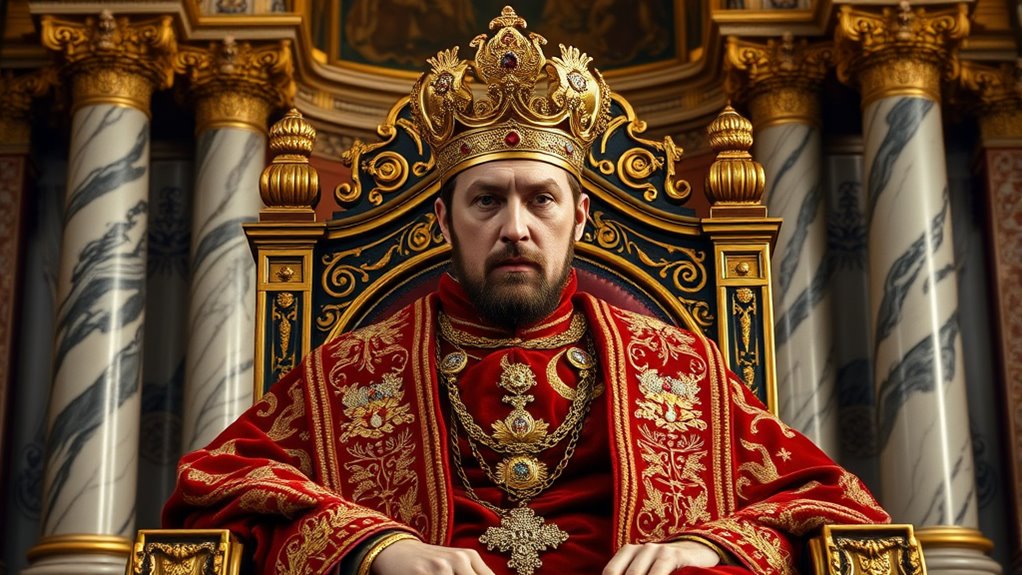

Augustus the Strong expertly combined political cunning, lavish art patronage, and scandalous intrigue to elevate Saxony’s power and prestige. You see him maneuvering behind palace doors to outsmart rivals and build alliances, all while transforming Dresden into a cultural masterpiece with grand palaces and stunning artworks. His bold efforts boosted Saxony’s reputation but also sparked controversy. If you explore further, you’ll uncover how his clever strategies and artistic legacy shaped history.
Key Takeaways
- Augustus the Strong skillfully used court intrigue and political maneuvering to consolidate power and secure Saxony’s influence in Europe.
- He patronized renowned artists and imported artworks, transforming Dresden into a major cultural hub to project strength and sophistication.
- His strategic art investments served diplomatic purposes, impressing allies and intimidating rivals, shaping Saxony’s artistic legacy.
- The court life featured elaborate cultural events, reinforcing his image as a powerful yet cultured ruler amid scandals and controversies.
- Augustus balanced political cunning with grandeur and artistic patronage, crafting an influential empire marked by scandal, power, and cultural brilliance.
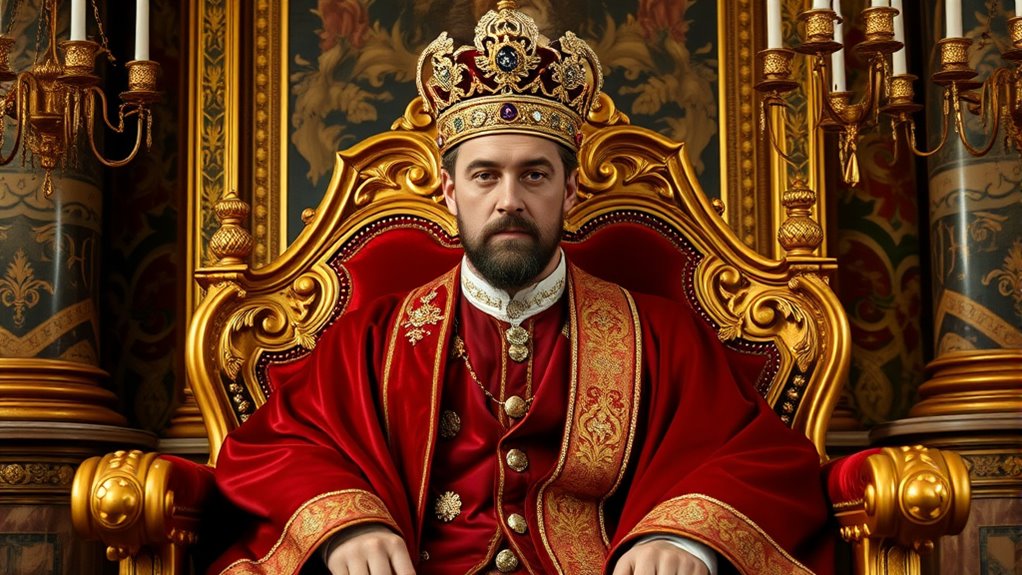
Augustus the Strong, a towering figure in Saxony’s history, combined immense political power with a passionate love for art and luxury. As you explore into his reign, you’ll quickly see how he masterfully navigated court intrigues to strengthen his grip on power while simultaneously cultivating an environment of artistic brilliance. Court intrigues became a crucial part of his strategy, allowing him to outmaneuver rivals and secure loyalty within his court. You’ll notice that he skillfully used these political maneuvers not just to protect his throne, but to elevate Saxony’s status across Europe. Behind the scenes, alliances were forged and broken, secrets whispered in shadowed chambers, all aimed at consolidating his authority. Yet, amid this web of political scheming, Augustus’s true passion shone through in his artistic patronage. He believed that art and culture were essential tools to project strength and sophistication. You can see this clearly in his lavish court, where he commissioned works from renowned artists, imported rare artworks, and built magnificent palaces to showcase his wealth. His patronage transformed Dresden into a cultural hub, attracting talents from across the continent. As you explore the museums and palaces today, you realize that his investments in art weren’t mere displays of wealth—they were strategic moves to impress allies, intimidate enemies, and leave a lasting legacy. Augustus understood that art could serve as both a diplomatic tool and a reflection of his divine right to rule. You’ll also find that his court was a center of lively cultural exchanges, where music, dance, and theatrical performances flourished. These events weren’t just entertainment; they were carefully curated displays of power and taste, reinforcing his image as a ruler both formidable and cultured. Despite the scandals and controversies that surrounded his court, Augustus maintained a keen eye on the bigger picture: shaping Saxony’s reputation as a European cultural and political powerhouse. His ability to blend political cunning with artistic ambition created a legacy that endures today. This combination of artistic patronage and political strategy was fundamental to his enduring influence. You’ll see that his reign was marked by a relentless pursuit of beauty and grandeur, balanced with the ruthless political tactics needed to stay in control. In the end, Augustus the Strong’s story isn’t just about power or scandal, but about how he used art and intrigue to craft an empire that was as influential as it was opulent.

Dresden Illustration Poster, Dresden Germany Skyline Poster Cityscape and Landmark Print, Dresden Illustration Home Wall Art, Office Wall Decor – 12×18
235 gr/m Thick High-quality photographic premium photo paper, satin, luster surface
As an affiliate, we earn on qualifying purchases.
As an affiliate, we earn on qualifying purchases.
Frequently Asked Questions
What Was Augustus the Strong’s Childhood Like?
You might find that Augustus the Strong’s childhood was shaped by a noble upbringing, giving him access to education and court life early on. However, he also faced childhood hardships, such as political instability and family pressures. These experiences likely influenced his desire for power and grandeur later in life. Despite difficulties, his privileged background helped him develop the skills and confidence needed to rule Saxony and Poland successfully.
Did Augustus the Strong Have Any Illegitimate Children?
Yes, Augustus the Strong had illegitimate heirs, often acknowledged through his relationships with royal mistresses. You might find it interesting that he fathered numerous children outside of his official marriages, and some of these illegitimate heirs were recognized or supported discreetly. His numerous affairs with royal mistresses contributed to this complex legacy, influencing succession plans and court intrigues during his reign.
How Did Augustus the Strong Influence European Politics?
You might not realize it, but Augustus the Strong’s actions shaped European politics considerably. His strategic marriages and alliances boosted Saxony’s influence, while his military expansion strategies challenged neighboring powers. These coincidences created a ripple effect, influencing diplomatic alliances across Europe. By cleverly maneuvering court politics and military prowess, he extended Saxony’s reach, making him a key figure in shaping the continent’s political landscape during his reign.
Were There Any Conspiracies Against Augustus the Strong?
You should know that there were indeed conspiracies against Augustus the Strong. Court intrigues and secret alliances often plotted against him, fueled by his rivals’ ambitions and political rivalries. These covert schemes aimed to weaken his power or overthrow him. Despite these threats, Augustus skillfully navigated the treacherous court politics, maintaining his rule by uncovering plots and forging strategic alliances, ensuring his dominance in Saxony and beyond.
What Happened to Augustus the Strong’s Art Collection After His Death?
Imagine his art collection as a grand river that splashed across Saxony’s landscape. After his death, the collection’s dispersal scattered masterpieces into various private and public collections, diluting its original unity. Yet, his legacy preservation efforts guaranteed many works found homes in museums and galleries, keeping his cultural influence alive. You can still trace his artistic footprint today, like footprints in the sands of history.

Baroque (Basic Art)
Used Book in Good Condition
As an affiliate, we earn on qualifying purchases.
As an affiliate, we earn on qualifying purchases.
Conclusion
As you close this chapter on Augustus the Strong, remember how his reign was a swirling storm of power, art, and scandal—like a grand tapestry woven with both golden threads and dark shadows. His life’s story is a vivid painting, full of bold strokes and unexpected splashes. You see, beneath the glittering surface, he reminds us that even the brightest stars cast shadows. His legacy lingers, a dazzling yet complex dance of ambition and artistry.

Louis Vuitton: The Birth of Modern Luxury Updated Edition
As an affiliate, we earn on qualifying purchases.
As an affiliate, we earn on qualifying purchases.

Falagil Medieval Cathedral Architecture Building Blocks Set, MOC Castle Series Modular Church Model, Collectible Display Creative Ornament for Adults and Teens (6,172PCS)
Background Information: Step into the grandeur of the Middle Ages with this Medieval Church building block set. Part…
As an affiliate, we earn on qualifying purchases.
As an affiliate, we earn on qualifying purchases.