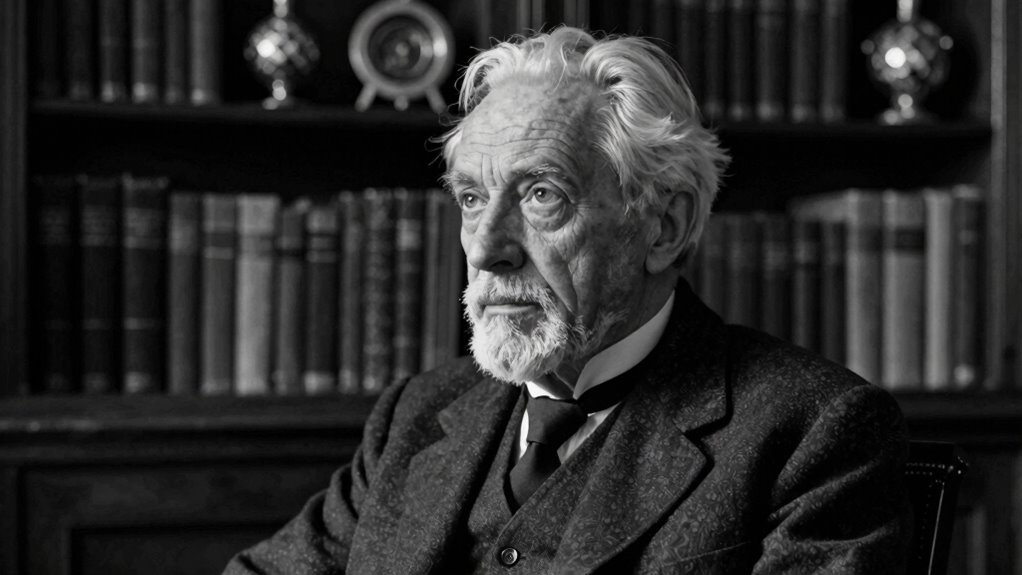
Carl Jung, a pioneering psychologist, believed exploring your inner world uncovers deep truths about yourself and human nature. He saw dreams as meaningful messages from your subconscious, filled with symbols and archetypes that influence your thoughts and feelings. By interpreting these symbols, you can understand hidden parts of yourself and promote personal growth. Taking your inner world seriously can lead to profound transformation, and if you keep exploring, you’ll discover more about the powerful insights waiting within.
Key Takeaways
- Carl Jung emphasized the importance of exploring the inner world and the subconscious for personal growth.
- He developed dream analysis as a means to access symbols and archetypes in the collective unconscious.
- Jung believed that understanding archetypes reveals universal motifs shaping individual identity.
- He viewed dreams as meaningful messages from the inner self, guiding self-awareness and transformation.
- Jung’s work highlights the significance of inner exploration for psychological wholeness and self-understanding.

Have you ever wondered what lies beneath our conscious minds? Carl Jung believed that our inner world is a vast, mysterious landscape filled with symbols, archetypes, and hidden truths waiting to be uncovered. He argued that understanding these elements could reveal insights about ourselves and our lives. One of his most influential ideas was that dreams aren’t just random images but meaningful messages. Through dream analysis, you can explore the deep layers of your subconscious, uncovering patterns and themes that shape your thoughts and feelings. Jung saw dreams as a direct communication from your inner self, offering clues about your personal growth and unresolved conflicts.
Dreams are meaningful messages from your subconscious, revealing hidden truths and guiding your personal growth.
A key part of Jung’s approach to understanding the inner world is archetype symbolism. You can think of archetypes as universal symbols or themes that recur across cultures and history—figures like the Hero, the Shadow, or the Anima and Animus. These archetypes serve as templates that influence your perceptions, behaviors, and emotional responses. When you encounter certain symbols in dreams or myths, they tap into these deep-seated patterns rooted in collective unconsciousness. Recognizing archetype symbolism helps you see how these universal motifs shape your personal experiences and inner conflicts. It’s like discovering a blueprint of human psychology that connects individual struggles with shared human mythology. Developing media literacy can also help you interpret these symbols more accurately and avoid misconceptions.
Jung’s emphasis on the inner world challenges you to look beyond surface appearances and examine what’s happening beneath your awareness. Instead of dismissing your dreams as meaningless or random, he encourages you to interpret their symbols and themes. For example, if you dream of a wise old man or a fierce animal, these images might represent parts of yourself you haven’t fully acknowledged. By analyzing these symbols, you can gain clarity about your fears, desires, and potential for growth. Jung believed that this process of decoding archetype symbolism isn’t just about understanding dreams—it’s also about integrating different aspects of your personality and achieving wholeness. Recognizing the importance of symbolic language in dreams can help deepen your understanding of your subconscious.
Additionally, understanding concepts like ventilation and safe sauna practices can help maintain physical well-being while exploring your inner world, ensuring a balanced approach to self-discovery. Incorporating digital safety practices can also protect your personal information as you explore online resources related to your inner journey. Exploring these practices ensures that your journey inward remains both meaningful and secure.
In essence, Jung’s focus on the inner world invites you to take your subconscious seriously. Dream analysis becomes a powerful tool for self-discovery, and recognizing archetypes helps you interpret the universal stories that shape your identity. By embracing this perspective, you’re engaging in a meaningful journey inward—one that can transform how you see yourself and your place in the world. Jung’s work reminds you that within your mind lies a treasure trove of wisdom waiting to be explored.
As an affiliate, we earn on qualifying purchases.
Frequently Asked Questions
How Did Jung’s Childhood Influence His Psychological Theories?
Your childhood deeply shaped Jung’s psychological theories, especially his focus on dream analysis and archetype symbolism. Growing up, he experienced vivid dreams that sparked his interest in exploring the unconscious mind. These early experiences led him to believe that dreams reveal universal symbols—archetypes—that influence your behavior and thoughts. His childhood therefore motivated his belief in the importance of understanding inner worlds to achieve psychological harmony.
What Are Jung’s Views on Spirituality and Religion?
You see, Jung believed spirituality is like a whisper from the soul, guiding you through mystical experiences. He valued religious symbolism as a language of the unconscious, revealing universal truths. To him, religion isn’t just doctrine but a bridge to deeper self-awareness. He saw spiritual symbols as threads weaving individual consciousness into the collective unconscious, helping you find meaning beyond the material world and connect with the divine within.
How Did Jung’s Personal Life Impact His Professional Work?
Your understanding of Jung’s work is deeply influenced by his personal life, especially his dreams and experiences with archetype symbolism. His struggles and spiritual explorations led him to develop techniques like dream analysis, which reveal the unconscious mind’s messages. These personal insights shaped his theories, making his professional work richer and more authentic. You see how his inner life directly informs his approach to understanding human psychology and spirituality.
What Are Some Criticisms of Jung’s Theories?
You might find criticisms of Jung’s theories compelling, especially his focus on archetype symbolism and dream analysis, which some see as overly subjective. Critics argue these concepts lack scientific rigor and are difficult to test empirically. While Jung’s emphasis on the inner world offers profound insight, skeptics contend it blurs the line between psychology and mysticism, challenging the scientific foundation of his approach.
How Does Jung’s Work Compare to Freud’s?
You see that Jung’s work differs from Freud’s by emphasizing dream analysis and archetype symbolism over sexual and childhood issues. Jung believes dreams reveal universal symbols and collective unconscious patterns, while Freud focuses on personal repressed desires. You might find Jung’s approach more spiritual and holistic, encouraging self-discovery through interpreting archetypes in your dreams. This contrast highlights their differing views on the mind’s inner workings and the paths to understanding oneself.
As an affiliate, we earn on qualifying purchases.
Conclusion
You might think exploring your inner world is just daydreaming or overthinking, but Jung shows it’s where real growth begins. By taking your inner experiences seriously, you gain access to insights that can transform your life. So, don’t dismiss your thoughts and feelings as trivial; they’re valuable guides. Embrace the journey inward, and you might discover the most authentic, powerful version of yourself waiting to be revealed.
subconscious mind exploration kit
As an affiliate, we earn on qualifying purchases.
As an affiliate, we earn on qualifying purchases.
As an affiliate, we earn on qualifying purchases.