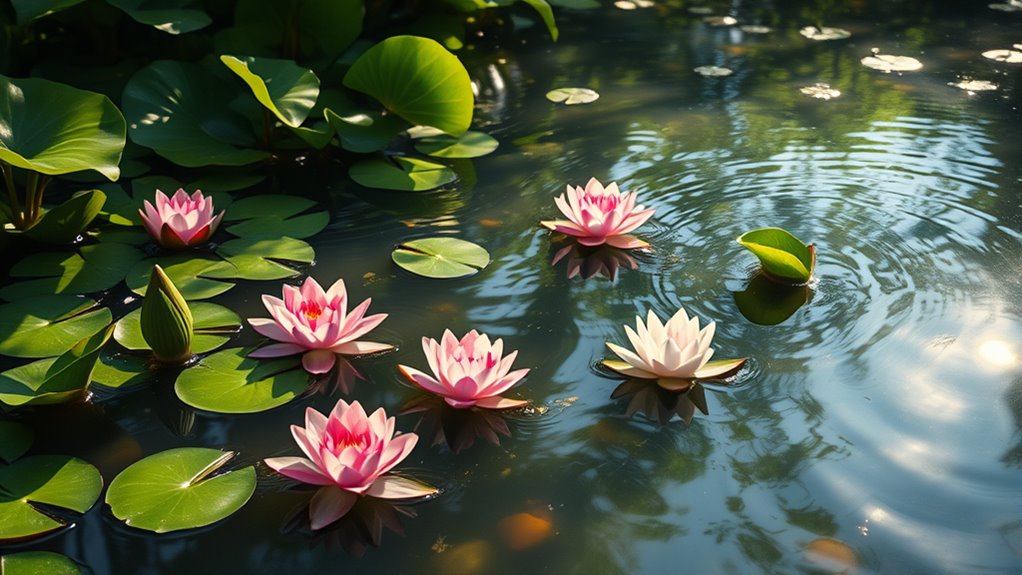
Claude Monet revolutionized Impressionist art by capturing the elusive qualities of light and atmosphere in his water lilies series. His quick, fluid brushstrokes create a sense of movement and reflect the shimmering water, skies, and seasonal changes. Monet’s vibrant yet harmonious color palette enhances the fleeting effects of natural light. This mastery invites you to see the world in its ever-changing beauty—if you want to explore further, you’ll find even more fascinating insights ahead.
Key Takeaways
- Monet masterfully captured the fleeting effects of light and atmosphere in his Water Lilies series using loose, expressive brushstrokes.
- His vibrant, harmonious color palette creates shimmering water reflections and enhances the ethereal quality of the scenes.
- The fluid brushwork mimics water ripples and sky reflections, emphasizing movement and the transient nature of nature.
- Monet’s focus on spontaneous, quick strokes conveys a sense of immediacy and vitality in his impressionist landscapes.
- His innovative techniques revolutionized art by emphasizing light, mood, and the ephemeral beauty of water and natural light.

Claude Monet was a pioneering French painter whose work revolutionized the art world with his innovative approach to capturing light and atmosphere. As you explore his paintings, you’ll notice how his mastery of brushstroke techniques brings scenes to life. Monet’s brushstrokes are often loose and fluid, giving his work a sense of movement and immediacy. Instead of meticulously blending colors, he applied paint in quick, expressive strokes that suggest forms rather than define them. This technique allows you to see the energy and spontaneity behind his work, making you feel as if you’re witnessing the scene unfold in real time. His brushstroke techniques contribute substantially to the overall mood and tone, emphasizing the fleeting effects of light and weather conditions. Additionally, Monet’s approach to specialized brushstroke techniques contributed to his ability to evoke atmosphere and mood more vividly.
In addition to his brushwork, Monet’s color palette choices are vital in establishing the atmosphere of his paintings. He favored a vibrant yet harmonious selection of colors, often working with a relatively limited palette to create a cohesive visual experience. You’ll observe that he rarely relied on black or dark tones to create shadows; instead, he used complementary colors and subtle gradations to evoke depth and dimension. This approach enhances the luminosity of his works, allowing light to seem to shimmer across the surface. Monet’s color choices reflect his desire to capture the transient qualities of nature, where colors shift and blend under changing light conditions. Whether portraying the shimmering water lilies or the dappled sunlight filtering through trees, his palette choices help communicate the fleeting beauty of the natural world.
When you focus on Monet’s water lily series, you see how his brushstroke techniques and color palette choices work hand in hand. His brushstrokes become even more fluid, mimicking the gentle ripples of the pond’s surface. The colors he uses—soft pinks, blues, greens, and purples—are layered and blended with a sense of spontaneity, creating a dreamlike quality. It’s as if you’re standing right there, watching the water reflect the sky and surrounding foliage. Monet’s ability to manipulate light through his brushstrokes and color choices makes his water lilies seem alive, constantly shifting with the changing light and seasons. As you immerse yourself in his work, you gain a deeper appreciation for his skill in capturing the ephemeral beauty of nature, inviting you to see the world through his eyes—ever-changing, vibrant, and full of light.
Frequently Asked Questions
What Inspired Monet’s Fascination With Water Lilies?
You’re curious about Monet’s fascination with water lilies. His garden inspiration sparked his love for these scenes, especially after exploring Japanese prints that emphasized nature’s beauty and serenity. Monet spent years capturing the changing light and reflections on his pond, inspired by the tranquility and delicate brushwork seen in Japanese art. This blend of influences fueled his passion, leading to the iconic water lily paintings we admire today.
How Did Monet’s Technique Evolve Over His Career?
Imagine your artistic journey unfolding like a river’s course—your technique evolves seamlessly over time. Monet’s brushwork progression becomes more fluid, capturing fleeting moments with spontaneity. His color experimentation deepens, reflecting changing light and moods. As you progress, you notice a shift from detailed realism to loose, vibrant strokes, embracing impressionism. This evolution reveals his mastery of capturing nature’s ephemeral beauty, inviting viewers to see the world through his ever-changing lens.
What Role Did Light Play in Monet’s Impressionist Style?
You see that light is central to Monet’s impressionist style, shaping how he captures fleeting moments. His brushwork techniques create vibrant, textured strokes that reflect changing light and atmosphere. He carefully considers color harmony, blending hues to evoke natural luminosity. By focusing on how light interacts with water and landscapes, Monet transforms ordinary scenes into dynamic, luminous images, making the viewer feel immersed in the transient beauty of nature.
Were Monet’s Water Lily Paintings Influenced by Other Artists?
Imagine stepping into Monet’s garden in the 1890s, where his water lilies bloom vividly. You’d see that his paintings were influenced by artistic influences like Japanese prints and Impressionist peers, blending these ideas with botanical inspirations from his own pond. Monet’s innovative approach, focusing on light and color, shaped his water lily series, making it a masterpiece inspired by both external artistic trends and his personal botanical observations.
How Are Monet’s Water Lilies Preserved Today?
You can see Monet’s Water Lilies preserved through ongoing conservation efforts that help protect their delicate paint and canvas. Museums display these masterpieces in climate-controlled environments, ensuring they stay in excellent condition for future generations. Regular cleaning and careful handling are part of the preservation process, allowing visitors like you to experience Monet’s luminous water scenes with their vibrant light and water effects intact.
Conclusion
As you leave Monet’s world behind, you sense there’s more beneath the surface—hidden details waiting to be discovered. His mastery of light and water creates a mystery that keeps pulling you back, inviting you to explore even deeper. What secrets do his paintings still hold? You can’t help but wonder if there’s a new perspective, a fresh connection, just waiting to be uncovered. The story of Monet’s water lilies isn’t finished—there’s always more to see.