
F. Scott Fitzgerald masterfully chronicles the Jazz Age by blending poetic prose with vivid symbolism, capturing both the glamour and disillusionment of the era. His stories reveal the era’s dreams, excess, and moral decay beneath a glittering surface. Through settings, objects, and colors, he deepens themes of illusion and societal critique. If you explore further, you’ll uncover how Fitzgerald’s style transforms cultural excess into profound reflections on human aspiration and disappointment.
Key Takeaways
- Fitzgerald vividly captures the exuberance and excess of the Jazz Age through his lyrical prose and detailed settings.
- His novel *The Great Gatsby* epitomizes the era’s dreams, illusions, and moral decadence, reflecting its cultural atmosphere.
- Fitzgerald uses symbolism, such as Gatsby’s mansion and green light, to explore themes of aspiration and disillusionment.
- His style blends poetic descriptions with social critique, illustrating both glamour and moral decay of the 1920s.
- As a chronicler, Fitzgerald’s works serve as timeless reflections on the pursuits and failures of the Jazz Age.
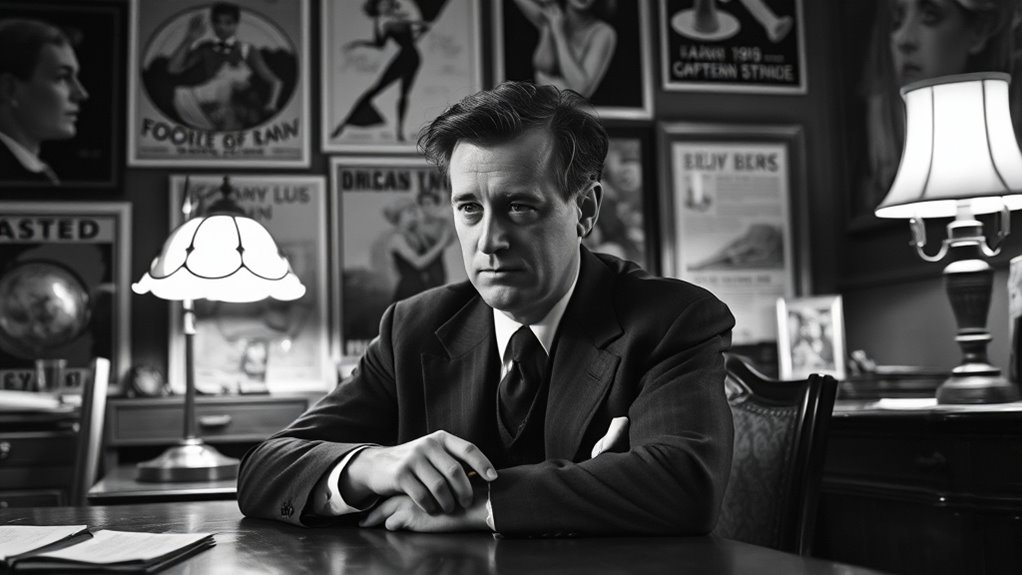
Have you ever wondered what it takes to capture the glamour and disillusionment of the Jazz Age? F. Scott Fitzgerald did this masterfully through his writing, especially in *The Great Gatsby*. His work is rich with symbolism, with Gatsby himself serving as a powerful emblem of the era’s dreams and failures. You can see Gatsby’s Symbolism woven throughout the novel, representing the elusive nature of happiness, the corruption of wealth, and the American Dream itself. His grand parties and opulent mansion are more than just luxurious settings; they symbolize the hollow pursuit of pleasure that defined the age. Fitzgerald’s literary style complements this symbolism perfectly. His prose is both poetic and precise, blending lyrical descriptions with sharp social commentary. You might notice how he uses vivid imagery and metaphor to evoke the mood of the Roaring Twenties—an era of excess and disillusionment. Fitzgerald’s literary style isn’t just about creating beautiful sentences; it’s a deliberate tool to reveal deeper truths about society, desire, and identity. His use of language often invites you to see beyond the surface, exposing the moral decay beneath the glittering facade of wealth. As you read, you’ll find that Fitzgerald’s sharp eye for detail and his ability to craft complex characters make his storytelling compelling and layered. His style is characterized by a mix of elegance and irony, capturing the contradictions of the Jazz Age—its glamour and its despair. Fitzgerald’s mastery lies in his ability to depict the world’s glittering surface while subtly critiquing its emptiness. He uses symbolism not just in the characters, but also in settings, objects, and even colors, to deepen your understanding of the narrative’s themes. His literary style enhances this symbolism, making every sentence resonate with meaning. When you immerse yourself in Fitzgerald’s writing, you begin to see how his craftsmanship transforms a story about parties and wealth into a profound reflection on human aspiration and disappointment. His words linger, revealing that beneath the dazzling veneer of the Jazz Age, there’s a fragile, often tragic pursuit of happiness. In addition, understanding the developmental benefits of literary devices like symbolism can deepen your appreciation of his artistry. In essence, Fitzgerald’s artistry lies in his ability to marry symbolism with a distinctive literary style, capturing the spirit and contradictions of his time with elegance and insight. His work invites you to look beyond the surface and explore the complex emotions that defined an era marked by both brilliance and disillusionment.
Top picks for "scott fitzgerald jazz"
As an affiliate, we earn on qualifying purchases.
Frequently Asked Questions
What Were Fitzgerald’s Favorite Hobbies Outside Writing?
You’d find Fitzgerald enjoying poetry reading and horse racing outside his writing. He loved immersing himself in poetry, often visiting cafes for readings and to discuss literature. Horse racing also captivated him, reflecting his fascination with glamour and speed. These hobbies provided a lively escape from his literary pursuits, offering inspiration and excitement. Engaging in poetry reading and horse racing showcased his appreciation for art, culture, and thrill-seeking beyond the world of words.
How Did Fitzgerald Influence Modern American Literature?
You might not realize it, but Fitzgerald’s influence on modern American literature is profound. His mastery of literary innovation, blending poetic language with sharp social commentary, reshaped storytelling. His portrayal of the Jazz Age’s glamour and disillusionment left a lasting cultural impact, inspiring countless writers to explore new narrative forms and themes. As a result, his work continues to shape the landscape of American literature today, sparking curiosity and admiration.
What Personal Struggles Did Fitzgerald Face During His Career?
You face Fitzgerald’s personal struggles firsthand—he deals with financial hardships and health issues that often hinder his career. Despite his talent, he battles debt and inconsistent income, making it difficult to maintain stability. Additionally, health problems, including alcoholism, take a toll on his well-being and productivity. These struggles shape his life and work, highlighting the challenges he confronts while endeavoring to leave a lasting mark on American literature.
Did Fitzgerald Have Any Close Friendships With Other Writers?
You’ll find that Fitzgerald did have close literary friendships, especially with writers like Ernest Hemingway and Gertrude Stein. These relationships often involved lively exchanges and mutual support, shaping his work and perspective. While formal writer collaborations were rare, these friendships created a network of influence and inspiration. You can see how these bonds helped Fitzgerald navigate his career and personal struggles, enriching his storytelling during the Jazz Age.
How Was Fitzgerald Perceived by His Contemporaries?
You see that Fitzgerald’s contemporaries viewed him with mixed feelings; some admired his literary talent and public admiration, while others saw him as emblematic of the Jazz Age excess. His literary reputation grew over time, but during his life, he was often seen as both a brilliant writer and a symbol of the era’s fleeting glamour. Despite this, he maintained close friendships with fellow writers, who appreciated his craft and unique perspective.
Conclusion
As you reflect on Fitzgerald’s life, imagine stepping into a shimmering Gatsby party, where dreams dance just out of reach—much like his stories. His words reveal the jazz age’s glittering allure and underlying emptiness, reminding you that beauty often masks deeper truths. Like Fitzgerald himself, you learn that chasing illusions can be both enchanting and fleeting. His legacy teaches you to treasure genuine moments amid life’s fleeting, glittering illusions.