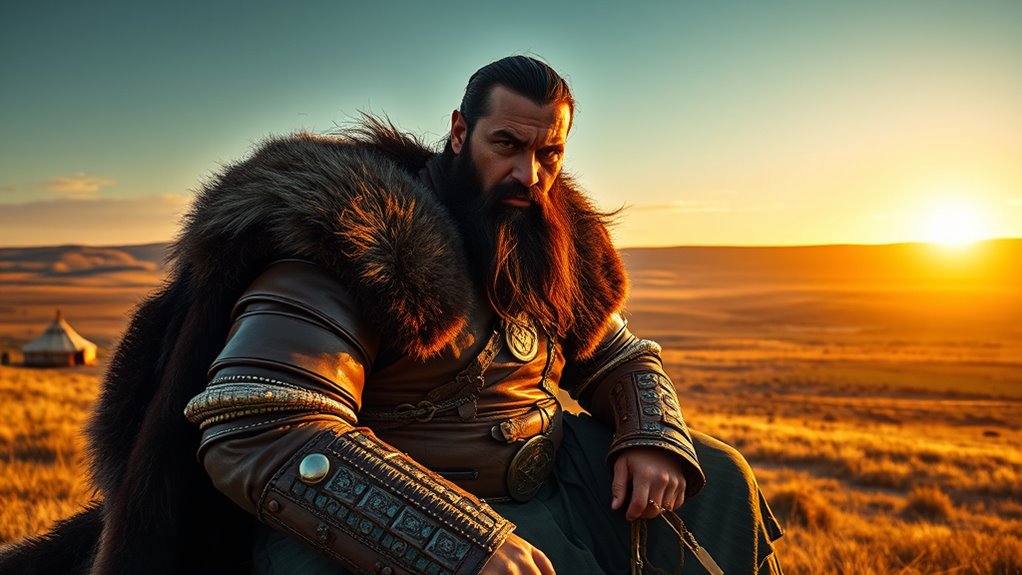

Genghis Khan was a powerful Mongol leader who united tribes and built one of the largest empires in history. He used innovative military tactics like fast horse archers, psychological warfare, and clever sieges to conquer vast territories across Asia. His leadership emphasized discipline, discipline, and meritocracy, which kept his army effective. His legacy shaped Eurasian history and cultural exchange. If you explore further, you’ll discover how his strategies changed warfare forever.
Key Takeaways
- Genghis Khan united Mongol tribes and built one of history’s largest empires through strategic military campaigns.
- He revolutionized warfare with speed, discipline, mobility, and innovative siege and psychological tactics.
- His leadership emphasized meritocracy, strict discipline, and loyalty, ensuring effective and loyal armies.
- Genghis adapted tactics to various enemies and terrains, enabling expansion across Asia and into Europe.
- His conquests facilitated cultural exchange, trade along the Silk Road, and transformed medieval Eurasia.

Genghis Khan, born as Temujin around 1162, united the Mongol tribes and forged one of the largest empires in history. You might wonder how he managed to accomplish such a feat, and the answer lies in his mastery of Mongol warfare. Genghis Khan revolutionized military tactics, emphasizing speed, discipline, and adaptability. His armies relied on highly mobile horse archers, who could strike swiftly and retreat before enemies could mount a defense. This approach allowed him to conquer vast territories with remarkable efficiency. You see, Mongol warfare wasn’t just about brute force; it was about strategic innovation. Genghis Khan devised clever siege techniques, used psychological warfare to weaken opponents, and employed intelligence networks to gather essential information. These methods gave him a decisive edge over larger, more established armies. Furthermore, his ability to adapt tactics to different enemies and terrains was instrumental in his success.
As you study his campaigns, it becomes clear that his leadership was as much about organization as it was about combat. Genghis Khan implemented strict discipline and promoted meritocracy within his ranks, ensuring loyalty and effectiveness. His ability to adapt tactics to different enemies and terrains helped him expand across Central Asia, Persia, and China. This mastery of Mongol warfare set a new standard for military success in medieval times and inspired countless future generals. It’s this innovative approach that cements Genghis Khan’s legacy as a military genius.
When you think about Genghis Khan’s legacy, it’s impossible not to recognize his profound influence on history. His conquests reshaped Eurasia, facilitating cultural exchanges and trade along the Silk Road. Despite his reputation for brutality, his leadership also fostered a sense of unity among diverse peoples, creating a vast empire that persisted long after his death. His legacy endures in the way modern armies study his tactics and in the cultural memories of the Mongol people. Genghis Khan’s ability to forge an empire through strategic warfare and leadership left a lasting imprint on history. His innovative methods of warfare, combined with his vision for a united Mongol nation, transformed the medieval world and laid the groundwork for future empires. Whether viewed as a ruthless conqueror or a visionary leader, his impact on history remains undeniable.

Genghis Khan and the Making of the Modern World
Great product!
As an affiliate, we earn on qualifying purchases.
As an affiliate, we earn on qualifying purchases.
Frequently Asked Questions
What Was Genghis Khan’s Childhood Like?
Your childhood was marked by a tribal upbringing and early hardships. You grew up in the harsh Mongolian steppes, facing constant struggles for survival. Your family was often targeted by rival tribes, and you experienced loss and adversity early on. Despite these challenges, you developed resilience, leadership skills, and a fierce determination that would shape your future as a powerful and influential leader.
How Did Genghis Khan Unite the Mongol Tribes?
Imagine a thunderstorm of change sweeping across the Mongol steppes; you see Genghis Khan forging tribal alliances with unmatched skill. His leadership qualities—bravery, charisma, and strategic thinking—act as lightning rods, pulling tribes together. He breaks down old rivalries, uniting them under a common banner. By turning enemies into allies through diplomacy and strength, he transforms chaos into a formidable, united force ready to conquer.
What Were Genghis Khan’s Main Military Strategies?
You see, Genghis Khan’s main military strategies include skillful horse archery and the clever feigned retreat. He trains his soldiers to shoot accurately while on horseback, giving him a mobile advantage. The feigned retreat tricks enemies into chasing, only to be ambushed. These tactics make his armies highly effective, allowing him to conquer vast territories and outmaneuver larger, less flexible foes.
How Did Genghis Khan Influence World History?
Like a modern-day Alexander the Great, Genghis Khan reshaped history through his Mongol conquests, spreading fear and innovation. His military prowess and strategic brilliance led to vast territories uniting under one empire. Beyond conquest, he fostered cultural impact by encouraging trade, communication, and cultural exchanges across Eurasia. You can see his influence today in global trade routes and cultural diversity, making him a pivotal figure in shaping the world’s interconnected future.
What Was Genghis Khan’s Legacy After His Death?
You see Genghis Khan’s legacy through the lasting Mongol influence and cultural legacy he left behind. His conquests connected East and West, boosting trade and exchange. The empire’s stability promoted cultural integration, inspiring future leaders. His impact persists in modern history, shaping nations and cultures. Genghis’s leadership and innovations continue to influence global perspectives on governance, warfare, and cultural blending long after his death.

Voices of Freedom: A Documentary History
As an affiliate, we earn on qualifying purchases.
As an affiliate, we earn on qualifying purchases.
Conclusion
You stand witness to Genghis Khan’s legacy, a towering shadow etched in history’s fabric. His conquests, like lightning strikes, reshaped continents and cultures, proving that one vision can ignite a world. Remember, his empire’s story isn’t just about conquest but the relentless spirit that refused to bow. As you reflect, ask yourself: will your ambitions echo through time like his, or fade into silence? The choice is yours, and history awaits your voice.

Silk Roads: Peoples, Cultures, Landscapes
As an affiliate, we earn on qualifying purchases.
As an affiliate, we earn on qualifying purchases.

Asmodee Citadels Revised Edition Board Game – Master Builder Showdown, Medieval Strategy Game for Kids & Adults, Ages 10+, 2-8 Players, 30-60 Min Playtime
REVISED EDITION: Experience the ultimate game of intrigue and strategy with Citadels Revised Edition, a condensed and travel-friendly…
As an affiliate, we earn on qualifying purchases.
As an affiliate, we earn on qualifying purchases.