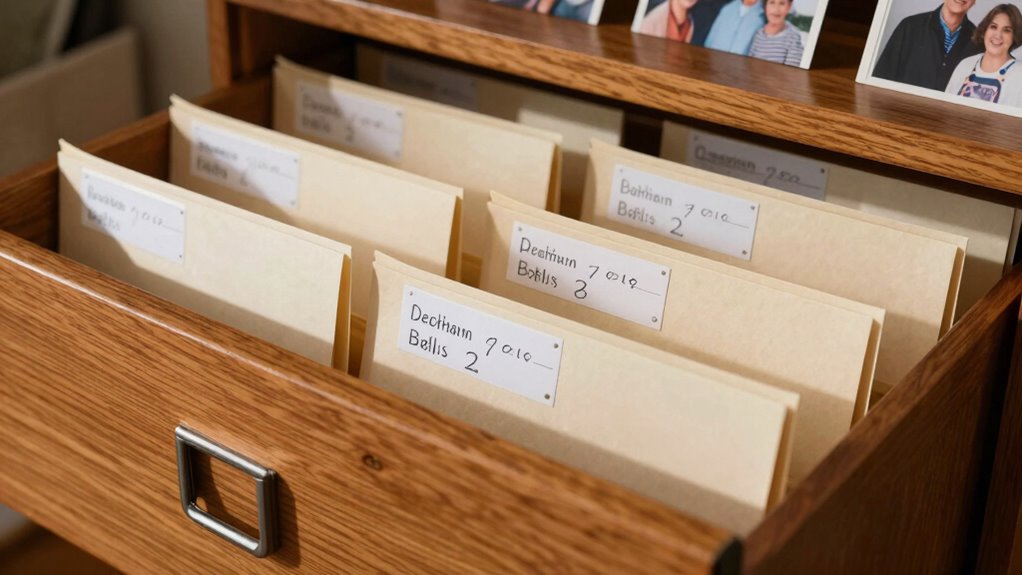

Properly labeling your family history files is key to staying organized and making record retrieval easier. Use consistent formats with clear details like names, dates, and document types, whether digital or physical. Neat, visible labels help prevent misfiling and save time, while logical structures improve efficiency. Small labeling choices directly affect how smoothly your genealogical research flows. Keep exploring to discover more tips that can make your organization even more effective.

Get art and craft supplies delivered free with Prime
- Fast, free delivery on millions of items
- Prime Video, Amazon Music and more included
- Member-only deals all year
Key Takeaways
- Consistent labeling enhances file organization, making it easier to locate and retrieve family history documents quickly.
- Clear labels prevent misfiling, reducing time spent searching for specific records.
- Using standardized formats ensures uniformity, simplifying both digital and physical file management.
- Well-designed labels improve readability, especially over time, maintaining the archive’s clarity.
- Small labeling choices, like font and label placement, significantly impact overall efficiency and accuracy.
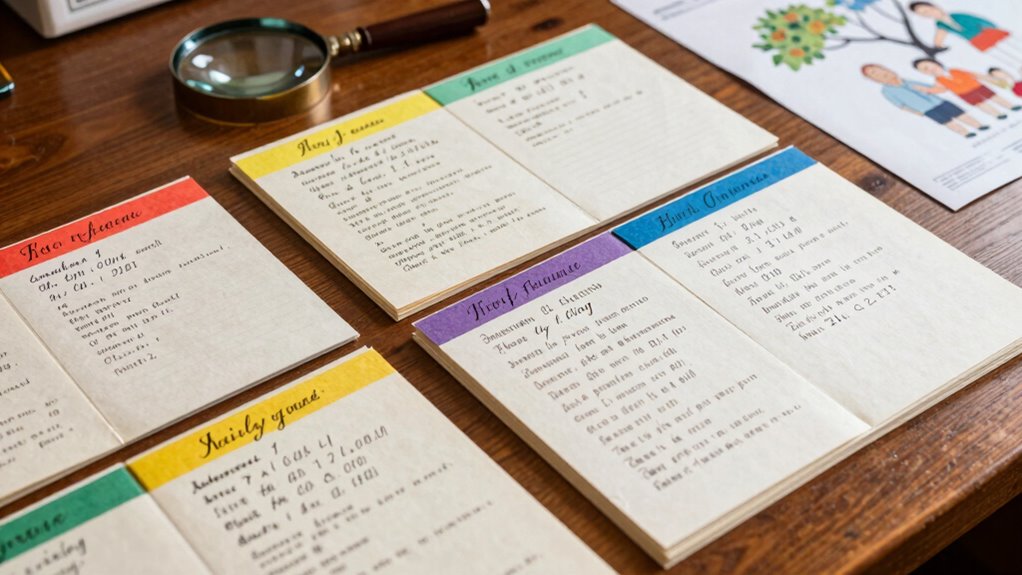
Organizing your family history files starts with clear and consistent labeling. This initial step might seem simple, but it’s crucial for effective genealogical organization. When you label files correctly, you save yourself time and frustration down the line. Whether you’re working with digital files or physical documents, the goal is to create a system that’s easy to understand and maintain. Digital vs. physical labeling presents different challenges and opportunities. Digital files allow for quick edits, search functions, and backups, but they still need a logical structure. Physical files, on the other hand, rely on clear, visible labels that stand out and won’t fade over time.
For digital genealogical organization, you want labels that are descriptive yet concise. Think about including key details like names, dates, or document types directly in the file name. For example, “Smith_Jane_1850MarriageCert” instantly tells you what’s inside. Use standardized formats for consistency, such as “LastName_FirstName_Event_Year,” so your files sort alphabetically and chronologically. This makes searching and sorting effortless. When it comes to physical labeling, sturdy, legible labels or file tabs are essential. You might opt for printed labels or handwritten ones that are clear and uniform. Keep your handwriting neat, or better yet, invest in a label maker for professional-looking results. The most important part is that labels are easy to read at a glance and won’t smudge or peel.
Consistency is the key in both digital and physical labeling. Decide on a format and stick to it. For instance, always use the same order of information—name, event, date—so your files form a logical, predictable system. This consistency helps you locate documents quickly and reduces the risk of misfiling. Think about your workflow: if you’re frequently updating files or adding new ones, develop a naming scheme that’s flexible enough to accommodate growth. Proper labeling systems can also incorporate the use of solar-powered devices or tools to help organize large collections more efficiently, especially when working in outdoor or off-grid settings. Additionally, understanding the importance of contrast ratio can help you design physical labels that are highly visible and easy to distinguish in various lighting conditions. Incorporating digital tools that support file organization can further streamline your process and keep your archive well-structured over time. Moreover, adopting a consistent filing method can greatly enhance your efficiency and make retrieval even more straightforward.
In the end, the small choice of how you label your family history files can have a significant impact. Well-labeled files boost efficiency, improve accuracy, and keep your genealogical journey on track. Whether you’re organizing digitally or physically, clear and consistent labels turn a chaotic collection into a manageable, accessible archive. Remember, good labeling isn’t just about aesthetics; it’s about creating a system that works for you now and in the future. With a little effort upfront, you’ll find your family history far easier to explore and share.
As an affiliate, we earn on qualifying purchases.
Frequently Asked Questions
What Are the Best Tools for Digital Family History File Labeling?
You should consider tools like Evernote, OneNote, or Trello for digital family history file labeling. These platforms excel in digital tagging and cloud organization, helping you categorize and access files easily. They allow you to add tags, notes, and labels, making retrieval straightforward. Using cloud-based tools guarantees your data stays safe and synchronized across devices, streamlining your family history research and management process effectively.
How Often Should I Update My Family History Labels?
You should update your family history labels whenever you add new information or discover inaccuracies, maintaining genealogical consistency. Regular updates guarantee labels follow your established labeling conventions, making files easier to find and understand. Set a routine review schedule—like every few months—to keep everything current. Staying consistent with your labeling conventions helps preserve clarity across your family history collection, preventing confusion as your research grows.
Can Labeling Improve Collaboration With Other Family Researchers?
Picture your family history files as a well-organized garden, each label a guiding signpost. Clear labels sharpen family collaboration, helping everyone find their way through the research maze. When you label consistently, research efficiency blooms, sparking smooth sharing and fewer misunderstandings. You become the gardener nurturing a thriving, interconnected family tree, where everyone can easily add, access, and grow their knowledge together with confidence and clarity.
Are There Common Mistakes to Avoid When Labeling Files?
You should avoid common mistakes like inconsistent label formats and unclear names, which can cause confusion later. Stick to clear, simple file naming conventions and maintain label consistency across all your files. Don’t use vague abbreviations or duplicate labels. Regularly review and update your labels to guarantee clarity. This approach helps you find information quickly, enhances collaboration, and keeps your family history organized efficiently.
How Do Labels Help in Preserving Fragile Paper Records?
Think of labels as gentle guardians for your delicate archival materials. They guide you through the maze of fragile paper records, helping preserve their story without causing harm. Proper labeling guarantees you can quickly locate essential documents, reducing handling and wear. Using preservation techniques in your labels, like acid-free paper and archival ink, keeps these treasured records safe from deterioration, ensuring their legacy endures for generations to come.
As an affiliate, we earn on qualifying purchases.
Conclusion
By giving each family history file a clear, consistent label, you’re planting a seed for future generations to nurture. Your careful choices create a well-tended garden where stories and memories can flourish, easily found and cherished. Remember, small touches today can bloom into a legacy of love and understanding tomorrow. So, take a moment to label thoughtfully—your effort will help your family’s roots grow strong and deep, guiding those who come after you.
As an affiliate, we earn on qualifying purchases.
genealogy record organization tools
As an affiliate, we earn on qualifying purchases.
As an affiliate, we earn on qualifying purchases.
Fall Picks
fall essentials
As an affiliate, we earn on qualifying purchases.