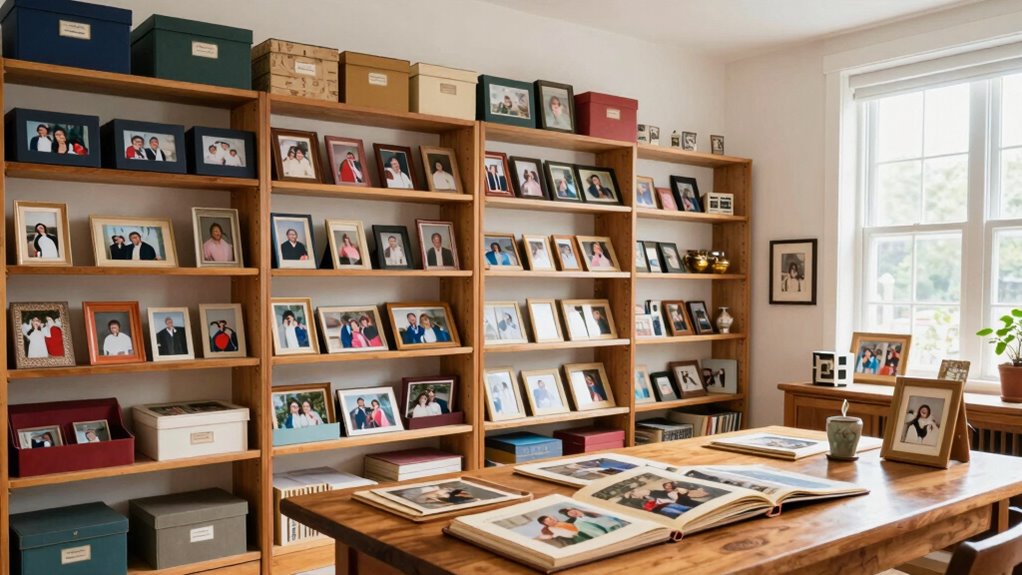

To organize your family archives easily, start by evaluating all your items and deciding what’s worth keeping based on significance and condition. Categorize physical items with labeled boxes or folders, and create a clear digital folder structure for your files. Invest in archival storage and back up digital copies regularly. Keep everything updated and involve family members in the process to make sharing easier. Keep going, and you’ll discover even more tips to turn chaos into a cherished family legacy.

Get art and craft supplies delivered free — and shop member deals
- Fast, free delivery on millions of items
- Access to Prime Big Deal Days deals on October 6–7
- Prime Video, Amazon Music and more included
Key Takeaways
- Categorize and label physical items and digital files for quick identification and retrieval.
- Use archival-quality storage solutions to protect fragile family memorabilia.
- Create a centralized digital folder structure for easy access and organization.
- Regularly back up digital archives and update physical storage as collections grow.
- Involve family members in organizing and sharing to foster collective preservation efforts.

Organizing family archives might seem overwhelming at first, but with a clear plan, you can transform clutter into a cherished collection. The first step is to assess what you have—photos, documents, videos, mementos—and decide what’s worth keeping. Digital preservation is key here; scanning old photos and documents creates digital copies that are easier to store, share, and protect from physical deterioration. You want to safeguard your family history against fires, floods, or simple decay, so investing in reliable storage solutions becomes essential. External hard drives, cloud storage, or specialized digital archive services offer secure options for storing high-resolution images, videos, and important files. Using a combination of these guarantees your digital collection remains accessible and safe over time.
Start by assessing your family items and prioritize digital preservation to safeguard memories from physical damage and loss.
Next, categorize your materials in a way that makes sense to you—by family branches, chronological order, or event type. This step simplifies the process of locating specific items later on. When it comes to physical items, use labeled folders, boxes, or binders to keep everything organized. Clear labels are your best friend; they help you quickly find what you need without sifting through piles. For digital files, establish a consistent naming system—think date, event, or subject—to streamline searches. Creating a centralized digital folder structure on your computer or cloud service helps keep everything tidy and easy to back up regularly. Additionally, understanding digital preservation techniques can significantly extend the lifespan of your digital files and ensure long-term accessibility. Incorporating metadata management practices can further improve the organization and searchability of your digital collection.
Once you’ve sorted and categorized your materials, establish a routine for maintaining the archive. Regularly scan new items, update your digital files, and re-evaluate physical storage as your collection grows. Consider investing in archival-quality storage solutions like acid-free boxes and sleeves for physical items to prevent deterioration. For digital preservation, ensure you have multiple backups—preferably in different locations—to minimize the risk of data loss. Cloud services can automate this process, providing peace of mind that your family history remains intact. Additionally, digitize handwritten notes or letters to preserve their content and make them easier to share with family members.
Finally, involve family members in the process. Share digital copies, invite input on organization methods, and encourage everyone to contribute their memories. This shared effort not only lightens your workload but also helps keep the family history alive. By combining thoughtful organization, smart storage solutions, and digital preservation techniques, you turn an overwhelming collection into a well-preserved family legacy. Not only does this clear the clutter from your space, but it also creates a meaningful, accessible archive that can be enjoyed for generations.
archival quality storage boxes for photos
As an affiliate, we earn on qualifying purchases.
As an affiliate, we earn on qualifying purchases.
Frequently Asked Questions
What Are the Best Digital Tools for Archiving Family Photos?
You should consider using digital tools like Google Photos, Adobe Lightroom, or Apple Photos for archiving family photos. These platforms offer reliable digital storage and excellent photo organization features, making it easy to categorize, search, and share memories. Cloud-based options guarantee your images stay safe and accessible from anywhere. By choosing the right tool, you simplify your archiving process and keep your family history beautifully organized for years to come.
How Often Should I Update My Family Archive System?
You should update your family archive system at least once a year to guarantee preservation techniques and storage solutions stay effective. Regular updates prevent deterioration of physical items and keep digital files organized. Overcoming the fear of constant upkeep, remember that small, consistent efforts preserve family memories better than infrequent, large overhauls. Staying proactive helps you maintain a well-organized archive that’s easily accessible and protected for future generations.
What Should I Do With Fragile or Damaged Items?
You should handle fragile or damaged items with care, starting with a damage assessment to determine their condition. For fragile preservation, use acid-free materials and gentle supports to prevent further harm. If items are severely damaged, consider consulting a professional conservator for repair or stabilization. Always store these items in a stable, low-humidity environment to slow deterioration and guarantee they’re protected for future generations.
How Can I Involve Children in Organizing Family Archives?
Get children involved by making organizing a fun adventure—it’s a win-win. Use simple organizing tips, like sorting photos into labeled albums or choosing special items to display. Let them decide on categories or create themed folders. This way, they feel part of the process and learn organization skills early on. Remember, turning the task into a game helps keep their interest alive and makes the experience enjoyable for everyone.
What Legal Considerations Are There for Preserving Family Documents?
When preserving family documents, you need to ensure estate planning and privacy concerns. Take into account sensitive materials, like wills or financial records, are stored securely and only shared with trusted individuals. It’s wise to consult a legal professional to understand the best ways to handle these documents, especially if they’re part of estate planning. Protecting privacy and complying with legal requirements keeps your family’s history safe and properly managed.
digital photo scanner with high resolution
As an affiliate, we earn on qualifying purchases.
As an affiliate, we earn on qualifying purchases.
Conclusion
By taking these simple steps to organize your family archives, you’ll create a more inviting and manageable space. Not only does this reduce clutter, but it also guarantees your family’s history is preserved for generations. Did you know that 70% of family historians find it challenging to locate specific documents? Tackling this task now means less stress later and a richer connection to your family’s story—so start organizing today and enjoy the benefits!
external hard drive for digital archives
As an affiliate, we earn on qualifying purchases.
As an affiliate, we earn on qualifying purchases.
labeled storage folders for documents
As an affiliate, we earn on qualifying purchases.
As an affiliate, we earn on qualifying purchases.
Fall Picks
fall essentials
As an affiliate, we earn on qualifying purchases.