

Jane Austen combines sharp wit, heartfelt romance, and keen social observations to reveal the complexities of Regency England’s rigid class system and gender roles. She skillfully uses irony and dialogue to critique societal pretensions while exploring themes of love, morality, and personal integrity. Her stories show how characters navigate societal expectations and social constraints, often challenging boundaries with humor. If you want a deeper understanding of Austen’s clever critique and timeless themes, stay with us to explore more.
Key Takeaways
- Jane Austen’s novels masterfully blend sharp wit and irony to critique Regency social pretensions and highlight human virtues.
- Her stories explore romance within the constraints of Regency England’s rigid social hierarchy.
- Austen’s use of dialogue and humor reveals societal hypocrisies while celebrating genuine affection.
- Themes of social class, marriage, and morality underscore her witty dissections of Regency society.
- Her enduring legacy lies in her insightful portrayal of love, virtue, and societal norms with intelligence and humor.
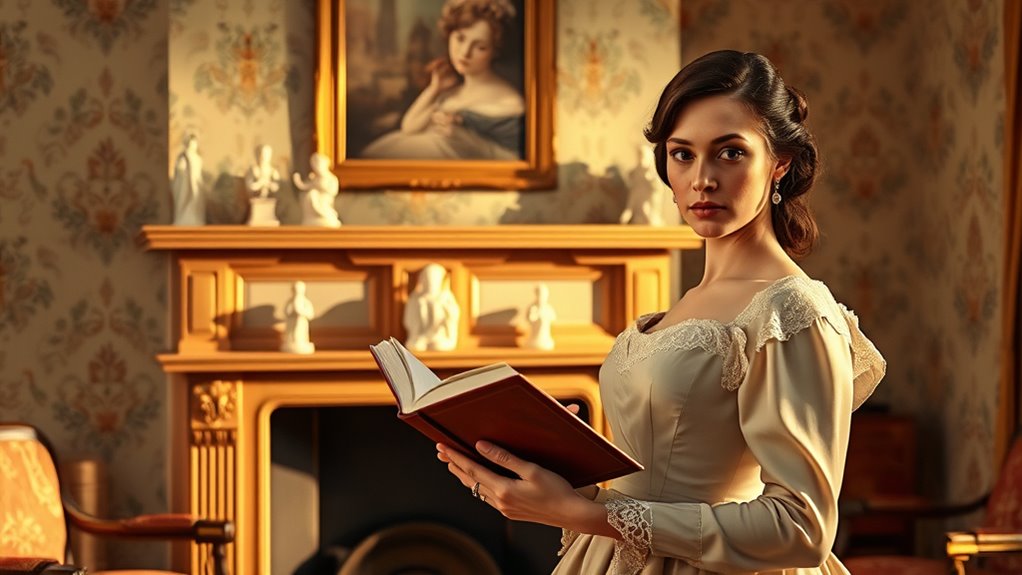
Jane Austen, renowned for her sharp wit and keen insights into society, remains one of the most celebrated authors of English literature. When you explore her novels, you’ll quickly notice how she masterfully explores social class and literary themes that resonate across centuries. Austen’s stories often revolve around characters maneuvering the rigid social hierarchies of Regency England, revealing how social class influences relationships, ambitions, and personal happiness. You’re drawn into a world where marriage isn’t just about love but also about social standing, wealth, and status. Austen exposes the often superficial nature of these societal distinctions, prompting you to reflect on how social class shapes individual choices and societal expectations.
Through her clever use of dialogue and irony, Austen invites you to question the values and pretenses of her time. Her literary themes extend beyond social class, touching on issues like morality, virtue, and the pursuit of happiness. As you read her works, you realize she isn’t merely telling romantic tales; she’s dissecting human nature and societal norms with a sharp eye. Austen’s characters often grapple with the tension between genuine affection and societal pressure, making her stories both entertaining and thought-provoking. You’ll find that her novels are rich with commentary on the importance of integrity and the dangers of vanity or superficiality.
Austen’s keen observations about social mobility and the limitations placed on women reflect her understanding of the societal constraints of her era. She presents characters who challenge these boundaries, subtly advocating for personal integrity over societal expectations. As you explore her novels, you see how she uses humor and irony to critique social pretensions and to highlight the importance of authenticity. Her stories often feature heroines who, despite societal pressures, seek to find happiness on their own terms, emphasizing individual agency amidst social constraints.
In essence, Austen’s works remain relevant because of her ability to weave social class and literary themes seamlessly into compelling narratives. You’re encouraged to look beyond the surface, recognizing the deeper critiques embedded in her stories. Her keen insights into human behavior and society continue to inspire readers today, reminding you that, beneath the veneer of social hierarchy, universal themes of love, morality, and personal growth endure. Austen’s legacy endures because she captures the complexities of social life and human nature with wit, intelligence, and a touch of humor that still resonates with modern audiences.
Frequently Asked Questions
Did Jane Austen Ever Experience Romantic Relationships Herself?
Yes, you learn that Jane Austen did experience romantic relationships herself. Though she never married, her personal relationships with family and friends deeply influenced her understanding of love and romance. Her experiences with courtship, social class, and marriage likely shaped her witty, insightful portrayal of romantic experiences in her novels. You can see her personal insights reflected in her stories about love, societal expectations, and personal relationships.
How Did Austen’s Personal Life Influence Her Novels?
You might be surprised to learn that Austen’s personal experiences deeply shaped her novels. A chance encounter with love, heartbreak, or social observation sparked her literary inspiration and added authenticity to her characters’ relationships. Her own romantic disappointments and societal observations provided insight into courtship and manners, making her stories resonate. So, your own experiences could similarly influence your creativity, just as Austen’s did for her timeless works.
Were Austen’s Works Popular During Her Lifetime?
During her lifetime, Jane Austen’s works gained notable literary popularity, though she wasn’t widely celebrated as a famous author initially. Readers appreciated her sharp wit and keen social observations, leading to positive reader reception. While her novels weren’t blockbuster hits right away, they gradually built a dedicated following, and her reputation grew posthumously. Today, her influence endures, but during her lifetime, her literary popularity was steady, if not extraordinary.
What Were Austen’s Hobbies Besides Writing?
You might be surprised to learn that besides her notable literary pursuits, Jane Austen enjoyed engaging in social activities with friends and family. She often attended gatherings, which inspired her storytelling and character development. Austen also loved reading and music, enriching her creative life. These hobbies allowed her to stay connected with her community and gather inspiration, helping her craft the witty, romantic novels that continue to charm readers today.
How Has Austen’s Legacy Impacted Modern Literature?
Her legacy notably impacts modern literature through her literary influence and timeless themes. You see her work echoed in contemporary novels, movies, and TV adaptations, which often draw on her sharp wit and nuanced characters. Austen’s storytelling techniques and social commentary inspire writers today, shaping how romance and societal critique are portrayed. Her enduring relevance ensures her influence continues, making her a key figure in both classic and modern literary landscapes.
Conclusion
As you reflect on Jane Austen’s timeless wit and romance, remember that “a picture is worth a thousand words.” Her stories remind you that love, society, and cleverness never go out of style. By immersing yourself in her Regency England, you see that true charm lies in authenticity and understanding. So, keep her words close—because sometimes, the simplest truths hold the greatest beauty, guiding you through life’s most charming moments.