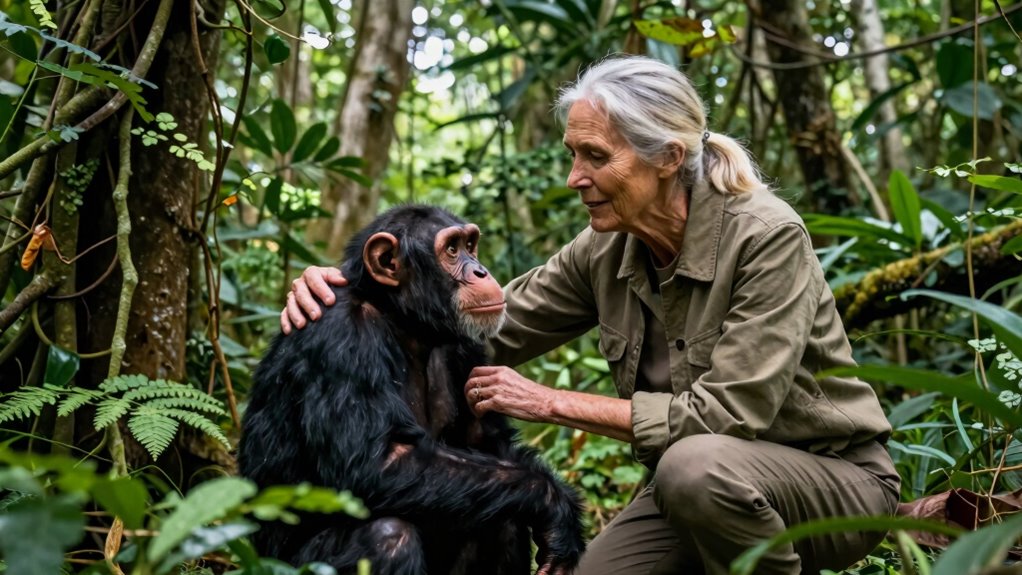

Jane Goodall revolutionized animal science by conducting immersive, ethical research on wild chimpanzees in Tanzania. She built trust through respectful observation, revealing their complex social structures, emotional bonds, and tool use—challenging ideas about animal intelligence. Her work shifted focus to habitat protection and conservation, inspiring global efforts. If you explore further, you’ll discover how her compassion and dedication continue to influence wildlife understanding and preservation today.

Get art and craft supplies delivered free with Prime
- Fast, free delivery on millions of items
- Prime Video, Amazon Music and more included
- Member-only deals all year
Key Takeaways
- Jane Goodall pioneered ethical, immersive research methods, transforming wildlife study practices and setting new standards for humane animal observation.
- She discovered complex social behaviors and tool use among chimpanzees, challenging human-centric views of intelligence.
- Her work emphasized habitat preservation, inspiring global conservation efforts and the creation of protected areas.
- Goodall advocates for ethical treatment of animals, promoting sustainable practices and community involvement worldwide.
- Her research and activism have reshaped societal perceptions of animals, fostering greater appreciation and responsibility for wildlife conservation.
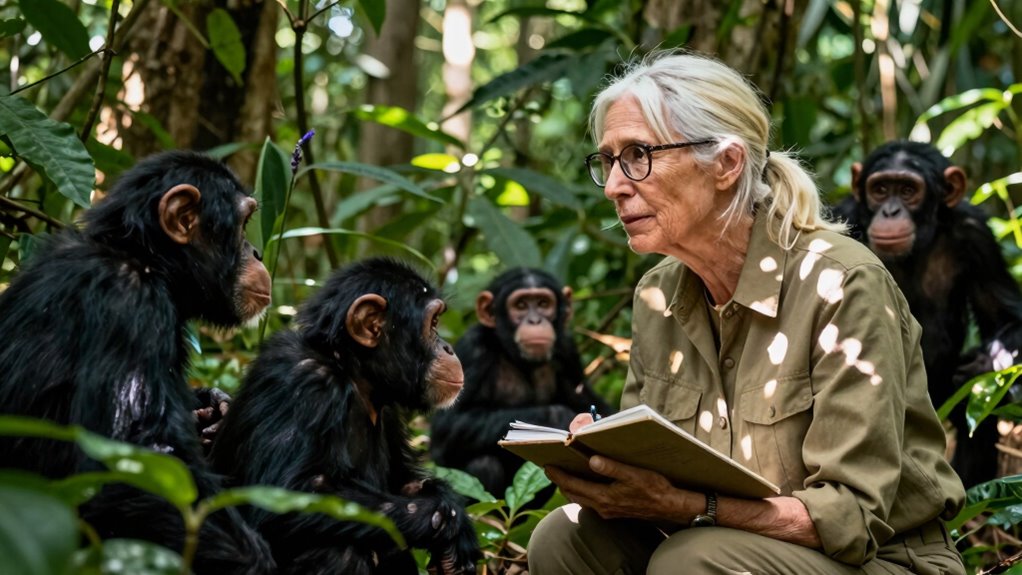
Jane Goodall revolutionized animal science by immersing herself in the wilds of Tanzania to study chimpanzees firsthand. As you follow her journey, you realize how her dedication transformed the way we view animals and their environments. She didn’t just observe from a distance; she built trust with these intelligent creatures, gaining insights that changed scientific understanding forever. Her approach emphasized ethical treatment—recognizing the importance of respecting animals’ natural behaviors and habitats. This focus on humane research set new standards for how scientists work with wildlife, shifting away from invasive techniques toward more compassionate methods.
Through her groundbreaking work, you see how Goodall’s observations revealed complex social structures, emotional bonds, and even tool use among chimpanzees. These discoveries challenged previous notions that humans were the only species capable of such behaviors. Her findings didn’t just expand scientific knowledge—they fostered a broader appreciation for animal intelligence and sentience. As you learn about her efforts, you understand how she became a passionate advocate for conservation efforts. She realized that protecting these animals meant safeguarding their habitats from deforestation, poaching, and other threats. Her work inspired a global movement to conserve not only chimpanzees but entire ecosystems that support biodiversity.
Goodall’s influence extends beyond her research. She actively promotes ethical treatment of animals, emphasizing that humans have a moral responsibility to protect wildlife. Her advocacy urges governments, organizations, and individuals to prioritize conservation efforts and adopt sustainable practices. You see how her dedication has led to the creation of protected areas and wildlife reserves, ensuring that future generations can witness these remarkable creatures in their natural environments. Her work also highlights the importance of community involvement and education, making conservation a shared goal.
As you consider her legacy, it’s clear that Jane Goodall didn’t just study animals—she transformed how society perceives and interacts with the natural world. Her commitment to ethical treatment and conservation efforts continues to inspire millions worldwide. Whether through her research, advocacy, or educational programs, she demonstrates that positive change begins with understanding and respect. Her life’s work proves that scientific curiosity and compassion can go hand in hand, fostering a more humane and sustainable relationship with the planet’s wildlife. In the end, Jane Goodall’s influence reminds you that protecting animals and their habitats is an essential part of preserving the rich diversity of life on Earth.
chimpanzee observation binoculars
As an affiliate, we earn on qualifying purchases.
As an affiliate, we earn on qualifying purchases.
Frequently Asked Questions
What Inspired Jane Goodall to Study Primates Initially?
You’re inspired to study primates because of your scientific curiosity about their behavior and social structures. Watching documentaries and reading about animal intelligence sparks your interest, making you want to observe primates firsthand. You feel a strong desire to understand how they live, interact, and communicate, which fuels your passion. This curiosity motivates you to dedicate your efforts to uncovering the complexities of primates’ behavior and their natural environments.
How Did Goodall’s Methods Differ From Previous Animal Research?
You’ll be fascinated to know that Jane Goodall’s approach revolutionized primate research. She focused on behavioral observation, spending years closely studying chimpanzee behavior in their natural habitat. Unlike earlier methods, she prioritized ethical considerations, avoiding captivity and interference. This hands-on, respectful approach allowed her to gather genuine insights, transforming how scientists understand animal intelligence and social structures, and inspiring a new era of compassionate, ethical research practices.
What Challenges Did She Face as a Female Scientist in Africa?
As a female scientist in Africa, you faced significant gender barriers and cultural obstacles that often questioned your credibility and authority. You had to work harder to gain respect from local communities and colleagues, overcoming stereotypes that women couldn’t succeed in scientific fields. Despite these challenges, your perseverance and dedication allowed you to break through societal expectations, paving the way for future generations of women in science.
How Has Goodall’s Work Impacted Conservation Policies Worldwide?
Goodall’s work has profoundly impacted conservation policies worldwide by emphasizing ethical implications in animal research. You see, her groundbreaking observations led to policy reforms that prioritize animal welfare and habitat preservation. Her advocacy inspires you to support sustainable practices, influencing governments and organizations to enact stricter laws. This shift guarantees that conservation efforts are more humane and effective, ultimately fostering a global commitment to protecting endangered species and their environments.
What Are Jane Goodall’s Current Projects and Initiatives?
You’re likely inspired by Jane Goodall’s ongoing dedication to primates conservation and ethical research. Currently, she leads the Jane Goodall Institute, focusing on protecting chimpanzees and their habitats worldwide. She also promotes youth education and environmental awareness through programs like Roots & Shoots. Her work continues to emphasize sustainable practices, ensuring future generations can appreciate these remarkable creatures while advancing science responsibly.
ethical wildlife research camera
As an affiliate, we earn on qualifying purchases.
As an affiliate, we earn on qualifying purchases.
Conclusion
You now hold the key to understanding how Jane Goodall’s unwavering curiosity and compassion transformed our view of animals. Her groundbreaking work planted seeds of empathy that continue to grow, blossoming into a forest of knowledge and hope. Just as a single drop ripples across a pond, her discoveries ripple through time, forever altering the landscape of animal science. You’re invited to carry her legacy forward, nurturing the fragile balance of life on Earth.
As an affiliate, we earn on qualifying purchases.
wildlife conservation educational kit
As an affiliate, we earn on qualifying purchases.
As an affiliate, we earn on qualifying purchases.
Halloween Picks
halloween
As an affiliate, we earn on qualifying purchases.