Simón Bolívar, known as the Liberator of South America, dreamed of more than just independence; he envisioned uniting the continent with shared ideals of liberty, justice, and brotherhood. He aimed to break down colonial social hierarchies and foster a society rooted in equality and cultural identity. Bolívar’s forward-thinking emphasized innovation and the use of modern ideas to shape a future where borders wouldn’t limit collective progress. Stay with us to discover how his vision still influences today’s efforts for unity.

Get art and craft supplies delivered free with Prime
- Fast, free delivery on millions of items
- Prime Video, Amazon Music and more included
- Member-only deals all year
Key Takeaways
- Bolívar envisioned a united South America built on liberty, justice, and brotherhood, transcending colonial borders.
- He aimed to dismantle colonial social hierarchies and promote equality and self-determination.
- Bolívar emphasized cultural identity and diversity to foster continental unity.
- His revolutionary ideals focused on overcoming borders through collective effort and societal transformation.
- Modern technology and innovation align with Bolívar’s forward-thinking approach to societal progress.
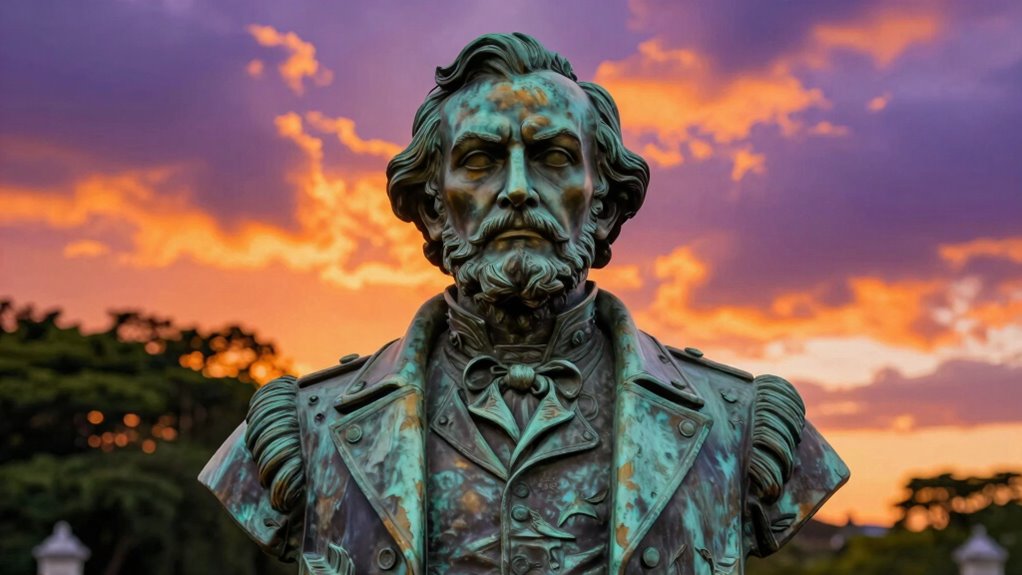
Few figures in history have dreamed as ambitiously as Simón Bolívar, the man known as the Liberator of South America. You might see him as a symbol of independence, but his vision extended far beyond freeing colonies from colonial legacy. Bolívar believed in transcending borders and uniting diverse peoples under a shared revolutionary ideal. His leadership was fueled by a deep conviction that independence was just the start; his goal was to forge a unified continent where freedom and equality thrived. You can imagine how revolutionary ideals motivated him—values like liberty, justice, and brotherhood weren’t just abstract concepts, but the foundation of his entire mission.
Simón Bolívar envisioned a united continent built on liberty, justice, and brotherhood beyond colonial borders.
Bolívar’s understanding of colonial legacy shaped his relentless pursuit of independence. He saw how centuries of Spanish rule had imposed social hierarchies, suppressed local cultures, and kept the region in economic and political subservience. This legacy created divisions and hindered progress, but Bolívar was determined to dismantle it. He envisioned a future where Latin American nations would no longer be shackled by colonial attitudes or external domination. Instead, they’d be united by common goals, shared history, and a collective sense of purpose. His revolutionary ideals weren’t just about ending colonial rule—they aimed to build a new society rooted in equality and self-determination. Recognizing the importance of social transformation in shaping future societies, Bolívar emphasized the need for comprehensive reforms that would promote lasting change. Additionally, Bolívar believed that embracing cultural identity was essential for fostering genuine unity among diverse populations. He understood that cultural diversity was a strength that could help reinforce a shared continental identity.
As you follow Bolívar’s journey, you notice how he constantly grappled with the challenge of translating lofty ideals into tangible change. He believed that true independence meant more than just throwing off foreign rule; it required reshaping societal structures and fostering a sense of continental unity. His efforts to rally diverse regions—Venezuela, Colombia, Ecuador, Peru, and Bolivia—stemmed from this belief. Bolívar didn’t see borders as fixed lines but as obstacles to be overcome through shared vision and collective effort. His dream was a continent where revolutionary ideals would serve as guiding principles for progress, rather than divisions. Recognizing the importance of digital concepts in shaping future societies, Bolívar’s emphasis on innovation and adaptation remains relevant today. This forward-thinking approach highlights how visionary leaders can utilize modern technologies to advance social and political change.
As an affiliate, we earn on qualifying purchases.
Frequently Asked Questions
What Was Bolívar’s Favorite Personal Hobby?
You might be surprised to learn Bolívar’s favorite personal hobby was horseback riding. His leisure activities often centered around riding, which he found both relaxing and inspiring. It allowed him to connect with his personal interests in nature and freedom, reflecting his passion for the outdoors. Riding also helped him clear his mind during stressful times, making it an essential part of his daily routine and a way to recharge his spirit.
Did Bolívar Ever Face Exile Outside Latin America?
Imagine Bolívar, the hero of Latin America, facing exile outside his homeland. He did experience exile, especially fleeing to Haiti and Jamaica after political setbacks. These exile experiences exposed him to foreign influences, shaping his revolutionary ideas. Though he struggled with displacement, Bolívar’s resilience fueled his resolve to free his continent. His time in exile was tough but ultimately strengthened his vision of a united Latin America.
How Did Bolívar’s Childhood Influence His Leadership?
Your childhood shaped Bolívar’s leadership through childhood resilience and formative experiences. Growing up amid political upheaval, he learned to adapt and persevere, fueling his resolve for independence. Witnessing injustice and inequality firsthand inspired his passion for freedom and justice. These early challenges strengthened his determination, helping him rally others and lead revolutionary movements. His childhood resilience and formative experiences laid the foundation for a visionary leader committed to Latin American liberation.
What Were Bolívar’s Views on Indigenous Peoples?
You learn that Bolívar believed in respecting indigenous rights and recognized their importance in society. He thought they should be included in nation-building, not marginalized through cultural assimilation. Bolívar advocated for equality and justice, aiming to integrate indigenous peoples into the new republics. His views reflect a desire to honor their contributions and protect their cultures, emphasizing unity rather than erasure of indigenous identities.
Did Bolívar Have Any Secret Political Alliances?
Yes, Bolívar engaged in secret diplomacy and covert alliances to strengthen his political influence and achieve independence goals. He often kept these alliances hidden from rivals and the public, believing they were necessary for strategic gains. You’ll find that Bolívar’s use of covert diplomacy helped him navigate complex regional politics, but it also led to skepticism about his true intentions. His secret efforts shaped much of his success and legacy.
Latin American history documentary DVD
As an affiliate, we earn on qualifying purchases.
As an affiliate, we earn on qualifying purchases.
Conclusion
You stand at the crossroads of history, witnessing Bolívar’s dream, like a mighty river, flowing beyond borders, shaping nations. Imagine him, once crossing the Andes with unwavering resolve, turning obstacles into stepping stones. His vision, like a seed planted across continents, grew into the vast tapestry of independence. Just as a single spark ignites a wildfire, Bolívar’s daring spirit continues to inspire generations to believe that borders are meant to be challenged, not confined.
South American independence history book
As an affiliate, we earn on qualifying purchases.
As an affiliate, we earn on qualifying purchases.
Latin American cultural identity educational kit
As an affiliate, we earn on qualifying purchases.
As an affiliate, we earn on qualifying purchases.
Halloween Picks
halloween
As an affiliate, we earn on qualifying purchases.