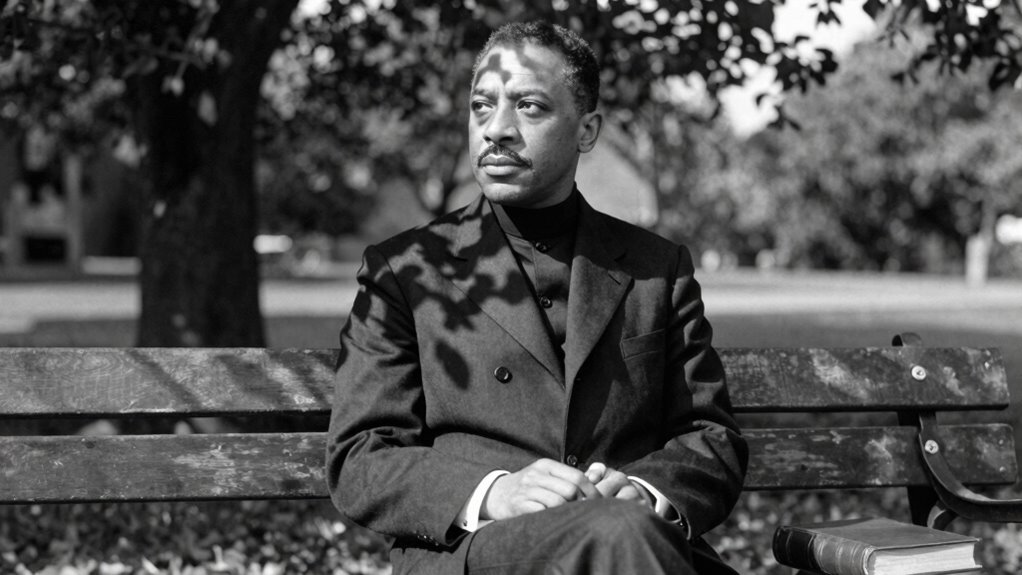
W.E.B. Du Bois was a visionary scholar-activist who recognized early on that education and awareness are key to dismantling systemic racism. You can see how he co-founded the NAACP and challenged societal norms to promote racial equality long before change took hold. His belief in the power of knowledge and activism helped shape civil rights efforts and inspired future generations. If you keep exploring, you’ll discover how his ideas continue to influence social justice today.
Key Takeaways
- W.E.B. Du Bois co-founded the NAACP, emphasizing collective action for racial justice and societal transformation.
- He combined scholarship with activism, advocating education as a tool for dismantling systemic barriers.
- Du Bois envisioned a future of racial equality through peaceful coexistence and structural societal change.
- His early advocacy for voting rights and economic opportunities highlighted his foresight into civil rights progress.
- Du Bois believed knowledge and persistent activism could drive societal progress and challenge ingrained racial prejudices.
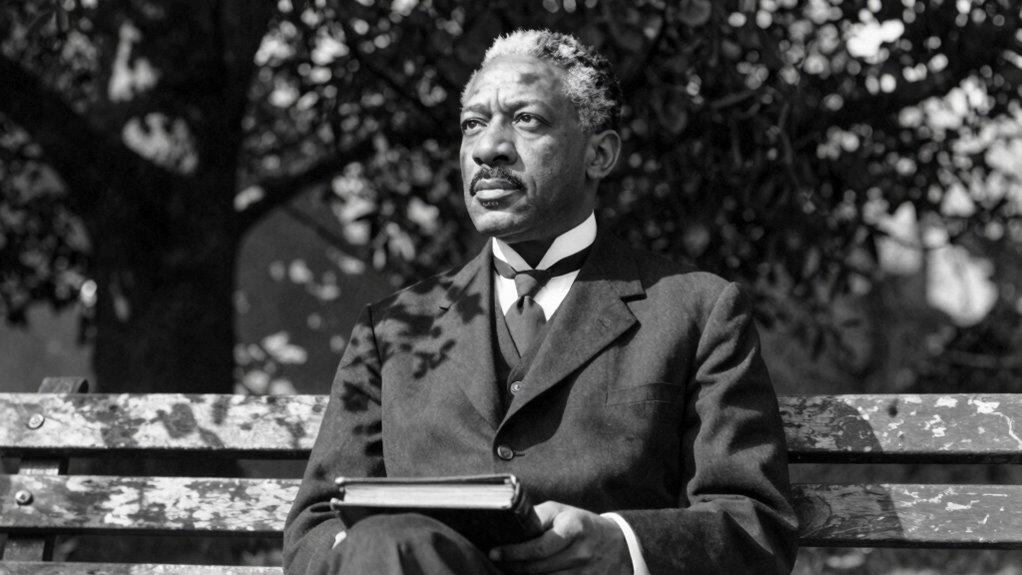
W.E.B. Du Bois was a visionary who understood the importance of fighting for racial equality and social justice long before many others saw the need. You might not realize it, but his efforts laid the groundwork for countless movements that followed. From his early writings to his leadership in the civil rights movement, Du Bois consistently pushed for a future where every person is treated with dignity and fairness, regardless of race. You can consider him a pioneer who believed that knowledge and activism are powerful tools for change. His work challenged the status quo, inspiring those who wanted a more just and equitable society.
W.E.B. Du Bois’s pioneering leadership laid the foundation for civil rights and social justice movements.
As you explore Du Bois’s life, you see how he blended scholarship with activism seamlessly. He didn’t just want to understand the problems; he aimed to solve them. His advocacy for racial equality wasn’t rooted in mere sentiment but in a deep belief that education and awareness could dismantle systemic barriers. You might find it striking that he emphasized the importance of higher education for African Americans, arguing that an educated leadership was essential for social progress. Du Bois believed that true social justice required confronting racial prejudice head-on, using facts and reason to dismantle stereotypes.
Du Bois saw the future early—he understood that racial injustice was deeply ingrained in American society, and he refused to accept it as inevitable. You’re encouraged to see his work as a call to action, urging people to challenge discrimination and fight for equal rights. His activism was not limited to speeches or writings; he organized and participated in movements that demanded change. He co-founded the NAACP, a bold step toward collective action for racial justice, recognizing that systemic change requires unity and persistent effort.
You should recognize that Du Bois’s ideas still resonate today because they speak to universal values of fairness and human dignity. His insistence on education, voting rights, and economic opportunity as means to achieve racial equality remains relevant. He understood that social justice isn’t just about individual acts but about transforming society’s structures. His vision was clear: a future where all races could coexist peacefully and equally. By studying Du Bois, you gain insight into the roots of civil rights struggles and the importance of unwavering dedication to justice. His legacy reminds you that change is possible when you act with purpose, knowledge, and a firm belief in a better future.

As an affiliate, we earn on qualifying purchases.
Frequently Asked Questions
What Were Du Bois’s Most Influential Publications?
You’ll find Du Bois’s most influential publications include “The Souls of Black Folk” and “The Philadelphia Negro,” which profoundly impacted academia and shaped civil rights thought. These works showcase his literary contributions and academic impact, emphasizing racial equality and social justice. His writings continue to inspire activists and scholars alike, highlighting his role as a pioneering scholar-activist who foresaw future struggles and opportunities for Black Americans.
How Did Du Bois Influence Modern Civil Rights Movements?
Like a beacon shining through fog, Du Bois’s ideas guide modern civil rights. You see his influence in fostering racial solidarity, uniting communities against injustice. His emphasis on educational reform empowers activism, inspiring movements to challenge inequality and demand change. By advocating for equal rights and education, you recognize how Du Bois’s legacy fuels ongoing efforts to create a fairer, more inclusive society today.
What Was Du Bois’s Relationship With Other Activists?
You see that Du Bois built strong relationships with other activists through academic collaborations and political alliances. He often collaborated with figures like Booker T. Washington, despite differences, to push for racial progress. His partnership with organizations like the NAACP strengthened civil rights efforts. Du Bois’s ability to forge these alliances helped shape a united front, making him a pivotal figure in advancing equality and inspiring future activism.
Did Du Bois Face Any Significant Opposition?
Yes, you’d find that Du Bois faced significant opposition, including academic resistance from some scholars who disagreed with his ideas. Politically, he encountered opposition from those who opposed his push for racial equality and activism, especially from segregationists and conservative groups. Despite this, Du Bois persisted, using his intellect and activism to challenge barriers and advocate for change, demonstrating resilience amidst resistance.
How Is Du Bois’s Legacy Viewed Today?
Your view of Du Bois’s legacy is that it’s as monumental as a mountain, shaping history and inspiring generations. Today, his historical perception is highly positive, recognizing him as a pioneering scholar-activist who fought tirelessly for civil rights. His contemporary influence remains profound—his ideas continue to inspire social justice movements, making him a symbol of resilience and vision. His enduring legacy cements his place as a true hero in American history.
The History of the Civil Rights Movement: A History Book for New Readers
As an affiliate, we earn on qualifying purchases.
As an affiliate, we earn on qualifying purchases.
Conclusion
You can see how W.E.B. Du Bois was truly ahead of his time, blending scholarly insight with activism to challenge injustice. His vision for equality, like a 21st-century social media strategist, predicted the power of collective voices shaping history. As you reflect on his legacy, remember that his pioneering spirit reminds us to stay vigilant and bold, even when the world seems stuck in a “stone age.” His foresight continues to inspire future changemakers.
As an affiliate, we earn on qualifying purchases.

Loerykt Social Justice Activism Stickers,50pcs Black Rights and Women's Rights & Equality Sticker, Social Worker Gifts Decal for Laptops, Water Bottles, Journals, Mobile Phone, Skateboard
- Premium Vinyl Material: Durable, waterproof, long-lasting stickers
- 50 Unique Winter Designs: Variety of snowmen, mittens, and more
- Great Gift Option: Perfect for birthdays, Christmas, and holidays
As an affiliate, we earn on qualifying purchases.
As an affiliate, we earn on qualifying purchases.