The best historical fiction cookbooks pair recipes with the people, settings, and customs that make the past feel tangible. Tasting History: Explore the Past Through 4,000 Years of Recipes stands out as the best overall pick for its broad historical scope, while The Jane Austen Recipe Book suits readers drawn to literary entertaining and The First American Cookbook offers a direct look at an early American source. The main tradeoff is between accessible modern adaptations and books that preserve more of the language or methods of their era. Some focus on a single period, while others range across centuries or center on storytelling. Continue reading for the full breakdown and help choosing the right book for your shelf and kitchen.

Get art and craft supplies delivered free with Prime
- Fast, free delivery on millions of items
- Prime Video, Amazon Music and more included
- Member-only deals all year
Key Takeaways
- Wide historical range sets the lead apart: Tasting History: Explore the Past Through 4,000 Years of Recipes spans more eras than the books focused on colonial America, the Gilded Age, or medieval cooking.
- Period specificity is a strength when it matches your interest: The Jane Austen Recipe Book and The Time Traveler’s Cookbook: 1920s America offer a more focused route into a particular literary world or decade.
- Primary-source appeal can mean more interpretation for the cook: The First American Cookbook reproduces an 1796 work, while modern-focused books are a more natural fit for readers who want contemporary kitchen guidance.
- History and usability are not the same thing: Books built around lore, stories, and historical context offer a different experience from practical guides such as The Medieval Cookbook: Medieval Recipes for Modern Kitchens.
- Two subjects appear in multiple editions or approaches: The Medieval Cookbook and its Revised Edition invite buyers to compare edition details, while the two Tasting History titles split broad historical exploration from recipes tied to calamities and conflict.
| A Taste of History Cookbook: The Flavors, Places, and People That Shaped American Cuisine |  | Best Broad American History Pick | Subject: American cuisine and its historical influences | Focus: Flavors, places, and people | Format: Not specified in provided product data | VIEW LATEST PRICE | See Our Full Breakdown |
| Revolutionary Recipes: Colonial Food, Lore, and More |  | Best for Colonial-Era Fiction | Subject: Colonial-era food and related lore | Historical focus: Colonial America | Content themes: Recipes, food, and lore | VIEW LATEST PRICE | See Our Full Breakdown |
| The Gilded Age Cookbook: Recipes and Stories from America’s Golden Era |  | Best for Gilded Age Settings | Subject: Recipes and stories from America’s Gilded Age | Historical focus: America’s Golden Era | Content: Recipes and stories | VIEW LATEST PRICE | See Our Full Breakdown |
| Lost Recipes of the American Revolution: Tales of Food & Freedom |  | Best for Revolution-Era Food History | Subject: Food and culinary traditions connected to the American Revolution | Historical focus: American Revolution | Content themes: Lost recipes, food, and freedom | VIEW LATEST PRICE | See Our Full Breakdown |
| Depression Era Recipes |  | Best for Depression-Era Cooking | Subject: Recipes from the Depression era | Historical focus: Depression era | Content: Recipe collection | VIEW LATEST PRICE | See Our Full Breakdown |
| The Time Traveler’s Cookbook: 1920s America |  | Best for Roaring Twenties Flavor | Subject: 1920s American cooking | Content: Recipes and historical stories | Style: Vintage American | VIEW LATEST PRICE | See Our Full Breakdown |
| The Jane Austen Recipe Book: Picnics, Feasts and Afternoon Teas Inspired by the Works of Jane Austen |  | Best for Austen-Inspired Gatherings | Product type: Recipe book | Inspiration: Works of Jane Austen | Occasions: Picnics, feasts, and afternoon teas | VIEW LATEST PRICE | See Our Full Breakdown |
| Tasting History: Explore the Past Through 4,000 Years of Recipes |  | Best for Broad Historical Range | Product type: Cookbook | Historical span: 4,000 years | Content: Recipes and food history | VIEW LATEST PRICE | See Our Full Breakdown |
| The First American Cookbook: A Facsimile of American Cookery (1796) |  | Best for Primary-Source Reading | Original publication year: 1796 | Format: Facsimile | Source work: American Cookery | VIEW LATEST PRICE | See Our Full Breakdown |
| All About History: Ultimate History Cookbook |  | Best for a Defined Recipe Selection | Number of recipes: 76 | Content: Historic recipes | Historical context: Explores origins of recipes that have survived for centuries | VIEW LATEST PRICE | See Our Full Breakdown |
| The Settlement Cook Book (1903) |  | Best for Early-20th-Century Food History | Title: The Settlement Cook Book (1903) | Publication year: 1903 | ASIN: 0486443493 | VIEW LATEST PRICE | See Our Full Breakdown |
| The Medieval Cookbook: Medieval Recipes for Modern Kitchens |  | Best for Medieval Cooking Beginners | Title: The Medieval Cookbook: Medieval Recipes for Modern Kitchens | ASIN: B0DNFD93JX | Product category: Cookbook | VIEW LATEST PRICE | See Our Full Breakdown |
| Tasting History: A Recipe for Disaster — Recipes from History’s Calamities, Catastrophes, and Conflicts |  | Best for History-and-Story Pairing | Title: Tasting History: A Recipe for Disaster — Recipes from History’s Calamities, Catastrophes, and Conflicts | ASIN: 1668046504 | Product type: Cookbook | VIEW LATEST PRICE | See Our Full Breakdown |
| The Medieval Cookbook: Revised Edition |  | Best for Readers Seeking a Revised Medieval Reference | Title: The Medieval Cookbook: Revised Edition | ASIN: 1606061097 | Edition: Revised edition | VIEW LATEST PRICE | See Our Full Breakdown |
| historical fiction cookbook | Format | Recipe count |
|---|---|---|
| A Taste of History Cookbook: T | Not specified in provided product data | Not specified in provided product data |
| Revolutionary Recipes: Colonia | Not specified in provided product data | Not specified in provided product data |
| The Gilded Age Cookbook: Recip | Not specified in provided product data | Not specified in provided product data |
| Lost Recipes of the American R | Not specified in provided product data | Not specified in provided product data |
| Depression Era Recipes | Not specified in provided product data | Not specified in provided product data |
| The Time Traveler’s Cookbook: | — | — |
| The Jane Austen Recipe Book: P | Not specified in the supplied product details | Not specified in the supplied product details |
| Tasting History: Explore the P | Not specified in the supplied product details | Not specified in the supplied product details |
| The First American Cookbook: A | Facsimile | Not specified in the supplied product details |
| All About History: Ultimate Hi | Not specified in the supplied product details | — |
| The Settlement Cook Book | — | — |
| The Medieval Cookbook: Medieva | — | — |
| Tasting History: A Recipe for | — | — |
| The Medieval Cookbook: Revised | — | — |
More Details on Our Top Picks
A Taste of History Cookbook: The Flavors, Places, and People That Shaped American Cuisine
A Taste of History Cookbook suits readers who want to connect American food with the people and places behind it, rather than stay within one era. Its wide historical framing gives it a broader role than The Gilded Age Cookbook, which centers on a single period, and makes it a useful companion for readers moving between historical novels set in different parts of the country. The title signals an emphasis on culinary context as well as recipes, a fit for readers who like background alongside cooking. The tradeoff is that the available details do not identify specific eras, recipe counts, or format, so buyers seeking a tightly focused period or a clearly documented set of recipes may prefer Revolutionary Recipes. I would choose this for breadth, not for a guaranteed deep treatment of any one historical moment.
Pros:- Frames American cuisine through people, places, and flavors
- Broad subject offers context for fiction set across multiple eras
- Combines historical themes with a cookbook premise
- Less period-specific than the Gilded Age and Revolution-focused options
Cons:- Available product details do not specify recipe count or historical periods covered
- No format, cooking guidance, or recipe-testing information is provided
- Its broad scope may offer less depth on a particular era than focused titles
Best for: Readers of American historical fiction who want food stories spanning different places and people rather than one narrowly defined era
Not ideal for: Cooks seeking a documented recipe count, a specific historical period, or confirmed details about format and recipe testing
- Subject:American cuisine and its historical influences
- Focus:Flavors, places, and people
- Format:Not specified in provided product data
- Recipe count:Not specified in provided product data
- Historical periods:Not specified in provided product data
- Publisher:Not specified in provided product data
Our verdict“Choose this if you want a wide-ranging American food-history companion, but pick a period-specific book if you need a defined setting.”
Revolutionary Recipes: Colonial Food, Lore, and More
Revolutionary Recipes is the most directly targeted choice here for readers whose novels are set in colonial America: its stated subject joins period food with lore, giving the historical setting a place alongside the cooking. That focus makes it a sharper match for colonial fiction than A Taste of History Cookbook, whose scope spans American flavors, places, and people. The inclusion of lore may appeal to readers who want cultural context rather than recipes alone. However, the provided description does not name recipes, explain the book’s format, or clarify how much space goes to food versus background. Readers wanting a wider range of American eras may find The Gilded Age Cookbook or the broad-ranging A Taste of History Cookbook a better fit. I’d select this for its colonial focus, not for confirmed cooking detail.
Pros:- Explicit colonial-era focus aligns with fiction set in early America
- Pairs food with lore rather than presenting a recipe-only premise
- More period-specific than A Taste of History Cookbook
- Relevant to readers interested in historical context around meals
Cons:- Provided details do not identify specific recipes or ingredients
- No information is supplied about format or cooking instructions
- Its narrow period focus may not suit readers seeking broader American food history
Best for: Readers of colonial and Revolutionary-era fiction who want a food-themed book that also signals historical lore
Not ideal for: Cooks looking for a clearly documented recipe selection, detailed format information, or coverage beyond colonial-era food
- Subject:Colonial-era food and related lore
- Historical focus:Colonial America
- Content themes:Recipes, food, and lore
- Format:Not specified in provided product data
- Recipe count:Not specified in provided product data
- Publisher:Not specified in provided product data
Our verdict“Pick this for colonial-era food and lore, but choose a broader title if your reading spans several American periods.”
The Gilded Age Cookbook: Recipes and Stories from America’s Golden Era
The Gilded Age Cookbook offers the clearest match for readers drawn to novels set in America’s late nineteenth-century “Golden Era”: both recipes and stories are part of its stated premise. Its bounded period gives it a more focused identity than A Taste of History Cookbook, which covers American cuisine through a wider lens, while its story component may appeal to readers who want social context alongside food. The narrower scope is also the main tradeoff. Someone seeking colonial meals or Depression-era cooking will need a different match, such as Revolutionary Recipes or Depression Era Recipes. The available description does not name dishes, explain the recipe approach, or specify format, so I’d treat this as a promising period companion rather than assume details beyond its stated focus.
Pros:- Clearly centers America’s Gilded Age
- States that it includes both recipes and stories
- Offers a more focused period match than A Taste of History Cookbook
- Its historical framing may complement fiction set in the era
Cons:- Limited to one broad historical period
- Provided details do not identify recipes or explain their historical treatment
- Format and recipe count are not supplied
Best for: Readers of Gilded Age historical fiction who want recipes paired with stories from the same American period
Not ideal for: Readers seeking colonial, Revolutionary, Depression-era, or cross-century coverage instead of a period-specific book
- Subject:Recipes and stories from America’s Gilded Age
- Historical focus:America’s Golden Era
- Content:Recipes and stories
- Format:Not specified in provided product data
- Recipe count:Not specified in provided product data
- Publisher:Not specified in provided product data
Our verdict“Choose this when your reading centers on Gilded Age America and you want stories as well as recipes.”
Lost Recipes of the American Revolution: Tales of Food & Freedom
Lost Recipes of the American Revolution is aimed squarely at readers curious about food traditions connected to the Revolution, with its title promising both culinary history and tales of freedom. Compared with Revolutionary Recipes, it shares the Revolution-era setting but presents a stronger emphasis on lost recipes and food traditions; the supplied description, however, does not confirm how those themes are developed. That makes it a natural choice for a reader pairing meals with Revolutionary-era fiction, but a less certain pick for someone prioritizing practical cooking instructions. A Taste of History Cookbook is the safer alternative for broader American context. Because no further details are available, I would not assume a recipe list, historical sources, or a particular format from the title alone.
Pros:- Directly connects its subject to the American Revolution
- Signals attention to food traditions and historical tales
- A distinct thematic match for Revolution-era fiction
- Offers a different framing from the colonial food-and-lore focus of Revolutionary Recipes
Cons:- Provided description does not identify any specific recipes
- No details explain sourcing, historical context, or cooking adaptations
- Format and recipe count are not provided
Best for: Readers of American Revolution fiction who are especially interested in food traditions and the stories attached to them
Not ideal for: Home cooks who need confirmed recipe details, clear preparation guidance, or a known book format before choosing
- Subject:Food and culinary traditions connected to the American Revolution
- Historical focus:American Revolution
- Content themes:Lost recipes, food, and freedom
- Format:Not specified in provided product data
- Recipe count:Not specified in provided product data
- Publisher:Not specified in provided product data
Our verdict“Choose this for a Revolution-centered food-history theme, but seek more product detail if practical recipe guidance is your priority.”
Depression Era Recipes
Depression Era Recipes is the most tightly defined choice for readers whose historical fiction centers on the Great Depression. Its premise is practical and era-specific: a collection of recipes from that period, rather than the broader food-and-place framing of A Taste of History Cookbook or the stories-and-recipes approach of The Gilded Age Cookbook. That directness makes it the easiest thematic match for someone exploring what people cooked during hard times. The limitation is equally clear: the supplied description gives no sample dishes, context about scarcity or household life, or details about modern preparation. Readers seeking a narrative-rich account may prefer a title that explicitly includes stories or lore. I’d choose this for its defined period, while treating the depth and format as unknown until confirmed.
Pros:- Clearly focuses on Depression-era dishes
- Provides a direct thematic match for fiction set during the Great Depression
- More period-specific than A Taste of History Cookbook
- Recipe-centered premise distinguishes it from titles that foreground stories and lore
Cons:- Provided description offers no examples of recipes or ingredients
- Historical commentary and social context are not specified
- Format and cooking guidance are not provided
Best for: Readers of Depression-era fiction who want a cookbook focused on recipes associated with that period
Not ideal for: Readers wanting broad American food history, extensive historical storytelling, or confirmed details about recipe adaptation and format
- Subject:Recipes from the Depression era
- Historical focus:Depression era
- Content:Recipe collection
- Format:Not specified in provided product data
- Recipe count:Not specified in provided product data
- Publisher:Not specified in provided product data
Our verdict“Pick this for a focused Depression-era recipe theme, but choose a story-led title if historical commentary matters as much as cooking.”
The Time Traveler’s Cookbook: 1920s America
A focused decade-by-decade choice, this cookbook pairs recipes inspired by 1920s America with historical stories, giving readers a sense of the period alongside the food. Its narrow Roaring Twenties focus makes it a more targeted pick than Tasting History: Explore the Past Through 4,000 Years of Recipes, which ranges across a much longer span of time. That focus suits readers building a period-themed meal or looking for food tied to a particular American era. The tradeoff is scope: the supplied details do not establish how many recipes it includes, how closely they reproduce period sources, or how much cooking guidance accompanies them. Readers seeking a facsimile sourcebook or a wide-ranging historical survey may find other options in this roundup a better fit.
Pros:- Centers recipes on 1920s America rather than covering many eras broadly.
- Pairs recipes with historical stories for context while cooking.
- Offers a vintage American theme suited to period-inspired menus.
Cons:- The supplied details do not specify recipe count or range.
- No information is provided about source notes or how recipes are adapted for modern kitchens.
Best for: Readers planning a Roaring Twenties-themed meal who want vintage American recipes paired with historical context.
Not ideal for: Readers seeking a broad survey of world food history, documented recipe counts, or a primary-source facsimile.
- Subject:1920s American cooking
- Content:Recipes and historical stories
- Style:Vintage American
- Historical period:Roaring Twenties
- Recipe focus:Recipes inspired by 1920s America
- Context:Historical stories accompany recipes
Our verdict“Choose it for a focused Roaring Twenties cooking experience with historical stories, not for a broad or source-critical survey.”
The Jane Austen Recipe Book: Picnics, Feasts and Afternoon Teas Inspired by the Works of Jane Austen
Literary occasion is the draw here: the book organizes its appeal around Jane Austen’s works and the social settings of picnics, feasts, and afternoon teas. That makes it a more event-oriented choice than The Time Traveler’s Cookbook: 1920s America, whose stated focus is a specific decade of American cooking rather than a literary world. Austen readers can use the theme to shape a gathering, though the available information does not confirm whether recipes reproduce period dishes or simply take inspiration from the novels. That distinction matters for buyers seeking historically documented Regency cooking. With no supplied recipe count, sample dishes, or format details, this is a less predictable choice than All About History: Ultimate History Cookbook, which specifies 76 recipes.
Pros:- Builds its theme around Jane Austen’s works.
- Covers distinct gathering occasions, including picnics, feasts, and afternoon teas.
- Connects literary interest with practical meal planning.
Cons:- The provided details do not establish whether recipes are historically authentic or only literary-inspired.
- No recipe count, sample dishes, or format information is supplied.
Best for: Jane Austen readers planning themed afternoon teas, picnics, or dinner gatherings who value literary inspiration.
Not ideal for: Cooks who need confirmed Regency-era authenticity, a stated recipe count, or detailed information about the book’s format.
- Product type:Recipe book
- Inspiration:Works of Jane Austen
- Occasions:Picnics, feasts, and afternoon teas
- Historical association:Jane Austen’s literary world
- Recipe count:Not specified in the supplied product details
- Format:Not specified in the supplied product details
Our verdict“Pick this for Austen-themed hosting, but choose a better-documented history cookbook if period authenticity is your main priority.”
Tasting History: Explore the Past Through 4,000 Years of Recipes
Its defining strength is breadth: recipes spanning 4,000 years make this the clearest pick for readers who want to compare food across eras rather than recreate one period. That wide frame sets it apart from The First American Cookbook: A Facsimile of American Cookery (1796), which offers access to a single historic American source, and from the decade-specific The Time Traveler’s Cookbook: 1920s America. The range can support a broad food-history reading experience, but the supplied details give no recipe count, regional breakdown, or information about how historical instructions are adapted for current kitchens. Buyers who want a close look at one era or a facsimile text may prefer a narrower book; this one is best suited to readers who value the long view.
Pros:- Spans 4,000 years of recipes, offering unusually broad historical scope within this lineup.
- Connects cooking with the history of food.
- Provides a useful contrast to books centered on one era, such as the 1796 American cookbook facsimile.
Cons:- The supplied details do not state the number of recipes or their regional distribution.
- No information is provided about recipe adaptation, historical sourcing, or format.
Best for: Curious home cooks who want recipes and food history across many eras rather than a single period or country.
Not ideal for: Readers seeking a primary-source facsimile, a specific historical setting, or confirmed details about recipe quantity and format.
- Product type:Cookbook
- Historical span:4,000 years
- Content:Recipes and food history
- Scope:Multiple historical eras
- Recipe count:Not specified in the supplied product details
- Format:Not specified in the supplied product details
Our verdict“Choose this for a wide-ranging tour of food history, not for a close study of one period or a facsimile source.”
The First American Cookbook: A Facsimile of American Cookery (1796)
This is the source-text choice, not the most clearly modernized cooking guide: its facsimile format preserves the presentation of American Cookery, originally published in 1796. That gives history-minded readers a direct encounter with an early American cookbook, a different purpose from All About History: Ultimate History Cookbook, which describes 76 historic recipes to make and explores their origins. The facsimile’s value lies in historical access and presentation, while its likely limitation for practical cooking is that the supplied details do not say whether instructions are adapted, annotated, or translated into modern measurements. Readers who want context alongside contemporary usability may prefer the story-paired The Time Traveler’s Cookbook: 1920s America; readers who want the historical document itself should look here.
Pros:- Reproduces a historically significant American cookbook first published in 1796.
- Facsimile presentation offers access to the original work’s historic form.
- Provides a focused primary-source contrast to modern historical recipe collections.
Cons:- The supplied details do not say whether recipes are adapted for modern kitchens.
- No information is provided about annotations, transcription, or explanatory historical context.
Best for: History readers and experienced cooks who want to consult a facsimile of an 18th-century American cookbook.
Not ideal for: Beginners who need modernized instructions, annotations, or clearly stated ingredient measurements.
- Original publication year:1796
- Format:Facsimile
- Source work:American Cookery
- Historical focus:Early American cooking
- Recipe count:Not specified in the supplied product details
- Adaptation details:Not specified in the supplied product details
Our verdict“Choose this for direct access to a 1796 American cookbook, not for confirmed modern cooking guidance.”
All About History: Ultimate History Cookbook
A stated count gives this book a practical advantage: its 76 historic recipes set clearer expectations than options such as The Jane Austen Recipe Book, for which no recipe total is supplied. It also explores the origins of recipes that have survived for centuries, tying the cooking to historical context rather than presenting dishes alone. Compared with Tasting History: Explore the Past Through 4,000 Years of Recipes, its appeal is a defined collection rather than a stated sweep across millennia. The tradeoff is that the supplied details do not identify the recipes, periods, regions, or degree of adaptation, so readers cannot tell whether it matches a particular historical interest. It suits buyers who want a bounded selection with origin stories, but less so those shopping for one era or a primary source.
Pros:- Specifies a collection of 76 historic recipes.
- Explores the origins of recipes that have survived for centuries.
- Offers a more defined recipe count than products in this lineup with unspecified totals.
Cons:- The supplied details do not identify the recipes, regions, or historical periods covered.
- No information is provided about recipe adaptation, format, or the depth of historical notes.
Best for: Readers who want a known selection of historic recipes with explanations of how dishes endured over time.
Not ideal for: Cooks seeking a specific historical period, named sample recipes, or a facsimile of an original cookbook.
- Number of recipes:76
- Content:Historic recipes
- Historical context:Explores origins of recipes that have survived for centuries
- Historical span:Recipes described as surviving for centuries
- Specific periods:Not specified in the supplied product details
- Format:Not specified in the supplied product details
Our verdict“Choose it for a defined set of 76 recipes and origin stories, but look elsewhere for a focused period or source text.”
The Settlement Cook Book (1903)
The 1903 publication date gives this book a distinct place among the roundup’s history-focused choices: it offers a period cookbook rather than a modern collection organized around historical fiction or a single famous era. That makes it a useful companion for readers curious about the food culture of its own time. Compared with The First American Cookbook: A Facsimile of American Cookery (1796), it points to a later chapter in American culinary history; compared with The Medieval Cookbook: Medieval Recipes for Modern Kitchens, it is better suited to exploring historical domestic cooking than medieval dishes adapted for today. The tradeoff is limited product information: no recipe list, format, or adaptation guidance is supplied. Readers seeking a clearly described, modern-ready recipe selection may prefer one of the more specifically framed titles.
Pros:- 1903 publication date offers a clear historical anchor
- Period cookbook perspective differs from modern history-inspired collections
- Pairs well with reading about early-20th-century domestic food culture
Cons:- Product information does not identify recipes or explain the book’s scope
- No details are provided about format or how accessible the recipes are for present-day cooks
Best for: Readers studying early-20th-century American food culture who want a period cookbook as a historical reference.
Not ideal for: Cooks who need confirmed recipe details, modern adaptations, or a clearly described historical-fiction tie-in before choosing a book.
- Title:The Settlement Cook Book (1903)
- Publication year:1903
- ASIN:0486443493
- Product category:Cookbook
- Historical period indicated:Early 20th century
- Edition detail:1903 edition
Our verdict“Choose this for a period source on 1903-era food culture, not for a clearly documented modern recipe guide.”
The Medieval Cookbook: Medieval Recipes for Modern Kitchens
Modern-kitchen adaptation is this title’s clearest selling point: its framing suggests a bridge between medieval food and present-day home cooking, making it a more approachable starting point than a period source such as The Settlement Cook Book (1903). It also gives historical-fiction readers a direct way to explore food associated with medieval settings rather than focusing on American eras or the event-driven theme of Tasting History: A Recipe for Disaster. That focus makes it a natural pick for readers whose stories are set in the Middle Ages. The limitation is how little is specified: the supplied details name no recipes, ingredients, format, or adaptation methods. I would choose it for its stated era and practical intent, but not if a particular dish or level of historical sourcing needs to be confirmed first.
Pros:- Dedicated focus on medieval recipes
- Explicitly frames recipes for modern kitchens
- More directly suited to medieval settings than broad historical collections
Cons:- No specific recipes or ingredients are identified in the supplied information
- The degree of historical sourcing and adaptation is not described
Best for: Historical-fiction readers new to medieval cooking who want recipes presented with modern kitchens in mind.
Not ideal for: Experienced historical cooks or source-focused readers who need a named recipe list, ingredient details, or documented adaptation approach.
- Title:The Medieval Cookbook: Medieval Recipes for Modern Kitchens
- ASIN:B0DNFD93JX
- Product category:Cookbook
- Cuisine period:Medieval
- Intended kitchen context:Modern kitchens
- Recipe details provided:No specific recipes or ingredients listed
Our verdict“Pick this as a practical-sounding entry point to medieval food, provided the broad description meets your needs.”
Tasting History: A Recipe for Disaster — Recipes from History’s Calamities, Catastrophes, and Conflicts
Historical crises as the organizing theme set this cookbook apart from titles built around a period or cuisine. Its focus on calamities, catastrophes, and conflicts may appeal to readers who want food connected to dramatic historical circumstances, including stories with war or upheaval in the background. Compared with The Medieval Cookbook: Medieval Recipes for Modern Kitchens, it appears broader in historical subject matter but less specifically aimed at cooking from one era. It also offers a sharper event-based premise than The Settlement Cook Book (1903), whose appeal rests on its publication date. The tradeoff is that the supplied description gives no recipe examples or practical cooking details, so buyers cannot judge its range or kitchen demands from the available information.
Pros:- Connects recipes with historical events
- Distinctive focus on calamities, catastrophes, and conflicts
- Offers a different organizing approach from period-specific cookbooks
Cons:- No individual recipes or ingredients are identified in the supplied description
- Cooking format, difficulty, and historical context per recipe are unspecified
Best for: Readers of historical fiction who want recipes linked to conflicts and other major historical crises rather than one specific period.
Not ideal for: Cooks choosing by particular dishes, eras, ingredients, or clearly stated recipe difficulty, since those details are not provided.
- Title:Tasting History: A Recipe for Disaster — Recipes from History’s Calamities, Catastrophes, and Conflicts
- ASIN:1668046504
- Product type:Cookbook
- Stated subject:Historical calamities, catastrophes, and conflicts
- Recipe details provided:No specific recipes listed
- Historical focus:Recipes connected to historical events
Our verdict“Choose it for an event-centered history-and-food concept, but seek more recipe detail if cooking specifics will decide your purchase.”
The Medieval Cookbook: Revised Edition
Revised edition is the only edition detail supplied, so this pick is best approached as an alternative for readers specifically seeking that version of The Medieval Cookbook. Unlike The Medieval Cookbook: Medieval Recipes for Modern Kitchens, whose title explicitly promises adaptation for current kitchens, this edition’s description does not say whether recipes are modernized or what changed from an earlier edition. That makes the modern-kitchen version easier to place for hands-on beginners, while this one may suit readers comparing editions or looking for the revised title itself. It also has a narrower period focus than Tasting History: A Recipe for Disaster, which centers on historical events. The key drawback is sparse information: no recipe list, publication details, or revision notes are available to guide a confident choice.
Pros:- Explicitly identified as a revised edition
- Keeps its focus on medieval cooking
- Offers an edition-specific alternative to the modern-kitchen-titled medieval cookbook
Cons:- No revision notes or differences from earlier editions are supplied
- Recipe selection, format, and present-day cooking guidance are unspecified
Best for: Readers specifically seeking the revised edition of a medieval cookbook and willing to verify its contents before purchase.
Not ideal for: First-time medieval cooks who want confirmed modern adaptations, recipe examples, or clear details about what distinguishes this edition.
- Title:The Medieval Cookbook: Revised Edition
- ASIN:1606061097
- Edition:Revised edition
- Product category:Cookbook
- Cuisine period:Medieval
- Recipe details provided:Not specified
Our verdict“Consider this edition if the revised version is your priority, but choose the modern-kitchen-titled alternative when adaptation guidance matters more.”
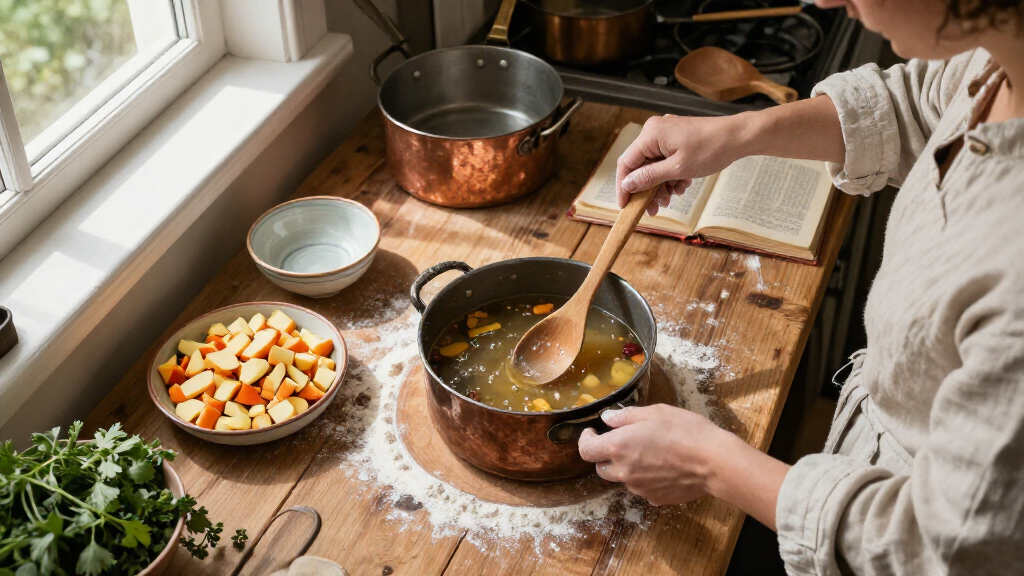
How We Picked
I judged these historical fiction cookbooks by how clearly each connects food with a time, place, literary setting, or historical event. I also weighed the likely cooking experience: whether a book appears aimed at modern kitchens, whether its subject is broad or tightly focused, and whether recipes share space with historical stories, lore, or source material. A strong match for this roundup needed to offer more than a historical-sounding title; it needed a clear reason for a reader interested in the past to choose it.
The ranking favors distinctive historical scope and an accessible premise, then separates focused alternatives by audience and use. Broad surveys rank well for readers who want variety, while period-specific and literary picks serve narrower interests more directly. Source reproductions and story-led books remain appealing, but they may ask readers to value historical texture over straightforward weeknight cooking. Since product descriptions alone cannot settle details such as adaptation level or recipe difficulty, I treat those as points to verify in a sample or edition listing before buying.
| historical fiction cookbook | Format | Recipe count |
|---|---|---|
| A Taste of History Cookbook: T | Not specified in provided product data | Not specified in provided product data |
| Revolutionary Recipes: Colonia | Not specified in provided product data | Not specified in provided product data |
| The Gilded Age Cookbook: Recip | Not specified in provided product data | Not specified in provided product data |
| Lost Recipes of the American R | Not specified in provided product data | Not specified in provided product data |
| Depression Era Recipes | Not specified in provided product data | Not specified in provided product data |
| The Time Traveler’s Cookbook: | — | — |
| The Jane Austen Recipe Book: P | Not specified in the supplied product details | Not specified in the supplied product details |
| Tasting History: Explore the P | Not specified in the supplied product details | Not specified in the supplied product details |
| The First American Cookbook: A | Facsimile | Not specified in the supplied product details |
| All About History: Ultimate Hi | Not specified in the supplied product details | — |
| The Settlement Cook Book | — | — |
| The Medieval Cookbook: Medieva | — | — |
| Tasting History: A Recipe for | — | — |
| The Medieval Cookbook: Revised | — | — |
Factors to Consider When Choosing Historical Fiction Cookbooks
Choosing among historical fiction cookbooks starts with what you want the past to add to your cooking: a story, a period-specific menu, a usable recipe collection, or a close encounter with an old source. These distinctions can matter more than page count or an attractive cover. I would use the following factors to match the book to your interests and your willingness to interpret older cooking practices.
Choose a time span that fits your curiosity
A broad survey gives you more chances to find a period that catches your interest, but its coverage of any one era may be lighter. A focused title can offer a stronger sense of place and a more coherent set of dishes, though it may feel limiting if your interest shifts. Before buying, check whether the book follows one decade or century, moves across many eras, or organizes recipes around a theme such as conflict. A common mistake is choosing the broadest scope by default when what you really want is a vivid guide to one setting. Pick breadth for browsing and variety; pick a narrow frame for a themed meal or a deep interest in one period.
Decide how close you want to get to original sources
Some books present historical recipes in a format intended for contemporary cooks; others foreground old wording, ingredients, or methods. A source-oriented book can make the history feel immediate, but older instructions may leave measurements, equipment, or technique less explicit. That can be rewarding for readers who enjoy research and experimentation, yet frustrating if you expect a recipe to work like a modern cookbook. Look for notes on adaptation, transcription, and ingredient substitutions before choosing. The tradeoff is not simply authentic versus convenient: a modern adaptation can clarify a recipe while still explaining what changed.
Separate literary inspiration from historical documentation
A book inspired by a novel or its social world is not necessarily a documentary record of what every character would have eaten. Literary cookbooks can be especially enjoyable for themed gatherings, but their recipes may interpret a setting rather than reconstruct a single historical menu. If accuracy is your main aim, check whether the author identifies sources and distinguishes documented dishes from imaginative inspiration. If atmosphere and entertaining matter more, a clear literary connection may be exactly the point. Avoid assuming that a book with a famous author or era in its title provides a scholarly account of daily foodways.
Match recipe detail to your kitchen confidence
Historical recipes can involve unfamiliar ingredients, imprecise quantities, or techniques that are rarely used in modern kitchens. A beginner may do better with clear modern instructions and explanatory notes than with a faithful facsimile or terse archival recipe. More experienced cooks may enjoy the freedom to test substitutions and adjust methods. Check a sample recipe if available, paying attention to measurements, timing, serving sizes, and whether specialized equipment is assumed. Do not judge difficulty by the age of the subject alone; editorial choices determine how approachable the cooking will feel.
Think about how you will use the book
A cookbook for regular cooking needs dependable instructions and dishes that fit your pantry, while a historical reference may be most valuable for reading, research, or occasional projects. For a dinner party, a coherent era or theme can make menu planning easier than a collection spanning millennia. For a gift, consider whether the recipient is more interested in food history, literary settings, or hands-on cooking. A common buying mistake is treating every history-focused title as a practical recipe manual. Choose based on whether you expect to cook from it often, read it closely, or use it as inspiration.
Compare editions before buying a revised or reprinted title
When a title appears in more than one edition, compare the publication details rather than assuming the newer version changes everything. Revisions may update recipes, add context, alter layout, or simply correct and expand material; the edition description should clarify what has changed. Facsimiles and reprints may preserve an original text without adding modern cooking guidance. This difference matters if you already own an earlier edition or want a book to cook from rather than a historical artifact to study. Check contents, publication date, and sample pages so you do not pay for a format that does not fit your purpose.
Frequently Asked Questions
Are historical fiction cookbooks suitable for someone who has never cooked from an old recipe?
Yes, but choose a book that adapts recipes for modern kitchens or explains unfamiliar methods. Old measurements and cooking instructions can assume equipment or knowledge that a new cook may not have. A clear sample recipe can reveal whether quantities, timing, and substitutions are explained. Source reproductions may be more satisfying once you are comfortable making judgment calls. If you want to cook without much interpretation, prioritize practical guidance over historical fidelity.
Should I choose a broad history cookbook or one focused on a single era?
Choose a broad book if you want variety and enjoy moving between periods; it can serve as a starting point for further reading. A focused title is a better fit when you have a particular setting, decade, or cultural moment in mind. Broad coverage can mean less depth on each subject, while a narrow focus may offer fewer recipes to revisit. Think about whether you want to browse or build a menu around a specific period. Your intended use is a better guide than the number of eras named in a title.
How can I tell whether a book is historically grounded or mostly themed around fiction?
Look for source notes, historical context, and explanations of how recipes were selected or adapted. A literary theme can be a creative framework rather than evidence that every dish appears in the original work or was eaten exactly as presented. Descriptions that identify archival sources or distinguish interpretation from documentation give readers a clearer basis for judging the book. If the listing is vague, inspect the contents or sample pages before deciding. The best choice depends on whether you want researched food history, imaginative atmosphere, or a blend of both.
Is a facsimile cookbook a good choice if I want recipes I can cook right away?
A facsimile is most appealing if you want to read an original text and see how an earlier cookbook presented its recipes. It may not provide modern measurements, equipment notes, or step-by-step explanations, so cooking from it can involve interpretation. Some readers enjoy that research process; others would rather have an edited or adapted version. Check whether the edition includes a transcription, annotations, or modern conversions. If dependable instructions are your priority, a contemporary guide may be a more comfortable first purchase.
What should I check when choosing between two editions of the same cookbook?
Compare publication dates, contents, recipe counts if provided, and any notes about revisions or added material. A revised edition may change the recipe guidance or historical commentary, while a reprint may preserve the earlier book with little alteration. Sample pages can show whether the layout and instructions suit your cooking habits. If you already own one edition, verify that the newer one adds something you value before replacing it. For a first purchase, choose the edition whose scope and presentation best match how you plan to use the book.
Conclusion
Best overall: I recommend Tasting History: Explore the Past Through 4,000 Years of Recipes for readers who want the widest historical sweep. Best value for a focused interest: Revolutionary Recipes is a strong direction for readers curious about colonial food and lore, while Depression Era Recipes suits those seeking a narrower period theme. Best premium-style pick: The Gilded Age Cookbook is the choice for readers who want recipes paired with stories from a defined American era. Best for beginners: start with a modern-kitchen-oriented option such as The Medieval Cookbook: Medieval Recipes for Modern Kitchens, then check a sample for the level of instruction you prefer. For literary entertaining, choose The Jane Austen Recipe Book; for primary-source interest, choose The First American Cookbook. If medieval cooking is your specific focus, compare both The Medieval Cookbook editions before selecting one.