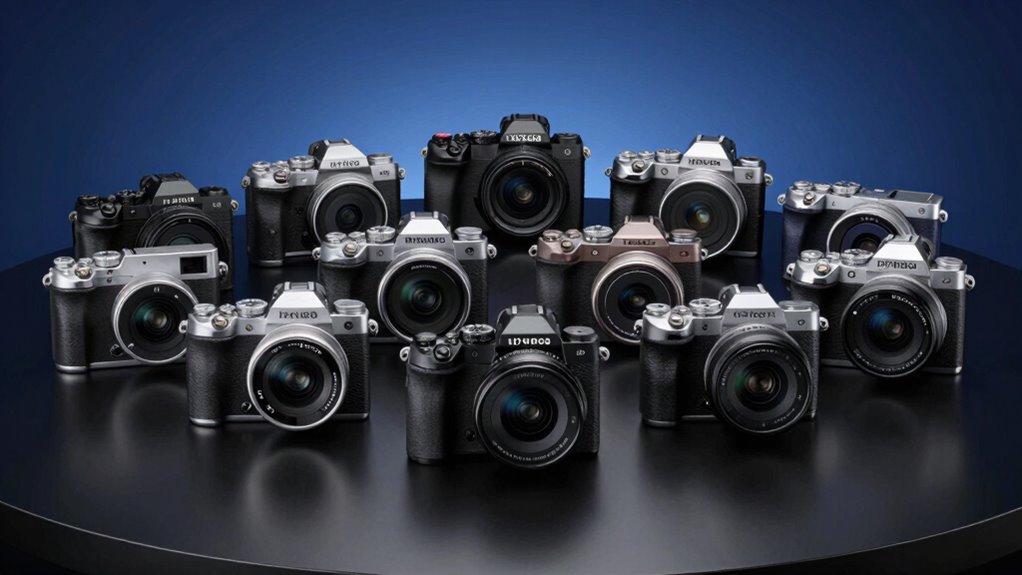

A full-frame mirrorless camera can deliver strong image quality and capable autofocus, but the right choice depends on whether you prioritize video, speed, handling, or a ready-to-shoot lens kit. I rank the Sony a7 IV as the best overall balance, while the Canon EOS R6 Mark II stands out for action and hybrid shooting, and the Nikon Z 5 offers a more approachable entry into full frame. The tradeoffs are clear: newer bodies bring more advanced features, while older models and lens bundles can be simpler ways to build a complete setup. Body-only options also require budgeting for a compatible lens. Read on for my full comparison, buying advice, and recommendations by buyer type.

Get art and craft supplies delivered free with Prime
- Fast, free delivery on millions of items
- Prime Video, Amazon Music and more included
- Member-only deals all year
Key Takeaways
- The Sony a7 IV is the strongest all-rounder in this lineup: it balances stills and video without being as specialized as the a7 V or R6 Mark II.
- The Canon R6 Mark II is the action-focused choice: its faster shooting and advanced subject detection suit moving subjects better than the entry-oriented RP or Z 5.
- Lens bundles change the real buying decision: the a7 III, R8, R6 Mark II, and RP kits offer a lens to start with, while their body-only counterparts need a separate lens purchase.
- The a7 III remains a capable lower-generation option: its kit and body versions appeal to stills-first buyers, but newer models offer more modern video and autofocus features.
- Full frame does not automatically mean the best fit: the RP and Z 5 favor accessible handling, while the a7 V and R6 Mark II make more sense for demanding speed and hybrid work.
| Sony Alpha a7 III Mirrorless Camera with 28-70mm Lens |  | Best Full-Frame Kit for Hybrid Shooters | Sensor: 35mm full-frame CMOS | Resolution: 24.2 MP | Autofocus: 693 phase-detection and 425 contrast-detection points | VIEW ON AMAZON | See Our Full Breakdown |
| Canon EOS R8 Mirrorless Camera with RF 24-50mm f/4.5-6.3 IS STM Lens, Black |  | Best Lightweight Full-Frame Kit | Sensor: 35mm full-frame CMOS | Resolution: 24.2 MP | Included lens: RF 24-50mm f/4.5-6.3 IS STM | VIEW ON AMAZON | See Our Full Breakdown |
| Nikon Z 5 Full-Frame Mirrorless Camera |  | Best for Stabilized Still Photography | Sensor: 35mm full-frame CMOS | Resolution: 24.3 MP | Image stabilization: 5-axis in-body | VIEW ON AMAZON | See Our Full Breakdown |
| Sony Alpha a7 III Full-Frame Mirrorless Camera Body Black |  | Best for Long Shooting Days | Sensor: 35mm full-frame CMOS | Resolution: 24.2 MP | Autofocus: 693 phase-detection points | VIEW ON AMAZON | See Our Full Breakdown |
| Sony Alpha 7 IV Full-frame Mirrorless Interchangeable Lens Camera |  | Best Premium High-Resolution Hybrid | Sensor: 35mm full-frame CMOS | Resolution: 33 MP | Image stabilization: Sensor-shift | VIEW ON AMAZON | See Our Full Breakdown |
| Canon EOS R8 Mirrorless Camera (Body Only) |  | Best Lightweight Full-Frame Body | Sensor: 24.2MP full-frame CMOS | Processor: DIGIC X | Lens mount: Canon RF | VIEW ON AMAZON | See Our Full Breakdown |
| Canon EOS R6 Mark II Mirrorless Camera (Body Only) |  | Best for Fast-Moving Subjects | Sensor: 24.2MP full-frame CMOS | Autofocus: Dual Pixel CMOS AF with eye, face, and head detection | Continuous shooting: Up to 40 fps at 20MP | VIEW ON AMAZON | See Our Full Breakdown |
| Canon EOS R6 Mark II Mirrorless Camera RF24-105mm F4-7.1 IS STM Lens Kit |  | Best Full-Frame Starter Kit | Sensor: 24.2MP full-frame CMOS | Included lens: RF24-105mm F4-7.1 IS STM | Image stabilization: Sensor-shift | VIEW ON AMAZON | See Our Full Breakdown |
| Sony Alpha a7 IV Mirrorless Camera with 28-70mm Lens |  | Best for High-Resolution Hybrid Work | Sensor: 33MP full-frame CMOS | Included lens: 28-70mm | Image stabilization: Sensor-shift | VIEW ON AMAZON | See Our Full Breakdown |
| Sony Alpha a7 V Full-Frame Mirrorless Camera Body with AI AF and 30fps |  | Best Premium Action Hybrid | Sensor: 33MP partially stacked full-frame Exmor RS CMOS | Image processor: BIONZ XR2 | Continuous shooting: Up to 30 fps blackout-free | VIEW ON AMAZON | See Our Full Breakdown |
| Canon EOS RP Mirrorless Camera with RF24-105mm F4-7.1 IS STM Lens Kit |  | Best Lightweight Full-Frame Kit | Sensor: 26.2 MP full-frame CMOS | Lens: RF 24-105mm F4-7.1 IS STM | Stabilization: Optical, up to 5 stops | VIEW ON AMAZON | See Our Full Breakdown |
| Nikon Z 6II Full-Frame Mirrorless Camera |  | Best for Hybrid Enthusiasts | Sensor: 24.5 MP full-frame CMOS | Continuous shooting: Up to 14 fps | Video: 4K UHD 2160p, up to 60p | VIEW ON AMAZON | See Our Full Breakdown |
| mirrorless camera full frame | Sensor | Video | Autofocus | Connectivity |
|---|---|---|---|---|
| Sony Alpha a7 III Mirrorless C | 35mm full-frame CMOS | 4K UHD 2160p | 693 phase-detection and 425 contrast-detection points | — |
| Canon EOS R8 Mirrorless Camera | 35mm full-frame CMOS | — | Phase detection, 399 points | Bluetooth, Wi-Fi, USB, and Micro HDMI |
| Nikon Z 5 Full-Frame Mirrorles | 35mm full-frame CMOS | 4K UHD 2160p | — | Bluetooth and Wi-Fi |
| Sony Alpha a7 III Full-Frame M | 35mm full-frame CMOS | 4K UHD 2160p | 693 phase-detection points | Bluetooth 4.1, Wi-Fi, HDMI, and NFC |
| Sony Alpha 7 IV Full-frame Mir | 35mm full-frame CMOS | 4K 60p, 10-bit 4:2:2 output | Hybrid contrast and phase detection, 693 points | — |
| Canon EOS R8 Mirrorless Camera | 24.2MP full-frame CMOS | 4K recording | — | Wi-Fi, Bluetooth, Micro HDMI, USB |
| Canon EOS R6 Mark II Mirrorles | 24.2MP full-frame CMOS | 6K-oversampled 4K up to 60 fps; Full HD up to 180 fps | Dual Pixel CMOS AF with eye, face, and head detection | — |
| Canon EOS R6 Mark II Mirrorles | 24.2MP full-frame CMOS | — | Dual Pixel CMOS AF II with subject detection | Bluetooth, Wi-Fi, USB, Micro HDMI |
| Sony Alpha a7 IV Mirrorless Ca | 33MP full-frame CMOS | 4K at 60p, 10-bit 4:2:2 | Phase and contrast detection, 759 focus points | Wi-Fi, Bluetooth, USB, HDMI |
| Sony Alpha a7 V Full-Frame Mir | 33MP partially stacked full-frame Exmor RS CMOS | 4K 120p | AI subject recognition | — |
| Canon EOS RP Mirrorless Camera | 26.2 MP full-frame CMOS | 4K UHD 2160p | Dual Pixel CMOS AF, 4,779 AF points | Bluetooth and Wi-Fi |
| Nikon Z 6II Full-Frame Mirrorl | 24.5 MP full-frame CMOS | 4K UHD 2160p, up to 60p | — | Bluetooth, Wi-Fi, HDMI, and USB |
More Details on Our Top Picks
Sony Alpha a7 III Mirrorless Camera with 28-70mm Lens
The Sony Alpha a7 III with 28-70mm lens is a strong starting point for buyers who want one full-frame setup for both stills and video. Its 24.2MP sensor and broad autofocus coverage suit portraits, family moments, and moving subjects, while the included zoom means you can start shooting without choosing a separate lens. Compared with the Nikon Z 5, this kit places more emphasis on autofocus speed and adds a useful general-purpose lens in the box. The tradeoff is that the bundled 28-70mm range is less wide than the Canon EOS R8 kit’s 24-50mm lens, and the camera’s menus may take time to learn. It also uses SDXC memory, so buyers should plan for storage and a spare battery for long days.
Pros:- 24.2MP full-frame sensor balances detail and manageable file sizes
- 693 phase-detection autofocus points help track subjects across the frame
- Includes a versatile 28-70mm zoom lens
- Records 4K UHD video
Cons:- The included lens starts at 28mm, narrower than the Canon EOS R8 kit’s 24mm wide end
- Menu complexity can slow down first-time mirrorless users
- SDXC storage and battery needs add planning for extended shoots
Best for: Photographers and video creators who want a capable Sony full-frame body and an everyday zoom in one kit.
Not ideal for: Buyers who need a wider kit lens, the simplest beginner controls, or a camera-and-lens combination optimized for long video sessions.
- Sensor:35mm full-frame CMOS
- Resolution:24.2 MP
- Autofocus:693 phase-detection and 425 contrast-detection points
- ISO range:50 to 204,800
- Maximum shutter speed:1/8000 second
- Video:4K UHD 2160p
- Viewfinder:Electronic, 0.78x magnification
- Included lens:28-70mm
- Weight:1.8 pounds
Our verdict“Choose this kit if you want an adaptable Sony full-frame camera with a ready-to-use zoom, and skip it if a wider starting focal length matters more.”
Canon EOS R8 Mirrorless Camera with RF 24-50mm f/4.5-6.3 IS STM Lens, Black
The Canon EOS R8 kit suits buyers who value a compact full-frame setup and a wide starting view. Its included RF 24-50mm lens reaches wider than the Sony a7 III kit’s 28-70mm zoom, which can help with interiors, landscapes, and group photos. The vari-angle touchscreen and subject-aware autofocus also make it a flexible choice for people who shoot themselves on camera as well as behind it. Canon lists 4K video capability and high frame-rate recording, though the supplied data’s video-resolution and frame-rate entries are inconsistent, so I would check the exact recording modes before buying for a specific workflow. The kit lens has a modest maximum aperture, and the body lacks a built-in flash. Compared with the Nikon Z 5, this is the more travel-minded option, while the Nikon offers in-body stabilization.
Pros:- Compact full-frame camera paired with a wide 24mm starting focal length
- Vari-angle capacitive touchscreen supports flexible framing and self-recording
- Phase-detection autofocus includes subject detection
- Bluetooth, Wi-Fi, USB, and Micro HDMI connectivity
Cons:- RF 24-50mm lens has a relatively narrow maximum aperture range of f/4.5-6.3
- No built-in flash
- Provided video specifications are inconsistent and should be verified for a specific frame-rate requirement
Best for: Travel photographers, family shooters, and solo video creators who want a lightweight full-frame kit with a vari-angle screen.
Not ideal for: Buyers who need in-body stabilization, a brighter kit zoom, or confirmed video modes for demanding production work.
- Sensor:35mm full-frame CMOS
- Resolution:24.2 MP
- Included lens:RF 24-50mm f/4.5-6.3 IS STM
- Autofocus:Phase detection, 399 points
- Maximum shutter speed:1/4000 second
- Display:3-inch capacitive LCD, 1,620,000 dots
- Viewfinder:Electronic
- Connectivity:Bluetooth, Wi-Fi, USB, and Micro HDMI
Our verdict“Pick the EOS R8 kit for a compact, wide-starting full-frame setup, but favor the Nikon Z 5 if in-body stabilization matters more.”
Nikon Z 5 Full-Frame Mirrorless Camera
The Nikon Z 5 is the most appealing choice here for photographers who want full-frame image quality with 5-axis in-body stabilization. That stabilization can reduce blur from camera movement with compatible lenses, giving handheld shooting more flexibility than the supplied Sony a7 III kit, whose data does not list in-body stabilization. Its 24.3MP sensor is close in resolution to both Sony a7 III options, so the main distinction is not pixel count but the Nikon’s stabilization and dual SD card slots. Those two slots can support a backup-oriented workflow, a practical benefit for event and travel photography. Against the Canon EOS R8, the Z 5 is less focused on a lightweight, creator-friendly kit and more on steady stills. Its supplied details do not specify battery life, and buyers looking for a bundled lens will need to check the configuration.
Pros:- 5-axis in-body image stabilization helps reduce camera-shake blur
- 24.3MP full-frame sensor offers resolution comparable to the Sony a7 III
- Two SD card slots support flexible storage and backup workflows
- 4K UHD video recording
Cons:- Battery life is not specified in the supplied product data
- No built-in flash
- This listing does not include a lens, unlike the Sony a7 III and Canon EOS R8 kits
Best for: Still photographers who shoot handheld, travel with one camera, or want dual SD card slots for backup.
Not ideal for: Video-first buyers prioritizing a compact creator setup, or shoppers who want an included lens and clearly stated battery endurance.
- Sensor:35mm full-frame CMOS
- Resolution:24.3 MP
- Image stabilization:5-axis in-body
- Maximum shutter speed:1/8000 second
- Video:4K UHD 2160p
- Display:3.2-inch LCD, 1,040,000 dots
- Memory slots:Two SD/SDHC/SDXC slots
- Connectivity:Bluetooth and Wi-Fi
- Weight:1.3 pounds
Our verdict“Choose the Nikon Z 5 if stabilized handheld still photography and dual-card storage outrank a bundled lens or creator-oriented portability.”
Sony Alpha a7 III Full-Frame Mirrorless Camera Body Black
The Sony a7 III body makes the most sense for photographers who already own compatible Sony E-mount lenses and value endurance. Its listed battery capacity reaches 610 shots through the viewfinder or 710 through the LCD, giving it a clear practical advantage over models in this group whose battery life is not specified. The 24.2MP sensor and 693 phase-detection points also keep it capable for general-purpose stills and 4K video. Compared with the a7 III kit version, this body-only option avoids duplicating a lens you already own; newcomers, however, may find the kit more convenient. The Nikon Z 5 adds in-body stabilization and dual SD slots, while the Sony’s supplied details emphasize battery performance and connectivity. Its menus can feel involved, and its 1.4-pound body is not the lightest travel choice.
Pros:- Battery rating of 610 viewfinder shots or 710 LCD shots
- 693 phase-detection autofocus points support broad subject coverage
- 4K UHD video recording
- Bluetooth, Wi-Fi, HDMI, and NFC connectivity
Cons:- Body-only configuration requires a compatible lens
- Menu system may be demanding for new users
- Heavier than the listed Nikon Z 5 body
Best for: Sony E-mount owners and event photographers who want a full-frame body with clearly stated battery endurance.
Not ideal for: First-time camera buyers who need an included lens, or travelers who prioritize the lightest body and simplest controls.
- Sensor:35mm full-frame CMOS
- Resolution:24.2 MP
- Autofocus:693 phase-detection points
- ISO range:50 to 204,800
- Shutter speed:30 seconds to 1/8000 second
- Video:4K UHD 2160p
- Battery life:610 shots via viewfinder; 710 shots via LCD
- Connectivity:Bluetooth 4.1, Wi-Fi, HDMI, and NFC
- Weight:1.4 pounds
Our verdict“Buy this body if you already have Sony E-mount glass and want dependable battery capacity, but choose the kit if you need a lens too.”
Sony Alpha 7 IV Full-frame Mirrorless Interchangeable Lens Camera
The Sony Alpha 7 IV is the step-up pick for buyers who want more detail for large prints or cropping, plus stronger video tools than the a7 III. Its 33MP sensor gives it a resolution lead over the 24.2MP a7 III and the 24.3MP Nikon Z 5, while 4K 60p recording and 10-bit 4:2:2 output offer more room for demanding video workflows. Sensor-shift stabilization and hybrid autofocus round out its stills-and-video appeal. That extra capability brings tradeoffs: the body weighs 0.99 kg, and its controls may feel complex to newcomers. Compared with the Canon EOS R8 kit, the Alpha 7 IV is a more advanced body-focused choice, but this listing does not include a lens. Buyers who do not need the extra resolution or video options may find the a7 III a simpler fit.
Pros:- 33MP full-frame sensor provides more cropping and print detail than the 24MP-class alternatives here
- 4K 60p video with 10-bit 4:2:2 output supports more flexible post-production
- Sensor-shift image stabilization
- Hybrid autofocus with 693 points
Cons:- Heavier than the Nikon Z 5 listed here
- Higher feature complexity can make setup and operation less approachable
- Body-only listing requires a compatible lens
Best for: Experienced hybrid shooters who need higher-resolution full-frame stills and advanced 4K recording options.
Not ideal for: Casual photographers, first-time mirrorless buyers, or anyone seeking an out-of-the-box camera-and-lens kit.
- Sensor:35mm full-frame CMOS
- Resolution:33 MP
- Image stabilization:Sensor-shift
- Autofocus:Hybrid contrast and phase detection, 693 points
- Maximum shutter speed:1/8000 second
- Video:4K 60p, 10-bit 4:2:2 output
- Viewfinder:Electronic, 0.78x magnification
- Display:3-inch tilting LCD, 1,036,800 dots
- Weight:0.99 kg
Our verdict“Choose the Alpha 7 IV if higher-resolution stills and advanced 4K production justify a heavier, more complex body without a bundled lens.”
Canon EOS R8 Mirrorless Camera (Body Only)
I’d pick the Canon EOS R8 when keeping a full-frame kit light matters more than having the most robust controls or longest shooting endurance. Its 24.2MP sensor and subject-detecting autofocus give it a capable foundation for stills, while the vari-angle touchscreen is handy for video and awkward shooting angles. Compared with the Canon EOS R6 Mark II, the R8 keeps a similar resolution and 40 fps electronic burst rate in a more travel-minded package, but the R6 Mark II offers a higher-resolution viewfinder and more clearly specified video flexibility. The R8’s listed battery information is limited, and this is a body-only listing, so buyers need to budget for an RF lens separately. I’d favor it for photographers who want portability without stepping down from full-frame image quality.
Pros:- Lightweight body makes a full-frame setup easier to carry
- 24.2MP sensor balances detailed images with manageable file sizes
- Subject detection and tracking support moving-subject photography
- Vari-angle touchscreen suits video and high- or low-angle framing
Cons:- Body-only package requires a separate RF-mount lens
- Battery details are limited, making extended-shoot planning harder
- Viewfinder resolution is lower than the specified R6 Mark II viewfinder
Best for: Travel and event photographers who want a lightweight full-frame Canon body with subject-tracking autofocus and a vari-angle screen.
Not ideal for: Photographers planning long, uninterrupted shoots or buyers seeking a ready-to-shoot kit with a lens included.
- Sensor:24.2MP full-frame CMOS
- Processor:DIGIC X
- Lens mount:Canon RF
- ISO range:50–102400
- Continuous shooting:Up to 40 fps
- Video:4K recording
- Viewfinder:0.39-inch OLED, 2.36 million dots
- Screen:3-inch vari-angle LCD touchscreen
- Connectivity:Wi-Fi, Bluetooth, Micro HDMI, USB
Our verdict“Choose the EOS R8 if you want a portable full-frame Canon body and can accept a body-only kit and less certain battery endurance.”
Canon EOS R6 Mark II Mirrorless Camera (Body Only)
The Canon EOS R6 Mark II is the stronger fit when action, reliable subject recognition, and flexible video matter more than a bundled lens or the highest pixel count. Its 40 fps electronic shooting and eye, face, and head detection give photographers more chances to capture fleeting expressions and movement. Compared with the lighter Canon EOS R8, it offers a sharper specified OLED viewfinder and broader video modes, including oversampled 4K at up to 60 fps and Full HD at 180 fps. The tradeoff is a more feature-dense camera with a menu system that can take time to learn; the 24.2MP sensor also gives less cropping room than the Sony a7 IV and its 33MP sensor. This is a body-only option, so lens choice and cost remain separate decisions.
Pros:- Up to 40 fps electronic shooting suits fast action
- Eye, face, and head detection help maintain focus on moving subjects
- 6K-oversampled 4K up to 60 fps and Full HD up to 180 fps expand video options
- High-resolution OLED viewfinder supports clear composition
Cons:- Complex menus can slow down setup for new users
- Body-only package requires a separately purchased RF lens
- 24.2MP resolution offers less cropping latitude than the 33MP Sony a7 IV
Best for: Sports, wildlife, and hybrid shooters who need fast subject tracking, high burst rates, and advanced video options in a Canon body.
Not ideal for: Beginners seeking the simplest controls, or detail-focused photographers who prioritize resolution for heavy cropping.
- Sensor:24.2MP full-frame CMOS
- Autofocus:Dual Pixel CMOS AF with eye, face, and head detection
- Continuous shooting:Up to 40 fps at 20MP
- Video:6K-oversampled 4K up to 60 fps; Full HD up to 180 fps
- Viewfinder:0.5-inch OLED, 3.69 million dots, 120 fps
- Screen:3-inch vari-angle LCD, 1.62 million dots
- Wireless connectivity:5GHz Wi-Fi and Bluetooth 5
- USB:USB Type-C
- Battery compatibility:LP-E6NH; compatible with LP-E6N and LP-E6
Our verdict“Choose the R6 Mark II for fast action and versatile video in the Canon system, provided you’re comfortable learning its controls and sourcing a lens.”
Canon EOS R6 Mark II Mirrorless Camera RF24-105mm F4-7.1 IS STM Lens Kit
This EOS R6 Mark II kit is the most convenient pick here for someone who wants a capable full-frame camera and a useful everyday zoom in one purchase. The included RF24-105mm lens covers wide-to-telephoto framing, so it can handle travel, family gatherings, and portraits without an immediate lens change. The R6 Mark II body brings subject detection, sensor-shift stabilization, and up to 40 fps electronic shooting; compared with the body-only EOS R6 Mark II, this listing saves the buyer from having to choose an initial lens. The kit lens’s f/4-7.1 variable aperture is the main compromise: it gathers less light at the long end than a brighter zoom, which can mean higher ISO or slower shutter speeds indoors. I’d choose this bundle for versatility, not low-light lens performance.
Pros:- Includes a 24-105mm zoom for varied everyday framing
- Sensor-shift stabilization can help reduce camera shake
- Subject detection supports dependable focus across different subjects
- Up to 40 fps electronic shooting handles quick action
Cons:- The f/4-7.1 variable aperture limits light gathering, especially when zoomed in
- The listed kit weighs 2.2 pounds, which may feel substantial for all-day carry
- A kit zoom may not satisfy buyers who need a brighter lens for dim settings
Best for: First-time full-frame buyers and family or travel photographers who want a versatile zoom included with a fast, stabilized camera body.
Not ideal for: Indoor event shooters and available-light videographers who need a bright, constant-aperture zoom.
- Sensor:24.2MP full-frame CMOS
- Included lens:RF24-105mm F4-7.1 IS STM
- Image stabilization:Sensor-shift
- Autofocus:Dual Pixel CMOS AF II with subject detection
- Continuous shooting:12 fps mechanical; 40 fps electronic
- ISO range:100–102400, expandable to 204800
- Viewfinder:Electronic, 3.69 million dots
- Memory cards:SD UHS-II, UHS Speed Class 3
- Connectivity:Bluetooth, Wi-Fi, USB, Micro HDMI
Our verdict“Choose this kit over the body-only R6 Mark II if you want a versatile lens included, but look elsewhere if low-light lens speed is your priority.”
Sony Alpha a7 IV Mirrorless Camera with 28-70mm Lens
I’d point detail-focused hybrid shooters toward the Sony a7 IV, whose 33MP full-frame sensor records more pixels than the 24.2MP Canon R8 and R6 Mark II. That extra resolution gives more room to crop or produce larger prints, while real-time Eye-AF and 759 phase-detection focus points support tracking across stills and video. Its 4K 60p 10-bit 4:2:2 recording offers useful color flexibility for filmmakers, and the included 28-70mm lens gets a kit started straight away. Compared with the newer Sony a7 V, this model is listed at 10 fps rather than 30 fps blackout-free and lacks the a7 V’s specified 4K 120p capture. The a7 IV’s listed 1.51kg weight also makes it a less appealing carry-all-day choice, and its extensive features may take time to master.
Pros:- 33MP sensor offers more cropping room than the 24.2MP Canon options
- 4K 60p 10-bit 4:2:2 video supports flexible post-production
- Real-time Eye-AF and 759 phase-detection points aid subject tracking
- Included 28-70mm lens provides a ready-to-shoot standard zoom
Cons:- Listed weight of 1.51kg makes it less convenient for extended carry
- 10 fps continuous shooting is slower than the a7 V’s 30 fps mode
- The feature set can create a learning curve for newer camera users
Best for: Photographers and filmmakers who want higher-resolution stills, a bundled standard zoom, and 10-bit 4K recording for flexible editing.
Not ideal for: Travelers prioritizing a lightweight kit or action shooters who need the a7 V’s faster blackout-free burst shooting.
- Sensor:33MP full-frame CMOS
- Included lens:28-70mm
- Image stabilization:Sensor-shift
- Autofocus:Phase and contrast detection, 759 focus points
- Continuous shooting:Up to 10 fps
- Video:4K at 60p, 10-bit 4:2:2
- ISO range:50–204800
- Display:3-inch articulating LCD, 1,036,800 dots
- Connectivity:Wi-Fi, Bluetooth, USB, HDMI
Our verdict“Choose the a7 IV if resolution and color-flexible 4K matter more than a lighter kit or the a7 V’s faster action performance.”
Sony Alpha a7 V Full-Frame Mirrorless Camera Body with AI AF and 30fps
The Sony a7 V earns the premium-action role with a partially stacked 33MP sensor, blackout-free 30 fps shooting, and AI subject recognition. That combination is better suited to tracking erratic movement than the 10 fps Sony a7 IV, while keeping more resolution than the 24.2MP Canon R6 Mark II. Its 4K 120p video also gives creators room for slow-motion footage, and the listed 5-axis stabilization can help steady handheld shots. The added speed and video range make this the most specialized option in the group; many general-purpose photographers may not use those capabilities often enough to justify choosing it over the a7 IV. This listing is body-only, so a Sony E or FE lens is a separate purchase. The menu learning curve and lack of a built-in flash also suit buyers who are ready to build a more deliberate kit.
Pros:- Blackout-free 30 fps shooting supports tracking fast-moving subjects
- 33MP partially stacked sensor balances resolution with speed
- 4K 120p enables high-frame-rate video capture
- 5-axis sensor-shift stabilization is specified at up to 7.5 steps
Cons:- Body-only package requires a compatible Sony E or FE lens
- Advanced controls and menus may challenge beginners
- No built-in flash for quick fill light without an accessory
Best for: Action photographers and hybrid creators who need blackout-free high-speed bursts, AI subject tracking, and 4K slow-motion recording.
Not ideal for: Casual photographers who rarely shoot fast action or slow motion, and anyone looking for a complete camera-and-lens kit.
- Sensor:33MP partially stacked full-frame Exmor RS CMOS
- Image processor:BIONZ XR2
- Continuous shooting:Up to 30 fps blackout-free
- Autofocus:AI subject recognition
- Image stabilization:5-axis sensor-shift, up to 7.5-step central
- Video:4K 120p
- Native ISO range:50–204800
- Maximum shutter speed:1/16000 sec
- Lens mount:Sony E / Sony FE
Our verdict“Choose the a7 V if fast action and 4K 120p are central to your work, but the a7 IV is a more measured fit for less demanding shooting.”
Canon EOS RP Mirrorless Camera with RF24-105mm F4-7.1 IS STM Lens Kit
The EOS RP kit is a practical entry point to full-frame photography when portability and an included zoom matter more than speed. Its 24-105mm lens covers wide scenes through short telephoto framing, while optical stabilization helps reduce blur from camera shake. At 16 ounces, the camera is easier to carry than the Nikon Z 6II, though the lens also affects the kit’s overall carry weight.
The tradeoff is the lens’s F4-7.1 variable aperture: it gathers less light toward the telephoto end and offers less background separation than a brighter lens. The EOS RP records 4K, but this kit is a better fit for casual video than for buyers prioritizing advanced video features. Its articulating screen and Dual Pixel autofocus add flexibility for portraits and self-recording, while the limited macro magnification may disappoint close-up specialists.
Pros:- Lightweight 16-ounce camera body is convenient for everyday carry
- Included 24-105mm zoom spans common travel and portrait framing
- Optical stabilization helps steady handheld shots
- Articulating LCD and Dual Pixel CMOS AF support flexible shooting
Cons:- The F4-7.1 aperture limits low-light flexibility, especially when zoomed in
- 4K recording and the kit lens are less suited to demanding video work
- Macro magnification may not satisfy dedicated close-up photographers
Best for: Travelers and first-time full-frame buyers who want a compact Canon body bundled with a stabilized everyday zoom.
Not ideal for: Low-light event photographers, action shooters, and video-first creators who need a brighter lens or more capable video features.
- Sensor:26.2 MP full-frame CMOS
- Lens:RF 24-105mm F4-7.1 IS STM
- Stabilization:Optical, up to 5 stops
- Autofocus:Dual Pixel CMOS AF, 4,779 AF points
- Video:4K UHD 2160p
- Display:3-inch articulating LCD, 1,040,000 dots
- Weight:16 ounces
- Connectivity:Bluetooth and Wi-Fi
Our verdict“Choose the EOS RP kit if an easy-to-carry full-frame Canon with a versatile stabilized zoom matters more than low-light speed or advanced video features.”
Nikon Z 6II Full-Frame Mirrorless Camera
The Nikon Z 6II is the more capable choice here for photographers who split their time between stills and video. Its 14 fps continuous shooting supports action and fleeting expressions, while 4K UHD at 60p gives video creators smoother motion options than the EOS RP’s listed 4K capability. The 24.5 MP sensor favors a balanced mix of resolution and low-light performance rather than maximum detail capture.
Compared with the lightweight Canon EOS RP kit, the Z 6II is a more substantial camera body, at 1.4 pounds, and its menus may take longer to learn. Its dual memory card slots offer added flexibility for backup or separating files, but the listed slot formats are SDHC and XQD, so card compatibility deserves attention. This body-only option also requires a separate lens, adding a choice—and another purchase—to the setup.
Pros:- 14 fps continuous shooting suits action and fast-moving subjects
- 4K UHD 60p supports smoother motion in video
- Dual memory card slots provide flexible file handling
- Full-frame 24.5 MP sensor balances detail and low-light use
Cons:- The 1.4-pound body is less comfortable for long handheld sessions than the EOS RP
- Menu complexity can slow down new mirrorless users
- Body-only packaging means buyers must choose and purchase a compatible lens
Best for: Enthusiast photographers and hybrid creators who want fast bursts, 4K 60p recording, and dual-card flexibility in a full-frame body.
Not ideal for: Casual buyers seeking a lightweight ready-to-shoot kit, or newcomers who prefer simpler controls and an included lens.
- Sensor:24.5 MP full-frame CMOS
- Continuous shooting:Up to 14 fps
- Video:4K UHD 2160p, up to 60p
- Shutter speed:1/8000 to 30 seconds
- Display:3.2-inch screen
- Memory slots:Two: SDHC and XQD
- Weight:1.4 pounds
- Connectivity:Bluetooth, Wi-Fi, HDMI, and USB
Our verdict“Pick the Z 6II if you want a more versatile stills-and-video body than the EOS RP and are comfortable with its added weight and setup complexity.”

How We Picked
I ranked these cameras by how well they serve distinct full-frame buying needs: image-making versatility, autofocus and continuous-shooting capability, video options, handling, and the practical cost of assembling a usable kit. I also separated body-only listings from lens kits, since a camera body without glass is not a complete purchase for most new buyers. The ranking favors models that cover a wider range of work without forcing a specialist compromise.
That places the Sony a7 IV first for broad capability, with the Canon R6 Mark II ahead for speed-oriented shooting and the Nikon Z 5 serving as a simpler entry point. Newer or faster models do not automatically rank higher: the a7 V is compelling for demanding performance, but many buyers may not need its extra speed. Older options such as the a7 III and EOS RP remain relevant where a straightforward kit or accessible system matters more than the latest features.
Factors to Consider When Choosing Mirrorless Camera Full Frame
Choosing a full-frame body is only part of the decision. I would match the camera to the subjects you shoot, the lenses you can access, and how much gear you want to carry.
Choose a Body and Lens Together
A body-only listing can look like a simple way to choose your camera, but it leaves the lens decision—and its cost—unresolved. A kit lens gives you a ready starting point for everyday subjects, travel, and learning focal lengths before you invest in specialized glass. Check the exact lens included: the 28–70mm and 24–50mm kits cover different ranges, while a 24–105mm kit offers more reach without a lens change. Kit lenses often have narrower maximum apertures than dedicated lenses, so they may be less suited to dim interiors or strong background blur. If you already own compatible lenses, a body-only option may be the cleaner purchase. If you are starting fresh, compare the complete system rather than the camera body alone.
Match Autofocus and Speed to Your Subjects
Autofocus priorities change with the subject: portraits and landscapes place less pressure on tracking than sports, wildlife, or children in motion. Faster burst shooting helps capture brief moments, but it does not guarantee sharp results if focus tracking, lens performance, or your timing falls short. Models such as the R6 Mark II and a7 V are aimed at buyers who benefit from stronger speed-oriented features. For posed portraits, travel, and general family photography, a more modest camera can leave more of the budget for lenses. Check whether the camera recognizes the subjects you photograph and how its controls support quick focus-area changes. Avoid paying for high-speed features if your work rarely calls for them.
Decide How Much Video Capability You Need
Hybrid creators should compare recording formats, frame-rate options, stabilization, ports, and how long a camera can comfortably record—not just its headline video resolution. A body that suits occasional clips may feel limiting for interviews, events, or work that needs slow motion. Video also makes lens choice more visible: focus noise, breathing, and stabilization can affect footage even when the camera body is capable. A stills-first buyer may get more practical value from reliable ergonomics and a useful kit lens than from advanced recording modes. Before buying, list the formats and frame rates your editing workflow can actually handle. That keeps a feature-rich camera from becoming an expensive mismatch.
Account for System Cost and Lens Availability
Full-frame systems can become costly after adding lenses, batteries, storage, and a bag, so compare the full setup you expect to own rather than one body listing. Lens availability matters most when you need a particular focal length, compact size, or specialty lens for your work. A camera system you can build gradually is often a better fit than one with a body that looks compelling but limited lens choices for your needs. If you already own compatible lenses, staying in that system may make more sense than switching for a modest body upgrade. Also check whether the kit lens will cover your routine work or become an early replacement. The best-value route depends on the complete kit, not simply the number of features on the body.
Balance Full-Frame Benefits Against Size and Learning Curve
A larger sensor can support image quality goals, but it does not make every photograph better by itself. Full-frame lenses can add weight and bulk, which matters if you carry a camera on long walks or travel frequently. Entry-level models such as the EOS RP and Nikon Z 5 can make the format more approachable, though they do not offer the same speed and advanced capabilities as newer performance-focused bodies. Think about grip comfort, button layout, viewfinder use, and how often you will carry the camera; those details affect whether it gets used. If you are new to interchangeable-lens cameras, prioritize clear controls and a manageable lens before advanced settings. A camera that fits your routine can be more useful than a higher-spec body that stays at home.
Frequently Asked Questions
Should I buy a body-only camera or a kit with a lens?
Choose a kit if you are starting without compatible lenses and want to take photos as soon as the camera arrives. A bundled lens is useful for learning which focal lengths suit your everyday subjects, though it may not be bright enough for dim settings or strong background separation. Body-only makes more sense when you already have lenses for that camera system or have a specific lens planned. Compare the full setup cost, including the lens, before deciding between listings. Do not assume two kits are equivalent just because both include a zoom.
Is the Sony a7 III still a sensible full-frame camera to buy?
The a7 III can still suit stills-focused buyers who want a capable full-frame body and do not need the newest video or autofocus refinements. Its appeal depends on whether its feature set matches your subjects and whether you prefer the included 28–70mm lens or a body-only setup. The a7 IV is a more balanced pick for buyers who want newer hybrid capabilities and plan to keep the camera for varied work. If you mostly shoot posed portraits, landscapes, or everyday scenes, the a7 III may be enough. Choose the newer generation when its improvements solve a real limitation in your work.
Which camera in this roundup makes the most sense for sports or wildlife?
The Canon EOS R6 Mark II and Sony a7 V are the strongest candidates here for subjects that move unpredictably, thanks to their speed-oriented feature sets. The R6 Mark II is a compelling fit for action-focused hybrid use, while the a7 V targets buyers who want advanced autofocus and high burst capability. Your lens matters just as much: a camera cannot make a short kit zoom reach distant wildlife. Consider how often you photograph fast action before choosing a body around that capability. For occasional action, a more versatile model paired with an appropriate telephoto lens may be the better overall system.
Is the Canon EOS RP or Nikon Z 5 a better first full-frame camera?
Both can be approachable ways into full frame, but the right choice depends on the lenses you plan to use and the kind of work you do. The EOS RP kit is a practical starting point if its included zoom suits your usual subjects and you want a bundled setup. The Nikon Z 5 is another entry-oriented choice for buyers interested in the Nikon system. Neither is the lineup’s best pick for demanding action or advanced hybrid work; the R6 Mark II and a7 IV are better matched to those needs. Check the controls and lens roadmap before choosing, since the system will shape your future upgrades.
Should I choose the a7 IV or the Canon R6 Mark II for photo and video work?
Both are strong hybrid options, so start with the work you do most rather than treating one as universally better. The Sony a7 IV is the more balanced recommendation for varied stills and video, while the R6 Mark II is more compelling when fast action and subject tracking are central. Your current lenses, preferred grip and controls, and recording requirements can outweigh small differences in body specifications. Compare the exact video modes you use and check that your storage and editing setup can handle them. If you do not need the R6 Mark II’s action emphasis, the a7 IV may be the more adaptable choice.
Conclusion
My best overall pick is the Sony a7 IV for buyers who want one body to cover varied photography and video. For best value and a beginner-friendly kit, compare the Nikon Z 5 and Canon EOS RP bundles against the lenses you expect to use; the right choice depends on system fit, not body features alone. The best premium, speed-focused option is the Sony a7 V, while the Canon EOS R6 Mark II is my pick for action and demanding hybrid work. For a more modest stills-first setup, the Sony a7 III remains a capable alternative, especially as a lens kit. Choose the camera that fits your subjects and complete lens setup, then spend on the glass that will make the biggest difference to your photographs.
Halloween Picks

Fun Costumes Creepy Twin Boys Halloween Animatronic

12.2 ft Halloween Inflatable Outdoor Decoration – Giant Pumpkin

8.5 Foot Halloween Inflatable Haunted House Castle with Skeleton, Ghost & Skulls
As an affiliate, we earn on qualifying purchases.