
To digitize old letters easily, gather all your letters and handle them carefully to prevent damage. Use a high-quality scanner or your smartphone camera, ensuring even lighting and the letters stay flat. Save the scans in PDF or JPEG formats, organize them with clear names, and back them up on cloud storage. Adding metadata helps you find everything fast later. Keep it simple for a clutter-free room and better preservation—stick around to learn the full process.

Get art and craft supplies delivered free — and shop member deals
- Fast, free delivery on millions of items
- Access to Prime Big Deal Days deals on October 6–7
- Prime Video, Amazon Music and more included
Key Takeaways
- Gather and carefully handle old letters, ensuring they are flat and undamaged before scanning.
- Use a high-quality scanner or smartphone camera with bright, even lighting for clear images.
- Save scans in accessible formats like PDF or JPEG, organized with logical naming conventions.
- Store digital files in cloud services, backed up regularly, with detailed metadata for easy retrieval.
- Maintain digital archives with proper formats and updates to ensure long-term preservation and accessibility.
Have you ever wondered how to preserve treasured old letters for future generations? Digitizing your collection is the perfect way to guarantee these memories last. When you focus on letter preservation through digital archiving, you’re creating a secure, accessible record that won’t fade or deteriorate over time. This process allows you to enjoy your family history without the fear of losing fragile paper or ink. Plus, digital copies make sharing your stories with relatives or researchers easier and more convenient.
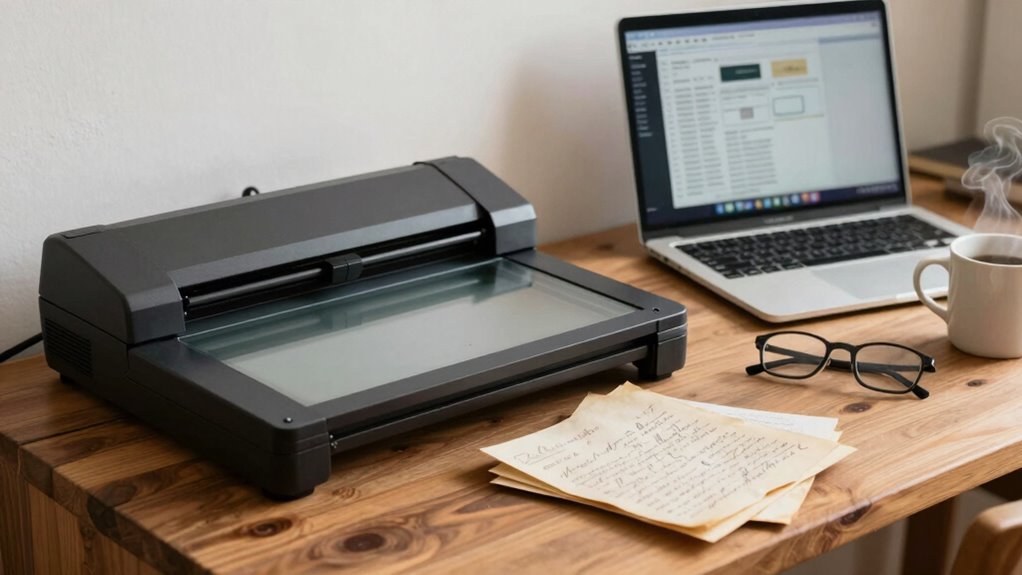
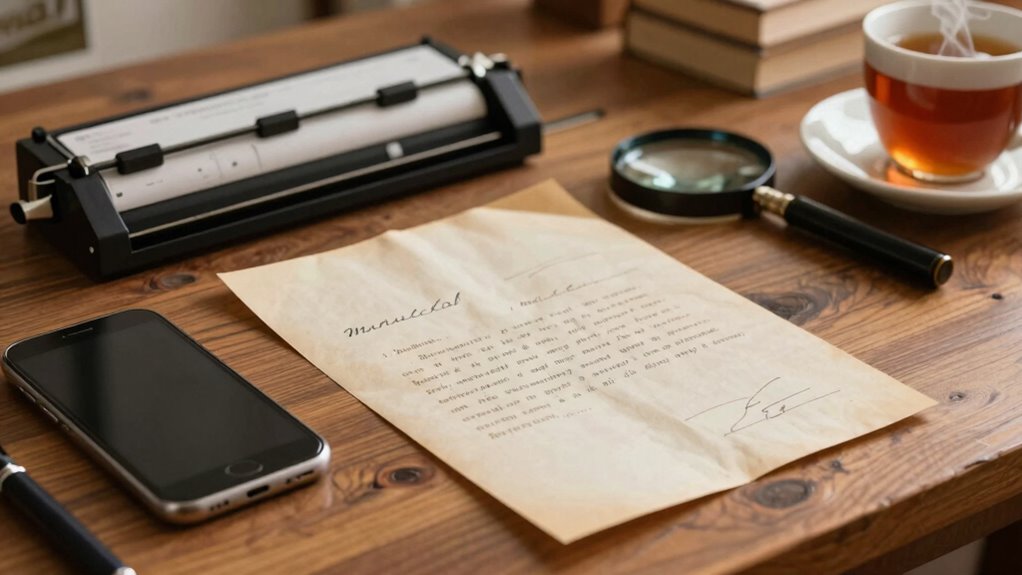
To get started, gather all the letters you want to preserve. Handle them carefully to avoid any damage. When it’s time to scan, use a high-quality scanner or a smartphone with a good camera—just make sure the lighting is even and bright to capture all the details clearly. Keep the letters flat and avoid any unnecessary bending or folding. It’s best to scan at a resolution of at least 300 dpi; this guarantees you capture the fine handwriting and small print, making the digital copy as detailed as the original.
Once you’ve scanned each letter, save the files in a universally accessible format like PDF or JPEG. PDFs are ideal for text-heavy documents, as they keep the layout intact and allow for easy navigation. Create a logical naming system so you can find specific letters quickly—consider including dates, names, or locations in the filenames. Organize these digital files into folders or cloud storage, which makes it simple to access and back up your collection. Cloud services like Google Drive, Dropbox, or dedicated digital archiving platforms are excellent options. They not only secure your files but also make them available from any device, anywhere.
Regularly backing up your digital archive is vital. Keep copies on an external hard drive or another cloud account to prevent data loss. As you digitize more letters, consider adding metadata—details about the letter’s sender, recipient, date, and context. This extra step enriches your archive and makes searching for specific items much faster later on. Utilizing proper color accuracy and contrast ratios can also improve the clarity and visual appeal of digital images, ensuring your scanned letters are preserved with high fidelity. Additionally, understanding digital preservation techniques can help ensure your archive remains accessible and intact over time. Incorporating best practices in digital archiving can further enhance the longevity and usability of your collection. Learning about file formats and their benefits can also contribute to maintaining the quality of your digital files over the years.
Digital archiving transforms a cluttered pile of paper into an organized, easily accessible library. It reduces physical storage needs and protects your collection from deterioration, pests, or disasters. Implementing these preservation methods can significantly extend the lifespan of your digital files and maintain their quality for years to come. Plus, sharing digital copies with family members or historians becomes effortless, keeping your family stories alive for generations. Overall, digitizing old letters isn’t just about preservation; it’s about making your treasured memories more accessible and guaranteeing they stand the test of time, brightening up your space and your family’s history.
high resolution document scanner
As an affiliate, we earn on qualifying purchases.
As an affiliate, we earn on qualifying purchases.
Frequently Asked Questions
What Equipment Do I Need to Start Digitizing Old Letters?
To start digitizing old letters, you’ll need a good flatbed scanner or a dedicated vintage document scanner for letter preservation. A clean workspace helps prevent damage, and using gloves can protect fragile paper. Consider a high-resolution setting for detailed vintage document scanning. Optional tools include a document holder or weight to keep pages flat, and photo editing software to enhance scanned images, ensuring your collection stays preserved and accessible for years to come.
How Can I Enhance the Quality of Scanned Handwritten Letters?
Imagine you’re a time-traveling detective, seeking perfect handwriting accuracy. To enhance scanned handwritten letters, set your scan resolution high—at least 600 DPI—to capture detail clearly. Use image editing software to sharpen or adjust contrast, making the handwriting pop. Avoid excessive compression, which can blur text. These steps guarantee your digital copies stay true to the original, preserving the charm of those handwritten gems for generations.
Are There Any Privacy Concerns When Digitizing Personal Letters?
Yes, there are privacy risks when digitizing personal letters. You could expose sensitive information if files aren’t securely stored or shared. To protect your privacy, use strong encryption methods to safeguard the digital copies. Also, keep backups offline or on secure cloud services, and limit access to trusted devices. Being cautious with encryption and storage helps guarantee your personal letters stay private and secure.
What File Formats Are Best for Saving Digitized Letters?
For digital archiving your old letters, choose PDF/A for long-term preservation, JPEG or TIFF for high-quality images, and PNG for detailed scans with transparency. These formats balance clarity and file size through file compression, ensuring your files remain accessible and manageable. You want formats that safeguard your memories while optimizing storage, making your digitized collection easy to access, share, and preserve for future generations.
How Do I Organize and Store Digital Copies Securely?
You should organize your digital copies with a clear folder structure, labeling files with dates and descriptions. To store them securely, implement digital backup strategies like backing up to external drives and using cloud storage solutions. Regularly update your backups, and consider encrypting sensitive files for extra security. This way, you protect your digitized letters from loss, theft, or damage, ensuring they stay safe and accessible.
smartphone camera scanner for documents
As an affiliate, we earn on qualifying purchases.
As an affiliate, we earn on qualifying purchases.
Conclusion
By digitizing your old letters, you turn clutter into clarity, transforming a chaotic room into a sleek, organized haven. Imagine your space bursting with vibrant memories, each letter perfectly preserved like priceless treasures in a digital vault — all without the dust and chaos of paper stacks. It’s like giving your treasured past a shiny new home where it can shine forever, freeing up room and peace of mind in ways you never thought possible.
cloud storage for digital archives
As an affiliate, we earn on qualifying purchases.
As an affiliate, we earn on qualifying purchases.
photo editing software for digitized letters
As an affiliate, we earn on qualifying purchases.
As an affiliate, we earn on qualifying purchases.
Fall Picks
fall essentials
As an affiliate, we earn on qualifying purchases.