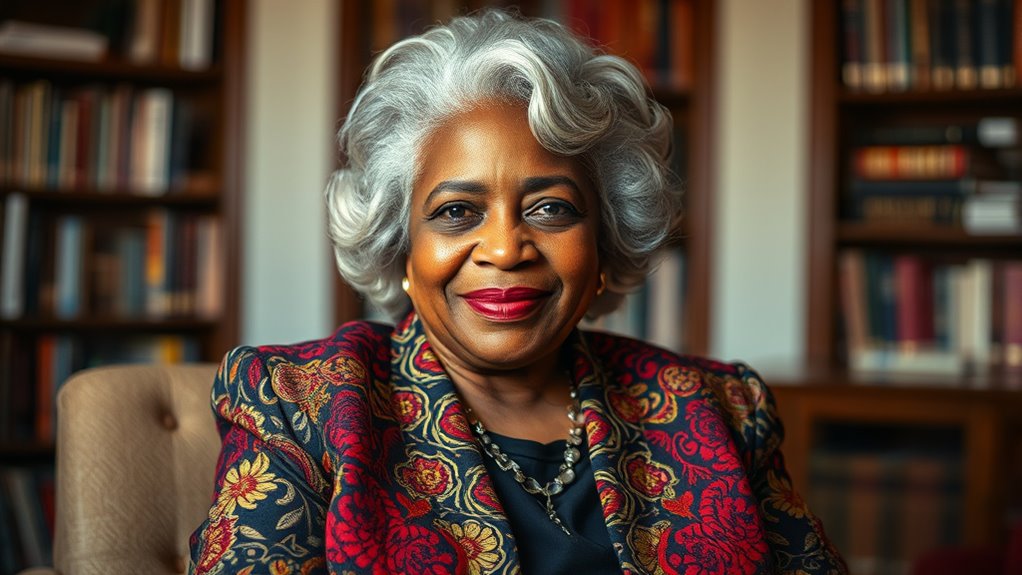

Toni Morrison, a Nobel laureate, reshaped American literature by giving voice to Black experiences often unheard or overlooked. She created powerful stories that blend history, folklore, and raw emotion, inspiring conversations about race, identity, and resilience. Her work highlights the dignity within painful histories and pushes for greater diversity in storytelling. If you continue exploring her life and legacy, you’ll discover how she used literature as a tool for empowerment and cultural change.
Key Takeaways
- Toni Morrison was awarded the Nobel Prize in Literature in 1993 for her impactful storytelling and contribution to American literature.
- She profoundly shaped Black cultural identity through novels like *Beloved* and *The Bluest Eye*.
- Morrison’s work highlighted Black experiences, addressing trauma, resilience, and systemic oppression.
- She broke literary barriers, amplifying marginalized voices and promoting diversity in publishing.
- Her legacy continues to inspire social change, cultural conversations, and recognition of Black narratives.
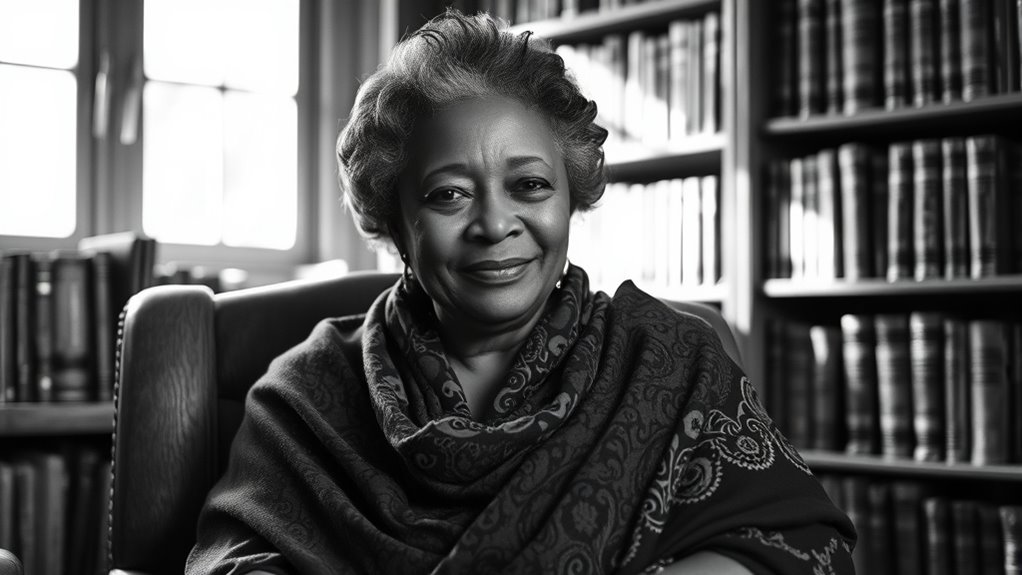
Have you ever wondered how one writer can reshape American literature and give voice to marginalized communities? Toni Morrison did just that, leaving behind a profound literary legacy that continues to influence generations. Her work isn’t just about storytelling; it’s a powerful cultural force that challenges perceptions, confronts injustices, and highlights the richness of Black experiences. When you explore her novels, you’ll see how Morrison masterfully blends history, folklore, and raw emotion, creating narratives that resonate deeply across racial and cultural boundaries. Her literary legacy isn’t confined to her books alone; it’s woven into the fabric of American culture, inspiring countless writers and activists to speak out and seek change. Morrison’s impact on culture is undeniable. She gave voice to Black Americans’ stories—stories that had long been silenced or ignored in mainstream literature. Through works like *Beloved*, *The Bluest Eye*, and *Song of Solomon*, you witness her ability to portray the complexities of identity, trauma, and resilience. Her stories often probe into painful histories of slavery, segregation, and systemic oppression, but they do so with a sense of dignity and hope. Morrison refused to sugarcoat reality; instead, she illuminated truths that many preferred to forget, prompting society to confront its past and present. Her writing catalyzed conversations about race, gender, and history, making her a catalyst for cultural change. By giving visibility to Black voices and experiences, Morrison’s work broke barriers and expanded the scope of American literature. She challenged the notion that stories about marginalized communities were niche or secondary. Instead, she proved that these narratives are central to understanding the collective American experience. Her influence extends beyond her novels—she mentored young writers, advocated for diversity in publishing, and spoke passionately about the importance of authentic storytelling. This ripple effect has shaped a more inclusive literary landscape, ensuring that future generations continue to tell stories that matter. Recognizing the importance of cultural representation in literature, Morrison’s work emphasizes the power of storytelling as a tool for empowerment, education, and change. Her literary contributions aren’t just celebrated for their artistry but for their role in shaping cultural consciousness. She showed that storytelling can be a tool for empowerment, education, and change. When you look at her body of work, you see a fearless voice that challenged the status quo and elevated Black voices to rightful prominence in American literature. Her cultural impact endures, reminding us all of the strength found in storytelling and the importance of giving voice to those who have been unheard for too long.
Top picks for "toni morrison nobel"
As an affiliate, we earn on qualifying purchases.
Frequently Asked Questions
What Inspired Toni Morrison’s Unique Narrative Style?
You’re inspired by Toni Morrison’s unique narrative style through her language experimentation and deep cultural storytelling. She pushes boundaries with inventive language, blending dialects and poetic techniques, which immerses you in authentic voices. Her stories reflect the richness of Black culture and history, inspiring you to see storytelling as a powerful way to explore identity and history. Morrison’s approach encourages you to embrace creative expression and cultural roots in your own writing.
How Did Morrison Influence Contemporary African American Writers?
You see how Morrison shaped contemporary African American writers by emphasizing authentic stories and complex characters, deepening your understanding of African American identity. Her literary legacy encourages writers to explore cultural history and social issues with honesty and artistry. Through her influence, you’re inspired to challenge stereotypes, craft powerful narratives, and honor the richness of Black experiences, ensuring her impact continues to inspire future generations of writers.
What Were Morrison’s Views on Political Activism?
Imagine a powerful river carving through obstacles—that’s how Morrison viewed political activism. She believed activism strategies should flow naturally, rooted in authentic storytelling and cultural expression. Morrison saw political engagement as essential for change, urging writers and readers alike to confront injustice with honesty and resilience. She emphasized that true activism stems from understanding history and using literature as a tool to amplify marginalized voices and inspire societal transformation.
How Did Her Personal Experiences Shape Her Literary Themes?
Your personal history and cultural influence deeply shape Morrison’s literary themes. Growing up in a segregated community, she experiences racial injustice firsthand, which fuels her exploration of identity, trauma, and resilience. Her background informs her vivid storytelling, highlighting Black experiences and history. By weaving her personal experiences into her work, you see how her life’s journey inspires powerful narratives that challenge societal norms and elevate Black voices.
What Awards Did Morrison Receive Beyond the Nobel Prize?
You’ll find that Toni Morrison received numerous literary honors beyond the Nobel Prize, including the Pulitzer Prize for Beloved and the Presidential Medal of Freedom. Her work also earned her recognition for her contributions to civil rights and American literature. These awards highlight her influence in advocating for justice and amplifying Black voices. Morrison’s legacy continues to inspire, reminding us of the power of storytelling in shaping social change and cultural understanding.
Conclusion
You can see how Toni Morrison’s words continue to echo like a lighthouse guiding Black America through stormy waters. Her stories aren’t just pages in a book—they’re a mirror reflecting resilience, pain, and hope. By honoring her legacy, you carry her voice forward, ensuring her truth remains a beacon for generations to come. Her influence is a river that flows endlessly, shaping the landscape of literature and consciousness in ways only she could inspire.