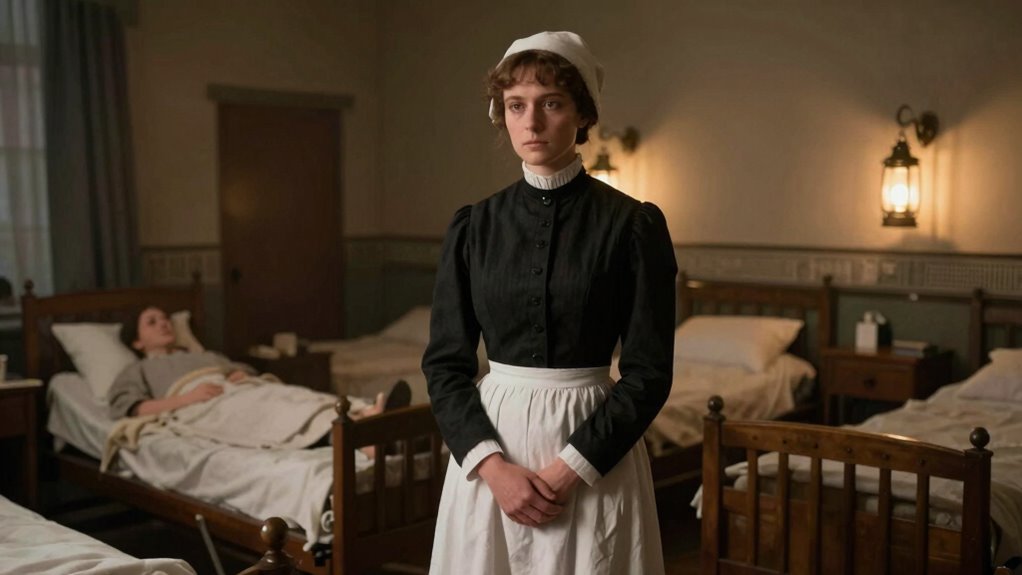

Florence Nightingale transformed nursing into a scientific discipline by emphasizing evidence-based practices, sanitation, and data analysis. She improved hospital hygiene, reducing mortality rates and setting new standards for infection control. Nightingale also promoted professional training, turning caregiving into a respected, skilled field. Her innovations laid the foundation for modern healthcare practices and policies that focus on cleanliness and data-driven decision-making. If you’re interested, you’ll find out how her legacy continues to shape healthcare today.
Key Takeaways
- Florence Nightingale transformed nursing into a scientific discipline through evidence-based practices and systematic data collection.
- She improved hospital sanitation, reducing mortality rates and establishing infection control standards.
- Nightingale advocated for formal nursing education, elevating caregiving to a respected, trained profession.
- Her innovations laid the foundation for modern healthcare practices, emphasizing hygiene and data-driven decision making.
- Nightingale’s legacy continues to influence healthcare policies, emphasizing sanitation, professionalism, and scientific methods.
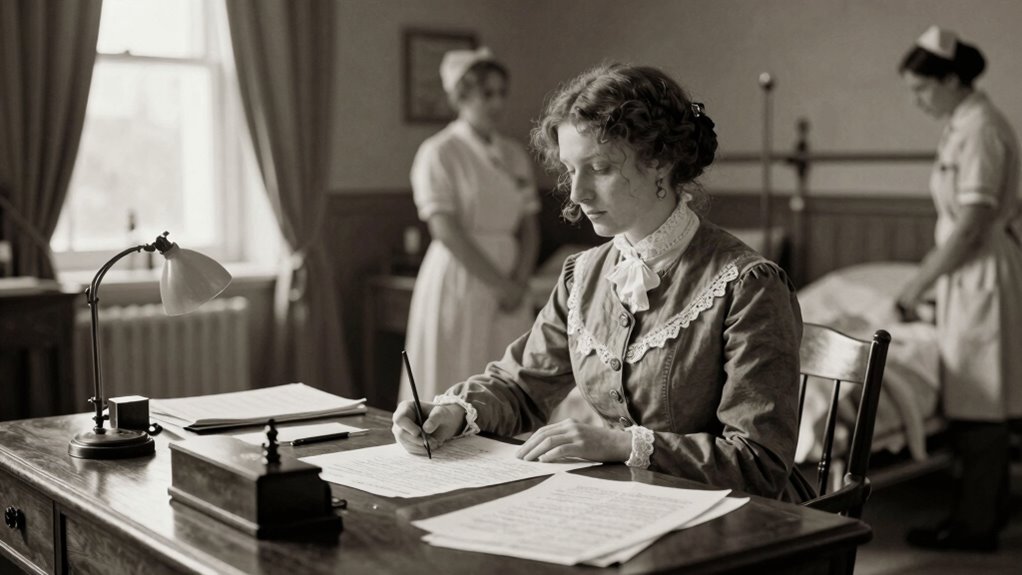
Florence Nightingale revolutionized nursing by transforming compassionate care into a rigorous, evidence-based science. Her work didn’t just change how hospitals operated; it reshaped the entire profession of nursing. Her influence is felt even today, as the foundations she laid continue to guide modern healthcare practices. You can see her historical impact in the way healthcare professionals approach patient care with a focus on sanitation, data collection, and systematic improvement. Nightingale’s groundbreaking nursing innovations helped reduce mortality rates during the Crimean War and set standards that persist in hospitals worldwide.
Florence Nightingale transformed nursing into a science, shaping modern healthcare through sanitation, data, and professional training.
You might not realize it, but her innovations in nursing laid the groundwork for many of the practices you see in healthcare settings today. She emphasized the importance of cleanliness, proper ventilation, and nutrition as essential components of patient recovery. Her commitment to hygiene and sanitation was revolutionary at a time when hospitals were often breeding grounds for infection. By systematically collecting and analyzing data, she demonstrated that improvements in sanitation directly affected patient outcomes, turning anecdotal care into a science rooted in evidence. This approach was a pivotal shift from the traditional, intuitive methods to a more scientific, measurable practice. You can credit her for establishing the use of statistics and data analysis as vital tools in healthcare, which helped inform policy changes and hospital reforms.
Her efforts also introduced the concept of professional nursing as a respected, trained discipline. Before her influence, caregiving was often seen as a low-status task performed by untrained individuals. Nightingale championed formal education and training for nurses, elevating the profession and ensuring better patient care. This was a significant nursing innovation that helped create a structured, skilled workforce capable of implementing health reforms. Her advocacy for nursing education laid the foundation for the modern nursing schools and certification programs you see today.
In essence, Florence Nightingale’s contributions are deeply embedded in the fabric of contemporary healthcare. Her historical impact goes beyond her immediate reforms; she established principles of infection control, data-driven decision-making, and professional training that continue to shape nursing standards. Her pioneering work turned the art of caring into a science, and her legacy remains a testament to how evidence-based practices can revolutionize patient outcomes. When you think about modern nursing, you’re directly standing on the shoulders of her innovations, which transformed compassionate care into a disciplined, scientific pursuit.
As an affiliate, we earn on qualifying purchases.
Frequently Asked Questions
What Inspired Florence Nightingale to Pursue Nursing as a Career?
You’re curious about what inspired Florence Nightingale to pursue nursing. Her personal motivations stemmed from a desire to improve healthcare amid the historical context of widespread disease and inadequate sanitation. Witnessing suffering and death during the Crimean War deeply moved her, motivating her to bring scientific principles to nursing. Her dedication transformed caregiving into a respected and systematic profession, driven by her passion to reduce suffering and improve patient outcomes.
How Did Nightingale’s Work Influence Modern Healthcare Systems?
Imagine a hospital today where data guides patient care—Nightingale’s work made this possible. Her focus on epidemiology advancements and meticulous medical record keeping transformed healthcare, emphasizing sanitation, data analysis, and evidence-based practices. You see her influence in modern infection control protocols and health statistics. Her innovations laid the groundwork for the systematic, scientific approach in healthcare, making patient outcomes safer and more predictable today.
What Were Her Major Challenges in Establishing Nursing as a Profession?
You face major challenges like overcoming historical obstacles that limited women’s roles and societal perceptions that viewed nursing as low-status work. Nightingale fought against these stereotypes by advocating for professional training and education, transforming nursing into a respected, scientific discipline. Her persistence helped shift public opinion, establishing nursing as a crucial and respected profession, despite resistance from those who doubted women’s capabilities or saw caregiving as merely domestic work.
Did Nightingale Have Any Notable Relationships With Other Healthcare Pioneers?
Think of Nightingale as the spark that ignited a fire among healthcare pioneers. She formed valuable medical partnerships and cultivated mentorship networks, connecting with influential figures like Sidney Herbert and William Farr. These relationships helped her promote sanitary reforms and advance nursing science. Her collaborations weren’t just friendships—they were strategic alliances that propelled her vision of modern healthcare, showcasing her ability to turn individual efforts into a collective movement.
How Is Her Legacy Preserved in Today’s Medical Practices?
Her legacy is preserved today through your adherence to ethical standards, emphasizing patient care and dignity. You benefit from her pioneering use of statistical analysis and data visualization, which have driven technological advancements in healthcare. Nightingale’s emphasis on sanitation and evidence-based practices continues to shape modern nursing, inspiring you to prioritize safety, hygiene, and continuous improvement in patient outcomes. Her influence remains central to contemporary medical and nursing practices.
As an affiliate, we earn on qualifying purchases.
Conclusion
You now see how Florence Nightingale revolutionized nursing, transforming it from simple compassion into a precise science. Her pioneering efforts laid the foundation for modern healthcare, proving that care and data go hand in hand. Think of her as the original “tech guru” of the 19th century, using stats and sanitation instead of apps. Her legacy reminds us that even in a world without Wi-Fi, dedication and innovation can change lives forever.
As an affiliate, we earn on qualifying purchases.
medical data collection software
As an affiliate, we earn on qualifying purchases.
As an affiliate, we earn on qualifying purchases.