TL;DR

Get art and craft supplies delivered free with Prime
- Fast, free delivery on millions of items
- Prime Video, Amazon Music and more included
- Member-only deals all year
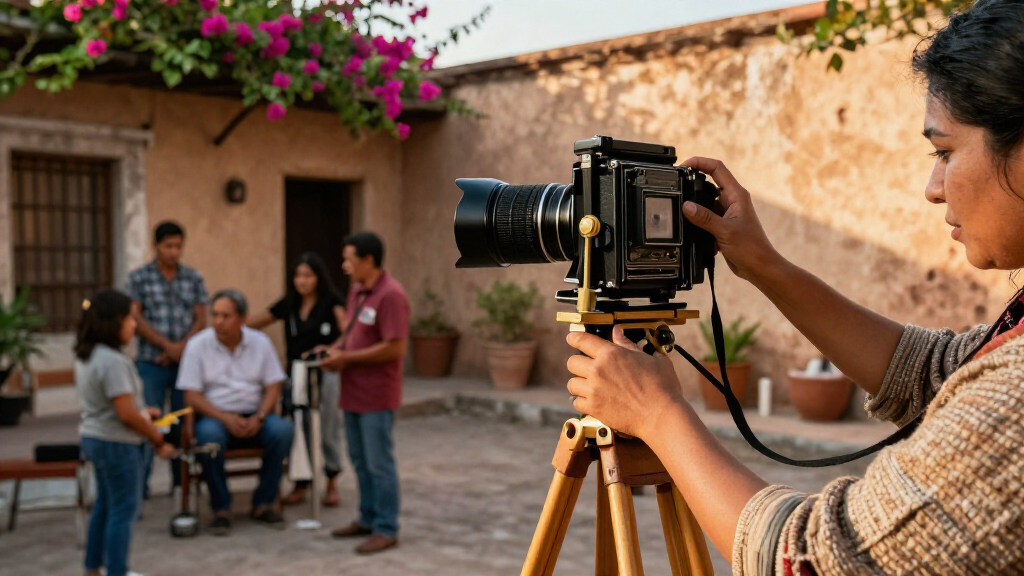
The Getty Center in Los Angeles is presenting Instante/revelación: Moments in Mexican Photography, an exhibition of work by 13 Mexican photographers made from the late 1920s to the mid-2010s. The show traces photography’s role in Mexico’s visual culture, from post-Revolution nation-building to contemporary life, through portraits, landscapes and scenes of everyday experience.
The Getty Center in Los Angeles is presenting Instante/revelación: Moments in Mexican Photography, an exhibition bringing together work by 13 Mexican photographers from the late 1920s to the mid-2010s. The show traces how photography helped shape Mexico’s visual culture, connecting the nation-building period after the Revolution with contemporary life.
The exhibition ranges across portraits, landscapes, botanical subjects and scenes of everyday life. It also places images of artists and intellectuals—including Frida Kahlo, Diego Rivera and David Alfaro Siqueiros—alongside less formal views of people and the natural world. The arrangement presents photography not only as documentary record but as a way of shaping how Mexico and its people are seen.
Two works singled out in Hyperallergic’s review illustrate the show’s attention to light, composition and the experience of its subjects. In Lola Álvarez Bravo’s Tríptico de los martirios (1950), a tree’s shadow moves toward an otherwise anonymous subject’s bare chest. Graciela Iturbide’s Mujer ángel (1979) depicts a woman in a veil and long white skirt, carrying a portable stereo across a flowered field toward a desert landscape.
The review describes both images as having a cinematic quality and as examples of modernist approaches to photography. The exhibition’s date range extends to the mid-2010s, while the reviewed works also include a 2007 photograph by Iturbide. The source does not provide a complete checklist of artists or individual works.
Photography and Mexico’s Public Image
The exhibition treats photography as part of the process through which a nation’s visual identity is made and interpreted. By bringing images of well-known cultural figures together with landscapes, plants and everyday scenes, it connects national history to ordinary experience rather than presenting identity through political leaders or iconic artists alone.
That approach matters because photographs can serve both as records and as carefully composed interpretations. The works described in the review draw attention to framing, light and the relationship between photographer and subject. The show’s long span also gives visitors a way to see how photographic practice changed while continuing to engage with questions of culture, place and representation.
Products Worth Considering

Garmin Tacx NEO 2T Smart Trainer

TheraGun Therabody Relief Massage Gun – 3 Speed, Navy

GoPro Fluid Pro AI 3-Axis Gimbal Stabilizer
As an affiliate, we earn on qualifying purchases.
From Post-Revolution Images to Iturbide
The exhibition begins in the late 1920s, after the Mexican Revolution, and follows photography into the mid-2010s. Its stated arc links the work of photographers to the country’s post-Revolution effort to build a national culture, then to later depictions of contemporary life. The source describes this as the show’s framework; it does not claim that photography alone created Mexico’s national identity.
The title draws on Octavio Paz’s book Instante y revelación (1982), translated in the source as Instant and Revelation. Paz paired his poetry with photographs by Manuel Álvarez Bravo, whose work he had encountered in the literary magazine Contemporáneos. That connection between writing and photography informs the exhibition’s poetic groupings, according to the review.
The review centers on Álvarez Bravo’s late wife and fellow photographer, Lola Álvarez Bravo, and on Iturbide, whose work extends into the 2000s. Their photographs offer examples from different points in the exhibition’s broader timeline, rather than a complete account of its 13 participants.
“The exhibition brings together work by 13 Mexican photographers, spanning the late 1920s to the mid-2010s.”
— Hyperallergic’s review
Details the Review Leaves Open
The source material does not give the exhibition’s opening and closing dates, admission details, full artist list or complete checklist. It also does not provide visitor figures or institutional statements quantifying the exhibition’s reception. The broader claim that photography helped shape national identity is presented as the show’s interpretive framework, not as a measured finding.
The review focuses on selected images and does not establish how much space or emphasis each photographer receives across the exhibition. Further details about the curatorial choices and the works on view would be needed to assess the show’s full scope beyond the examples described.
The Exhibition’s Public Run
The next practical step for readers is to check the Getty Center’s current exhibition information for dates, visiting arrangements and the full list of works on view. The supplied report does not state when the exhibition closes or identify related public programs, so those details should be confirmed with the museum rather than inferred from the review.
For the exhibition’s larger argument, the works themselves provide the next point of reference: visitors can compare images across the decades and consider how photographers represent public figures, ordinary life and the landscapes associated with Mexico.
Key Questions
What is Instante/revelación: Moments in Mexican Photography?
It is a Getty Center exhibition in Los Angeles featuring work by 13 Mexican photographers from the late 1920s to the mid-2010s. Its stated focus is photography’s relationship to Mexico’s visual culture, from post-Revolution nation-building to contemporary life.
Which photographers and works are highlighted in the review?
The review discusses Lola Álvarez Bravo’s Tríptico de los martirios (1950) and Graciela Iturbide’s Mujer ángel (1979). It also references Manuel Álvarez Bravo in connection with the exhibition’s literary framework.
Why does the exhibition refer to Octavio Paz?
The title comes from Paz’s 1982 book Instante y revelación. The review says Paz paired poetry with photographs by Manuel Álvarez Bravo, and that the link between language and visual art informs the exhibition’s groupings.
When can visitors see the exhibition?
The supplied report does not state the exhibition’s opening or closing dates. Readers should consult the Getty Center’s current visitor information for its status and visiting details.
Source: hyperallergic.com