AIThis post was created with the assistance of artificial intelligence (AI).

TL;DR

Handmade art supplies make thoughtful gifts when they fit the recipient’s favorite activity, experience, and available space. Choose a few dependable, compatible materials, add a simple project idea, check safety labels, and personalize the presentation with practical packaging or a note.

A gift can sit untouched for months—or become the reason someone fills a rainy afternoon with color. Handmade art supplies make thoughtful gifts because they invite the recipient to create something of their own, whether that means sketching a favorite view, stitching a patch, or filling a journal with bright scraps. The trick is choosing materials that fit the person, rather than buying the biggest box on the shelf. You’ll find ways to match a gift to someone’s favorite medium and experience, choose quality without overspending, and make the package feel personal. A few well-chosen supplies can open the door to a new hobby; a mismatched kit can leave someone wondering where to begin.
At a glance
Handmade Art Supplies for Gifts: How to Choose Well
Key insight
A beginner watercolor gift works best as a coordinated set: paint, watercolor paper, a few brushes, and a mixing surface, since ordinary sketch paper can buckle when wet.
Key takeaways
1

Match supplies to the recipient’s favorite medium and current skill level.

2

Build beginner kits with a few compatible basics and one simple project prompt.

3

Choose material quality for the intended use; a beginner may not need artist-grade supplies.

4

Check age, ventilation, and handling labels for tools and materials that can pose risks.

5

Use practical packaging, a personal note, or a flexible art-shop gift card to make uncertain choices feel thoughtful.

Step by step
1
Build a beginner kit that makes the first project easy
A good beginner art kit pairs a few compatible supplies with one clear project idea, so the recipient can start without a separate shopping…
Before you orderOffer from Amazon

Get art and craft supplies delivered free with Prime

  • Fast, free delivery on millions of items
  • Prime Video, Amazon Music and more included
  • Member-only deals all year
Start your free Prime trial Free trial for eligible customers · Cancel anytime
As an affiliate, we earn on qualifying purchases.

Start with what they already love to make

Handmade art supplies make gifts people are more likely to use when they match an activity the recipient already enjoys. Think about what they draw, paint, sew, print, or collect in their journal, then build around that habit. A gift should feel like an open door, not a new assignment. For a watercolor fan, a few brushes and suitable paper may be more welcome than a mixed-media box of unfamiliar tools. Someone who fills notebooks with daily observations might enjoy a pocket sketchbook and a reliable pen. If your cousin spends evenings embroidering tote bags, choose floss in colors she wears and a pattern close to her skill level. You can look for clues without turning gift shopping into detective work. Notice what sits on their desk, what they mention running out of, or which projects they share. A ceramic artist with a favorite palette may appreciate a small handmade mixing dish, while a new drawer may need pencils and an eraser more than specialty ink. When you’re unsure about the medium, ask a friend or family member what the person likes to make, or choose a gift card to an independent art shop. The personal touch can come from the note and packaging; the materials can stay flexible.

Products Worth Considering

Garmin Instinct 3 AMOLED Rugged GPS Smartwatch, 50 mm, Charcoal

Garmin Instinct 3 AMOLED Rugged GPS Smartwatch, 50 mm, Charcoal

As an affiliate, we earn on qualifying purchases.

Build a beginner kit that makes the first project easy

A good beginner art kit pairs a few compatible supplies with one clear project idea, so the recipient can start without a separate shopping trip. Keep the set small enough to understand at a glance. A sketchbook, graphite pencils, eraser, and sharpener can carry someone from a first still life to a month of daily doodles. For a starter watercolor set, include beginner-friendly paints, paper made for watercolor, two or three brushes, and a mixing palette. A kitchen plate can serve in a pinch, but a compact palette keeps colors tidy. Ordinary printer paper often buckles under wet paint, so suitable paper makes the first attempt less frustrating. Use this quick sequence to put a kit together:
  1. Pick one medium the recipient already likes or wants to try.
  2. Choose three to five compatible basics, checking that the paper, paint, tools, or fabric work together.
  3. Add one approachable project, such as painting a postcard or embroidering a small leaf.
  4. Include a short note with a simple first step and any care or safety guidance.
Imagine a new watercolor painter opening a box on Saturday morning. The paper, paints, brush, and postcard prompt are all there. They can begin with a cup of water instead of pausing to search for supplies.

Spend on dependable materials instead of a giant assortment

A smaller set of dependable materials usually makes a better gift than a big assortment of novelty items. Look for clear labels, comfortable tools, and paper suited to the medium. For paints and papers that matter to the recipient’s work, details such as lightfast pigments and archival paper can help them choose materials meant to hold up over time. Price alone doesn’t tell you whether a product fits. Artist-grade paints can offer qualities experienced painters value, but a beginner may enjoy a student-friendly set while learning how color behaves. A child who likes bold poster-sized pictures may want a washable, age-appropriate set more than a tiny collection of expensive pencils. The useful question is what the person will make and how often. A journaler who writes every day may appreciate one smooth, reliable pen and a notebook that takes ink well. A casual sketcher might prefer a modest pencil set they can carry in a coat pocket. Compare options by material suitability and comfort, not just the number printed on the box. If you can, check the label or ask the maker what the supplies are intended for. A small-batch brush or handmade ceramic palette can add character, but it should still work comfortably. Beautiful tools earn their place when they invite the recipient to reach for them.

Check safety, age guidance, and the space they have

The right art gift fits the recipient’s age and workspace as well as their interests. Read labels for age guidance, ventilation needs, and handling instructions, especially for solvents, powdered pigments, glazes, and adhesives. Children need products labeled for their age, and adults should follow the maker’s directions for materials that produce fumes or dust. A compact journal kit can suit someone with a small apartment desk: notebook, pens, washi tape, stickers, and a few stamps fit inside a pouch. A printmaking kit may need more room and careful handling because carving tools have sharp blades. If you give one, include age and safety guidance and a stable surface for the first project. Think about storage before you buy. A painter who already has a crowded shelf may prefer refillable markers or a slim palette over a large organizer. A new embroiderer might welcome a small box that keeps needles and floss together. The gift becomes easier to use when its supplies have a tidy home. For a family craft afternoon, choose materials everyone can handle and a project that suits the youngest participant. A short, cheerful session making stamped cards is easier to enjoy than passing around tools that need close supervision. Match the activity to the people and room you have.

Make the gift feel personal with thoughtful packaging

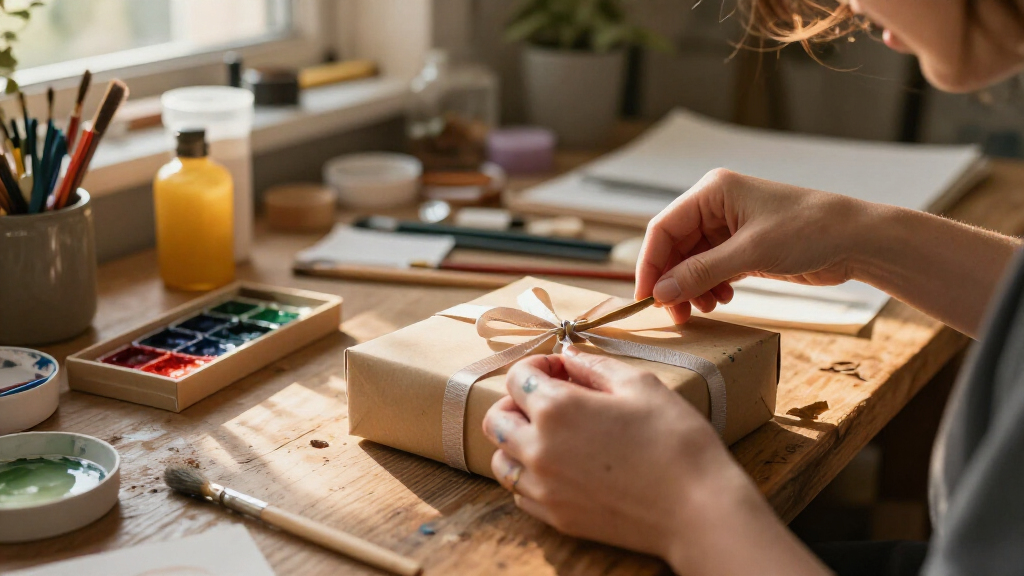
Personal packaging turns useful art supplies into a gift that feels chosen for one person. A handmade pouch, sturdy storage box, or sketchbook can protect the materials and give them a home after unwrapping. Add a note that suggests one small project, such as making a painted bookmark or stitching initials onto a fabric scrap. Packaging should protect delicate items without burying them under extra waste. Wrap brushes so their bristles stay straight, place a ceramic palette in a padded box, and keep paper flat. Reused tissue or a clean fabric wrap can look lovely beside a handwritten tag, especially when the colors echo the supplies inside. Small-batch and sustainability-focused options may appeal to recipients who value thoughtful sourcing. Look for recycled or responsibly sourced paper, refillable tools, or supplies made by independent makers. A handmade palette can carry a maker’s fingerprints and glaze variation; those small details give it warmth, while a standard palette may be more practical for someone who needs to replace items easily. A digital guide can complement a physical kit. If the maker offers a QR code linking to a demonstration, include it with a note about what the video shows. It can help a beginner get moving, while the physical supplies remain the heart of the present. Check current availability and product claims with the maker or retailer before buying.

Choose a useful gift even when you’re on a budget

You can make a thoughtful art gift at almost any budget by choosing a useful core item and adding one personal detail. A small sketchbook and two pencils can mean more than an oversized set of tools that duplicate what someone owns. Handmade art supplies need not be costly to make someone feel seen. A practical approach is to choose one item the recipient will use often, then add a low-cost complement. Pair a journal with a few washi tape rolls, or give embroidery floss with a small fabric hoop and a beginner pattern. If you know their preferred brand or medium, a gift card lets them pick the exact colors, paper weight, or tool they need. Budget also affects what you should leave out. Avoid buying delicate or specialized materials just because they look impressive if you can’t confirm the person wants them. A student painter may appreciate a few colors they use regularly; a larger set that sits untouched offers less value. When preferences are unclear, a note inviting them to choose a project together can make a modest gift feel generous. For example, a friend who sketches on the train could use a pocket notebook, a sturdy pencil, and a small eraser. Those three pieces fit in a bag and support an existing habit. The gift meets them where they are.

Frequently Asked Questions

What art supplies make a good gift for a beginner?

Choose one medium and a compact set of compatible basics. For drawing, a sketchbook, graphite pencils, eraser, and sharpener give a beginner enough to start. Add one simple project idea so the first step feels clear.

How do I choose supplies if I don’t know their favorite art medium?

Look for clues in their current hobbies or ask someone close to them what they like to make. If you’re still unsure, give a gift card to an art shop and pair it with a personal note or handmade pouch.

Are expensive art supplies worth buying as a gift?

Sometimes, especially when you know the recipient values a particular tool or material. For a beginner, reliable student-friendly supplies can be more approachable than expensive artist-grade products they may not need yet.

What should I include in a beginner watercolor kit?

Include beginner-friendly paints, paper suited to watercolor, a few brushes, and a mixing palette. A small postcard project gives the recipient a low-pressure first use for the set.

What safety labels should I check on children’s art supplies?

Check the age guidance and follow the product’s handling instructions. Read labels carefully for materials such as adhesives, glazes, solvents, or powdered pigments, and choose products specifically marked as suitable for the child’s age.

How can I make an art-supply gift feel personal?

Choose colors or materials linked to something the recipient likes, then add a useful pouch, sketchbook, or handwritten project prompt. Protective, reusable packaging can make the gift feel considered without adding clutter.

Conclusion

Choose one creative habit the recipient already enjoys, then give them a few reliable materials that make it easier to keep going. Add a small project idea or personal note, and let the rest of the gift breathe. A good art-supply present doesn’t need to fill a studio; it only needs to put the first pencil, brush, needle, or stamp within reach. When they open it, you want the colors and textures to feel like an invitation: there’s a little room here for something only you can make.
You May Also Like

James McNeill Whistler’s Music For The Eyes

Search interest in James McNeill Whistler’s ‘Music for the Eyes’ has spiked, driven by rising curiosity about his artistic approach and recent exhibitions, though details remain unconfirmed.

Revisit Claes Oldenburg’s Seminal ‘Six Themes’ 50 Years After Its Debut

Paula Cooper Gallery will bring together works from Claes Oldenburg’s six recurring subjects, 50 years after the Walker Art Center survey.

Dozens Of Sculptures Dot Bondi Beach In The 2026 Sculpture By The Sea Exhibition

Dozens of works by Australian and international artists line 1.25 miles of Bondi coastline in the free exhibition, on view through November 2.

Treachery In The Rodin Museum 3D Scan Verdict

A Conseil d’État ruling narrowed access to Rodin Museum 3D scans after a 2023 order to release them. The claimant disputes the court’s reasoning.