
TL;DR

Get art and craft supplies delivered free with Prime
- Fast, free delivery on millions of items
- Prime Video, Amazon Music and more included
- Member-only deals all year
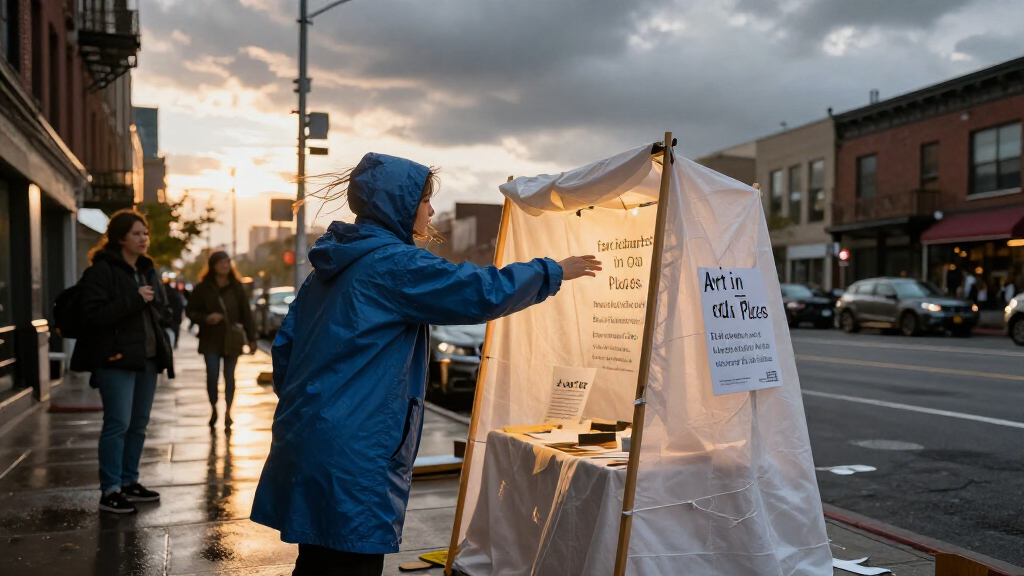
Art in Odd Places held its 21st edition along Manhattan’s 14th Street on Saturday and Sunday during a nor’easter. Artists presented participatory works about possible futures, while rain, complaints and site constraints disrupted some performances.
Art in Odd Places held its 21st festival along Manhattan’s 14th Street on Saturday and Sunday as a nor’easter brought heavy rain, with artists using performances and installations to invite public participation. The weather complicated the outdoor event, and at least one artist said storefront tenants objected to a performance involving fire and drums.
The festival stretched along 14th Street, with artists gathering between Sixth and Eighth avenues. Hyperallergic reported that the rain ranged from hard, sideways showers to mist, leaving artists to work beneath narrow awnings and scaffolding while trying to engage people hurrying through the wet weather. The report described the event as a public art festival focused on exploring possibilities for a utopian future.
At the Eighth Avenue subway stop, Massachusetts-based artist Nima Nikakhlagh presented “The Archive of Possibility” (2026). He asked passersby to draw a vision of a freedom not yet achieved or a city not yet realized. The report said the contributions would remain sealed in a box. Nearby, Panama-based performance artist Susana Gonzalez-Revilla packed up props under a laundromat awning after, she told Hyperallergic, storefront tenants complained about fire and drums in her performance.
Other works also addressed public participation and civic life. Entung Liu’s “Weaving You” (2026) invited people to weave strips featuring four AI-generated portraits together in a performance questioning technology’s role in immigration bureaucracy. Artist Ariel Kleinberg installed cutout paintings of goddesses on a chain-link fence beside a storefront covered by a tarp. The report does not say whether these works were changed or relocated during the weekend.
Public Art Meets Weather and Street Life
The festival put its central idea—engaging people in public space—to a practical test. Rain made it harder to stop passersby, while crowded sidewalks and a complaint about a performance’s fire and drums affected how artists could use the street. Those conditions show the immediate constraints artists faced during this particular outdoor event; the report does not establish that they changed the festival’s overall attendance or outcome.
The works also brought distinct questions into everyday settings: Nikakhlagh’s archive asked participants to imagine freedoms and cities not yet realized, while Liu’s weaving performance raised questions about AI and immigration bureaucracy. Both depended on people encountering and taking part in the work. The source offers descriptions of those invitations, but no count of participants or assessment of their views.
A Festival Along 14th Street
Art in Odd Places is described in the source as a public art festival staged along 14th Street in Manhattan. This was its 21st edition. The report locates the artists’ activity between Sixth and Eighth avenues and describes performances and site-specific installations rather than a single indoor exhibition.
The weather shaped the reported scenes throughout the weekend. Artists sought cover beneath awnings and scaffolding, and Gonzalez-Revilla moved her setup after tenants complained about the elements in her performance. The source does not provide a complete program, the festival’s original schedule, or details about other weather-related changes.
“A utopian vision of a freedom not yet achieved or a city not yet realized”
— Nima Nikakhlagh, as described by Hyperallergic
Attendance and Schedule Changes
The report does not give attendance figures, a full account of the festival schedule, or a count of people who took part in the interactive works. It is also unclear whether weather or site complaints led to cancellations or further relocations. The account of the complaint about fire and drums comes from Gonzalez-Revilla; the tenants’ perspective is not included.
The Festival’s Record of Participation
The source does not announce a forthcoming event or describe plans after the weekend. Nikakhlagh’s drawings are intended to remain sealed in his box, according to the report. Further information about participation, any schedule changes, or the festival’s next edition is not provided.
Key Questions
What happened at Art in Odd Places?
The festival held its 21st edition along Manhattan’s 14th Street over a rainy Saturday and Sunday, with performances and installations inviting public participation.
Where did the festival take place?
Artists worked along 14th Street between Sixth and Eighth avenues, including near the Eighth Avenue subway stop.
What was “The Archive of Possibility”?
It was Nima Nikakhlagh’s participatory work. He asked passersby to draw a freedom not yet achieved or a city not yet realized; the contributions were to remain sealed in a box.
Did the weather disrupt the festival?
The report describes persistent rain and artists seeking shelter under awnings and scaffolding. It does not list cancellations or quantify the weather’s effect on attendance.
Why did Susana Gonzalez-Revilla move her performance?
She told Hyperallergic she was relocating after storefront tenants complained about fire and drums used in her performance. The report does not include the tenants’ account.
Source: rss
Halloween Picks
halloween
As an affiliate, we earn on qualifying purchases.