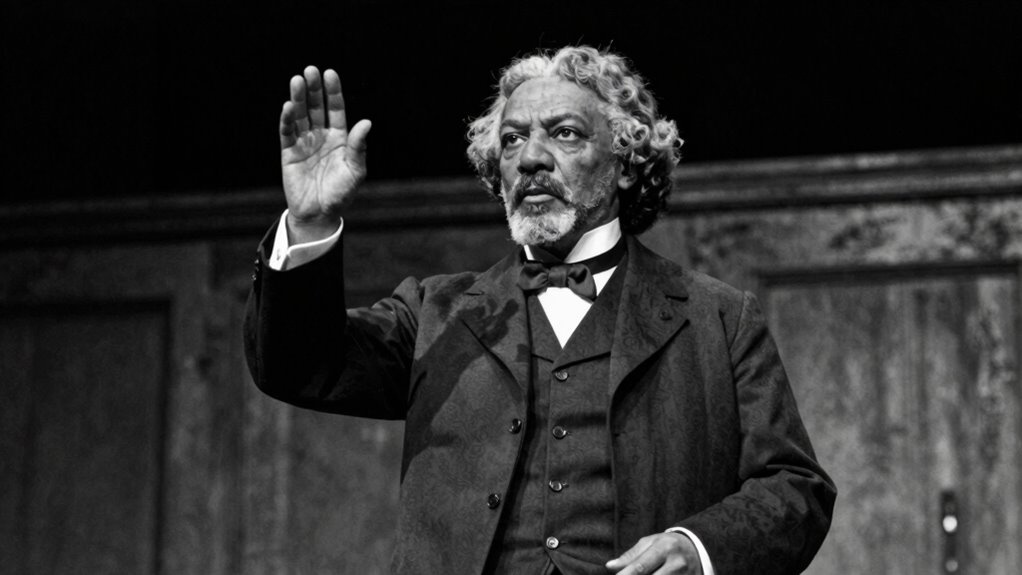

You see, Frederick Douglass turned his survival and hardships into a powerful force through masterful rhetoric. His speeches and writings exposed slavery’s cruelty, inspiring others to fight for justice. By educating himself against all odds, he amplified his voice and challenged oppression. His resilience and strategic use of language made him a legendary abolitionist. If you want to understand how his words transformed personal suffering into lasting social change, keep exploring his story.
Key Takeaways
- Douglass’s mastery of rhetoric transformed personal survival into a powerful tool for advocating abolition and justice.
- His eloquent speeches exposed slavery’s cruelty, inspiring resistance and social change through persuasive language.
- Self-education empowered Douglass to break barriers, turning hardship into a voice for freedom and dignity.
- His effective communication amplified his impact, rallying others to resist oppression and seek liberation.
- Douglass’s legacy demonstrates how resilience and strategic speech can challenge and dismantle systems of injustice.
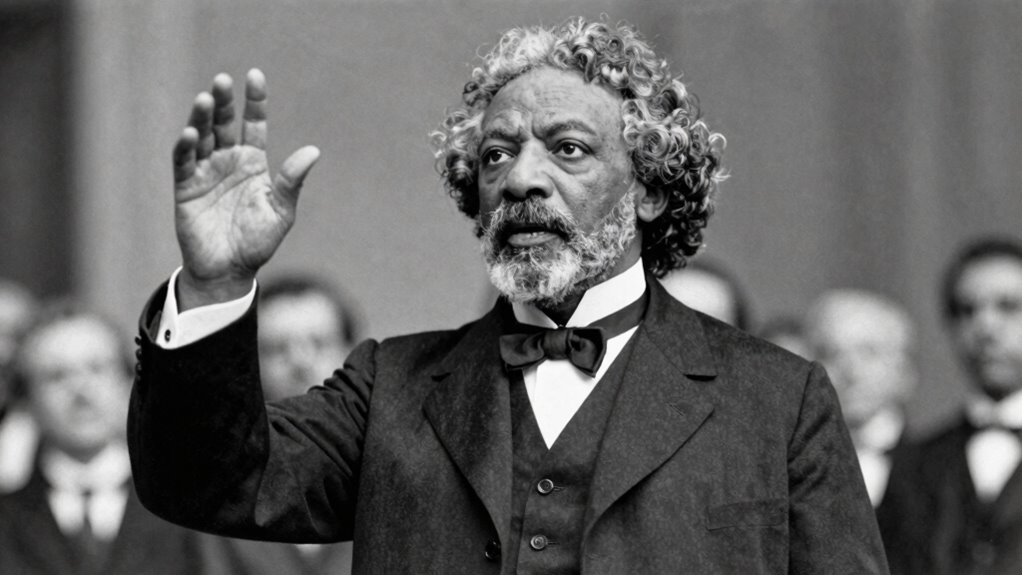
Have you ever wondered how one man’s voice could challenge an entire system of oppression? Frederick Douglass’s story is a testament to the power of words and unwavering resolve. His mastery of abolitionist rhetoric didn’t just inform or persuade; it shook the very foundations of slavery and racial injustice. When Douglass spoke, he didn’t merely share ideas—he wielded his voice as a weapon against the dehumanization he endured and witnessed. His speeches cut through the silence that often surrounded the brutality of slavery, exposing its cruelty to audiences both north and south. Each word he uttered carried the weight of personal resilience, transforming his survival into a powerful act of defiance. You see, Douglass’s ability to turn his suffering into eloquence was rooted in a fierce determination not to be silenced or defeated. His life was a testament to the idea that resilience isn’t just about endurance but about transforming hardship into a force for change.
From his earliest days, Douglass understood that survival wasn’t passive. It required mental strength, conviction, and a refusal to accept the status quo. When he learned to read and write—skills forbidden to enslaved people—he defied the system’s attempts to keep him powerless. This act of self-education became a cornerstone of his personal resilience. Each lesson learned reinforced his conviction that he deserved freedom and dignity. As he grew, Douglass harnessed his experiences and insights into compelling abolitionist rhetoric, speaking passionately about liberty, justice, and equality. His words resonated because they came from a place of lived experience; they weren’t abstract ideas but reflections of his own journey from bondage to liberation. You could say that his voice became a rallying cry for those who still suffered under slavery, inspiring countless others to resist and seek freedom. Additionally, his advocacy for educational empowerment helped dismantle some of the barriers to knowledge that oppressed enslaved people. Douglass’s mastery of rhetorical techniques further amplified the impact of his speeches, making his message both memorable and persuasive. His ability to effectively communicate complex ideas with clarity and passion was a testament to the importance of color accuracy in ensuring his messages reached diverse audiences. His strategic use of language and tone exemplifies how careful communication can influence public opinion and mobilize social change. Recognizing the importance of filtration systems in preserving health, Douglass’s emphasis on purity of message underscores how vital clarity and precision are in effective advocacy. His words created a legacy that proved survival, when wielded with purpose and strength, could turn into an unstoppable force for justice. Frederick Douglass’s life teaches us that resilience isn’t just about enduring hardships; it’s about transforming them into a voice that demands change.

Frederick Douglass: Prophet of Freedom
As an affiliate, we earn on qualifying purchases.
As an affiliate, we earn on qualifying purchases.
Frequently Asked Questions
What Inspired Frederick Douglass to Become a Passionate Orator?
You’re inspired by Douglass’s powerful speeches and his mastery of speech techniques and rhetorical strategies. Witnessing the brutality of slavery and longing for freedom fuels your passion to speak out. His compelling voice and persuasive methods, like vivid imagery and emotional appeals, motivate you to use your words as tools for change. You realize that turning survival into power starts with harnessing effective speech techniques and heartfelt rhetoric.
How Did Douglass’s Early Life Influence His Activism?
Your early life shaped you like a sculptor molds clay, forging your resolve through hardship. Slave narratives reveal your resilience, turning personal suffering into a weapon for change. The brutality and deprivation you endured fueled your passion for justice, making activism your voice. Every lash and lost moment became a catalyst, transforming survival into a powerful call for freedom and equality that echoes through history.
What Was Douglass’s Impact on the Abolitionist Movement?
You see, Douglass’s impact on the abolitionist movement was profound. He used his voice to challenge slavery, emphasizing slave resistance and educational empowerment. His powerful speeches inspired others to stand up against injustice, showing that knowledge and resilience could transform survival into a tool for change. By sharing his story, he helped dismantle the institution of slavery and motivated others to fight for freedom and equality.
How Did Douglass’s Speeches Affect Public Opinion?
Imagine his words as sparks igniting a fire in public opinion. Through masterful speech techniques, Douglass’s speeches crackled with vivid imagery and emotion, transforming silent bystanders into active advocates. His powerful public persuasion painted a compelling picture of justice, making viewers see the brutal truth of slavery. As a result, his speeches shifted perceptions, fueling support for abolition and inspiring countless others to stand against injustice.
What Were Douglass’s Views on Women’s Rights?
You see, Douglass strongly supported women’s rights, advocating for gender equality and embracing feminist advocacy. He believed women deserved the same freedoms and opportunities as men, and he spoke out against gender-based injustices. Douglass’s speeches highlight his commitment to expanding civil rights beyond race, emphasizing that true progress requires equality for all genders. His views helped inspire broader movements for women’s rights and gender justice.

ROXMART Speech Language Pathologist Gifts Glitter Spiral Notebook, SLP Speech Therapy Journal for Women, Groovy Therapist Hardcover Notebook Journal for Writing Note Taking, 5.5×8.3 Inch
- Compact and Portable: 5.5 x 8.3 inches lightweight design
- Sturdy Outer Covers: Hard covers protect pages and support writing
- Gift-Friendly: Ideal for students, professionals, and writers
As an affiliate, we earn on qualifying purchases.
As an affiliate, we earn on qualifying purchases.
Conclusion
You now hold the secret to unstoppable power—Douglass’s voice, born from relentless survival, is a force so mighty it could shake the very foundations of injustice. His words don’t just inspire; they ignite revolutions! Remember, by channeling his resilience, you wield the might to turn any struggle into an unstoppable wave of change. No obstacle is too great when you speak with the fire of a man who transformed survival into an unstoppable power!

How to Be an Adult: The Stuff They Didn't Teach You in School: A Simple Guide to Life Skills, Faith, Finances, Mental Health, and Overcoming Anxiety (The Hard Truth Handbooks)
As an affiliate, we earn on qualifying purchases.
As an affiliate, we earn on qualifying purchases.

How to Be Persuasive: An Ancient Guide to the Art of Rhetoric (Ancient Wisdom for Modern Readers)
As an affiliate, we earn on qualifying purchases.
As an affiliate, we earn on qualifying purchases.