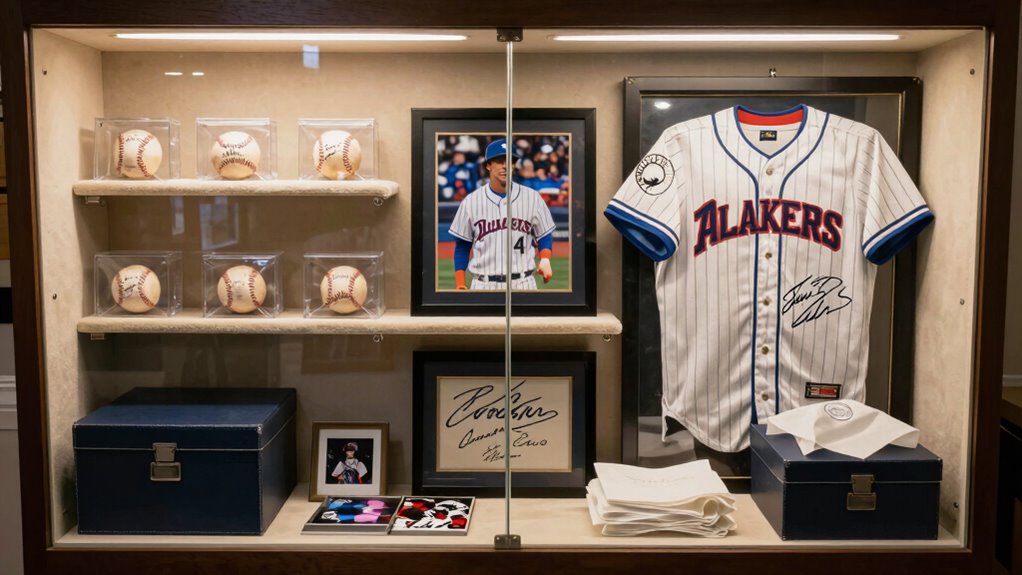
To protect signed memorabilia, you’ll want to start with proper authentication and keep detailed records, including certificates of authenticity, stored safely and digitally backed up. Control your storage environment by choosing a cool, dry space with UV-protected display cases and acid-free materials. Handle items carefully, minimizing contact, and regularly inspect for signs of damage or fading. Organized collectors discover early that combining these practices preserves value and longevity—keep going to learn more strategies for safeguarding your collection.
Key Takeaways
- Obtain and securely store authenticity documentation, including digital copies, to prevent disputes and verify value.
- Choose a cool, dry environment with controlled humidity and UV-protected cases to prevent deterioration.
- Use high-quality display cases and minimize handling to shield memorabilia from dust, dirt, and physical damage.
- Regularly inspect items for signs of fading, discoloration, or damage, and address issues promptly.
- Organize memorabilia with labeled storage solutions and maintain detailed records for easy access and preservation tracking.

If you’re serious about preserving your signed memorabilia, taking the right protective measures is vital. The first step is understanding the importance of proper authentication methods and reliable storage solutions. Authentication methods help verify the item’s legitimacy, which not only maintains its value but also provides peace of mind. Whether you’ve acquired a signature through a reputable dealer or at an event, having documentation or certificates of authenticity can be be a game-changer if you ever decide to sell or display the item. Keep these documents in a safe, organized spot, and consider digital copies for added security. This way, you protect your investment from potential disputes or devaluation caused by doubts over authenticity.
Authenticating and securely storing your memorabilia preserves its value and peace of mind.
When it comes to storage solutions, your goal is to shield your memorabilia from environmental damage. Temperature and humidity fluctuations are your biggest enemies, so choose a space that maintains a consistent climate. Avoid places like basements or attics that are prone to dampness, mold, or extreme temperature swings. Instead, opt for a cool, dry room where you can control the environment as much as possible. Invest in acid-free materials, such as backing boards and mounts, as they prevent the degradation of paper or fabric signatures over time. Using UV-protected display cases is another smart move, since direct sunlight can fade ink and signatures. Clear, high-quality cases also prevent dust, dirt, and accidental spills from reaching your memorabilia, prolonging its lifespan considerably. Additionally, understanding the significance of spiritual awakening can inspire you to approach your collection with mindfulness and care, enhancing your appreciation and preservation efforts. Regularly educating yourself about proper preservation techniques can further improve your ability to maintain the integrity of your collection over the years. Implementing preventive conservation practices is also essential to address potential issues early before they become irreversible.
Organized people understand that quick access and minimal handling are crucial to preserving signed memorabilia. When stored properly, your items won’t be subject to unnecessary wear and tear from frequent movement or mishandling. Use labeled storage boxes or portfolios to keep everything neat and easy to locate. If you’re displaying your memorabilia, make sure it’s in a secure, dust-free case where it’s less likely to be bumped or damaged. Regularly inspecting your collection ensures you catch any issues early, whether it’s fading, discoloration, or signs of deterioration. Maintaining a detailed inventory can also help you track the condition of each piece and plan for necessary repairs or upgrades.
Ultimately, the key to protecting signed memorabilia is a combination of careful authentication, smart storage, and organized handling. When you put these strategies into practice, you’re not just preserving the physical item but also safeguarding its sentimental and monetary value for years to come.

Danodoi Baseball Display Case UV Protected Acrylic Clear Baseball Holder Square Cube Ball Protector Memorabilia Autograph Display Box for Official Size Baseball
- Material: Transparent acrylic for durability
- UV Protection: Reduces light exposure and fading
- Design: Split two-piece for easy access
As an affiliate, we earn on qualifying purchases.
As an affiliate, we earn on qualifying purchases.
Frequently Asked Questions
What Are the Best Storage Materials for Signed Memorabilia?
You should use display cases that provide UV protection to keep your signed memorabilia safe from light damage. Acid-free materials, like sleeves, backing boards, and storage boxes, prevent deterioration over time. Make certain to store your items in a stable environment, avoiding humidity and extreme temperatures. Properly using display cases and acid-free materials ensures your signed memorabilia stays in pristine condition for years to come.
How Often Should I Inspect My Signed Items for Damage?
Like a vigilant guardian, you should inspect your signed items every 3 to 6 months. Regular checks in your display cases, especially those with climate control, help catch potential damage early. Temperature fluctuations or humidity changes can harm your memorabilia over time. By staying attentive, you preserve their value and integrity, ensuring your collection remains pristine for years to come—mirroring the foresight of those who plan ahead.
Can Exposure to Sunlight Affect Signed Memorabilia?
Yes, exposure to sunlight can harm your signed memorabilia by causing fading and deterioration. Sunlight damage occurs when UV rays break down inks and materials over time. To protect your items, use UV protection glass or acrylic cases, and keep them away from direct sunlight. Regularly inspecting your memorabilia for signs of fading helps catch early damage, ensuring your collection remains vibrant and well-preserved for years to come.
What Are Common Signs of Counterfeit Signatures?
Fake signatures often dance on the line of authenticity, revealing themselves through signature inconsistencies like uneven strokes, shaky lines, or mismatched ink. You’ll notice irregularities in letter shape, size, or spacing that don’t match genuine examples. These signs of counterfeit signatures are like cracks in a mirror—hinting at hidden flaws. Spotting these inconsistencies early helps you avoid falling for fake signatures and protect your memorabilia investment.
Is Professional Authentication Necessary for Resale?
Yes, professional authentication is essential for resale. It guarantees your signed memorabilia undergoes a thorough authentication process, verifying the signature’s legitimacy. This step boosts buyer confidence and increases your item’s value in the resale market. Without proper authentication, you risk selling counterfeit or questionable items, which can damage your reputation and lead to financial loss. Investing in certified authentication helps you protect your collection and achieve successful resale transactions.

Photo Storage Box, Gray
- Durable storage box: Heavy-duty construction for protection
- Metal ID plate: Easy identification of contents
- Divider cards included: Simplifies organization
As an affiliate, we earn on qualifying purchases.
As an affiliate, we earn on qualifying purchases.
Conclusion
Protecting your signed memorabilia isn’t just about keeping it safe; it’s about preserving your investment and memories. By taking simple steps early—like proper storage and handling—you guarantee these treasures last for generations. Did you know that 60% of collectors report that proper preservation greatly increases their items’ value over time? So, start implementing these tips today, and enjoy the satisfaction of safeguarding your prized possessions for years to come.
digital certificate storage for signed memorabilia
As an affiliate, we earn on qualifying purchases.
As an affiliate, we earn on qualifying purchases.

Mirfee 85L Electronic Cabinet — 700 Counts Large Capacity — Intelligent Temperature & Humidity Control — Spanish Cedar Wood — LED Digital Display — Stainless Steel with Lock
- Large Capacity: 700 Counts Storage Capacity
- Humidity Control: Intelligent Constant Humidity System
- Temperature Control: Smart Heating and Cooling Module
As an affiliate, we earn on qualifying purchases.
As an affiliate, we earn on qualifying purchases.