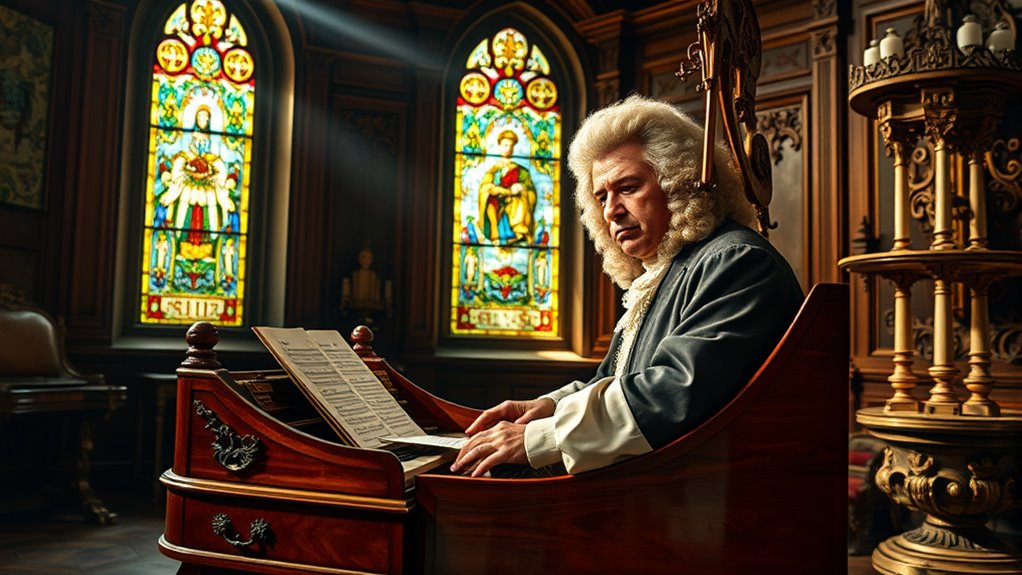

Johann Sebastian Bach earned his reputation as the Baroque’s musical architect by shaping Western music through his mastery of ornamentation, keyboard techniques, and complex polyphony. He crafted expressive melodies with intricate embellishments that deepen emotional impact. His innovations in keyboard playing set new standards, influencing countless musicians. Bach’s legacy endures because of his ability to combine technical skill with profound emotion. If you explore further, you’ll discover how his groundbreaking work continues to inspire musicians today.
Key Takeaways
- Bach revolutionized Baroque music with innovative ornamentation and expressive techniques that set new artistic standards.
- His mastery of keyboard techniques and polyphony defined the technical and aesthetic benchmarks of the era.
- Bach’s compositions seamlessly integrated ornamentation to deepen emotional expression and musical complexity.
- His work influenced generations of musicians, establishing foundational elements of Western classical music.
- As a pioneering architect of Baroque musical language, Bach’s legacy continues to shape musical performance and composition.
Have you ever wondered how one composer could influence Western music so profoundly? Johann Sebastian Bach’s mastery of musical form and technique has left a lasting legacy that still shapes composers today. His compositions embody the pinnacle of the Baroque era’s complexity and expressiveness, and his innovations in musical ornamentation and keyboard techniques set new standards for performers and composers alike. Bach’s approach to Baroque ornamentation wasn’t just decorative; it was a crucial part of his expressive language. He carefully crafted embellishments—such as trills, mordents, and appoggiaturas—to deepen the emotional impact of his music. These ornaments weren’t randomly added but were thoughtfully integrated into the structure, enhancing the melody and guiding the listener’s emotional journey. By understanding how to use ornamentation effectively, Bach elevated music from mere notes on a page to a vivid, expressive art form. When you listen to his keyboard works, you can hear how his mastery of Baroque ornamentation brings melodies alive, adding nuance and energy that captivate the ear. Bach’s keyboard techniques are equally groundbreaking. His compositions for harpsichord and organ showcase a technical prowess that pushed the limits of the instruments of his time. His fingerings, articulation, and use of pedal points reveal a deep understanding of how to produce clarity and richness in sound. Bach’s innovations in keyboard technique weren’t just for show—they served to illuminate the intricate polyphony he mastered. His fugues, for example, demonstrate how he could weave multiple voices together seamlessly, each voice maintaining independence while contributing to a unified whole. This mastery required a precise control of touch, timing, and registration, which Bach developed to perfection. As a performer, you’d find his keyboard works to be both a challenge and a revelation, demanding technical finesse and musical sensitivity. These techniques also influenced future generations of keyboard players, inspiring new ways to approach performance and composition. Bach’s integration of ornamentation and keyboard mastery created a language that was both technically advanced and emotionally compelling. His innovations set a foundation that countless musicians would build upon long after his lifetime, shaping the course of Western classical music. Whether you’re a performer or a listener, understanding Bach’s approach to ornamentation and keyboard techniques allows you to appreciate the depth of his artistry. His work was more than just technical skill; it was a means of expressing profound human emotion through intricate, beautifully crafted music. Bach’s influence endures because he transformed the possibilities of musical ornamentation and keyboard playing, leaving a legacy that continues to inspire and challenge musicians today.
Frequently Asked Questions
What Inspired Bach’s Unique Musical Style?
You’re inspired by the rich traditions of sacred music and Baroque ornamentation that shape Bach’s unique style. His deep faith and exposure to church music drive his compositions, blending intricate ornamentation with expressive melodies. Bach’s mastery of sacred music traditions fuels his innovative approach, allowing him to create complex, emotionally powerful works that stand out in the Baroque era. His passion for tradition and artistry make his music timeless.
How Did Bach Influence Later Composers?
You’ll find that Bach’s influence is profound—his melodic motifs and mastery of Baroque ornamentation set a standard for future composers. Over 1,000 of his works inspired countless musicians, from Mozart to Beethoven. His intricate styles pushed others to explore complexity and emotion, shaping the evolution of Western music. By studying Bach’s techniques, you can see how his innovations continue to inspire and challenge composers today.
What Were Bach’s Main Sources of Musical Inspiration?
You find Bach’s main sources of inspiration in Baroque ornamentation and sacred choral traditions. He masterfully incorporated intricate ornamentation to enhance musical expression and drew deeply from religious themes, reflecting his devout faith. His compositions often blend complex embellishments with sacred choral music, creating a divine harmony that influences composers even today. Bach’s devotion to these traditions shaped his unique style, making his work timeless and deeply spiritual.
Did Bach’s Music Have Any Political Significance?
Yes, Bach’s music sometimes held political significance through music as propaganda and political patronage. You might notice his compositions were often commissioned by church and court leaders, subtly reflecting their power and values. His intricate, majestic works could serve as symbols of authority, loyalty, or religious devotion, subtly reinforcing political and social hierarchies of his time. This strategic use of music helped solidify his patrons’ influence.
How Did Bach’s Personal Life Impact His Compositions?
Your personal life deeply influenced Bach’s compositions, as family struggles pushed him to create music that expressed his resilience and faith. His spiritual devotion is evident in his sacred works, reflecting his inner devotion and search for divine inspiration. You can see how his dedication to faith and family challenges shaped his passionate, intricate compositions, making his music not only a affirmation to his skill but also a reflection of his personal journey.
Conclusion
As you listen to Bach’s intricate melodies, you can almost see the delicate arches of his baroque architecture, each note a carefully placed stone. His music, like a masterful blueprint, builds bridges between emotion and intellect, inviting you into a timeless world of beauty and precision. Feel the warmth of his harmonies, the strength of his structures, and realize that through his art, you’re part of a grand, everlasting masterpiece.