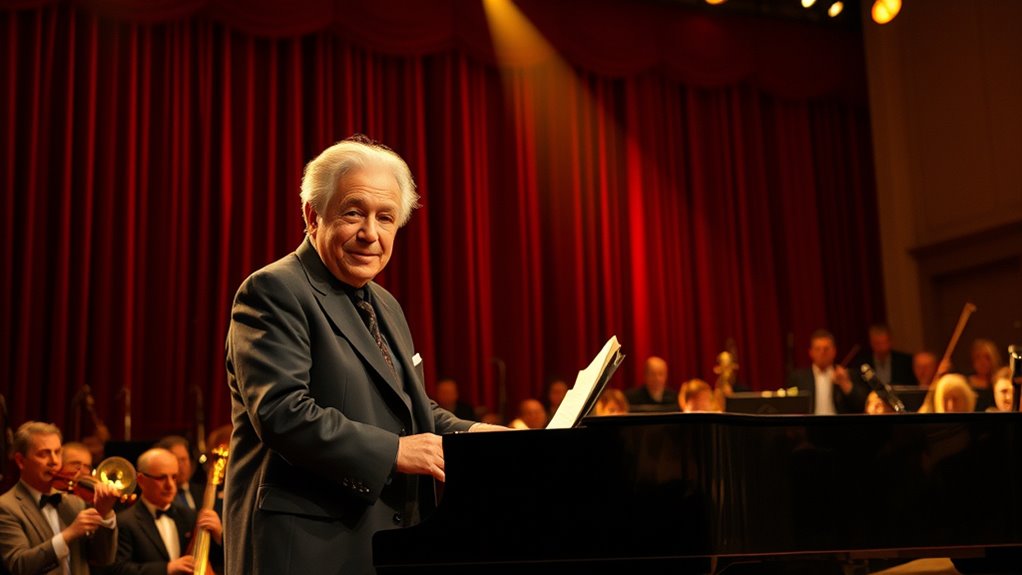

Leonard Bernstein transformed both Broadway and concert halls by blending musical styles like jazz, folk, and popular music with classical techniques. He broke genre barriers and made music more accessible, inspiring audiences and redefining roles in the music world. His work addressed social issues and fostered community through innovative storytelling. If you keep exploring, you’ll discover how his creative approach continues to influence music and society today.
Key Takeaways
- Leonard Bernstein revolutionized music by blending jazz, folk, and classical styles, making it accessible and culturally resonant.
- He transformed roles of composer and conductor, inspiring audiences through innovative storytelling in symphonies, operas, and Broadway.
- Bernstein used his platform to address social issues, promoting community engagement and musical accessibility for social change.
- His work bridged high art and popular culture, elevating the societal importance of music in everyday life.
- As a influential educator and conductor, Bernstein’s legacy continues to shape the interaction between music, society, and social issues.
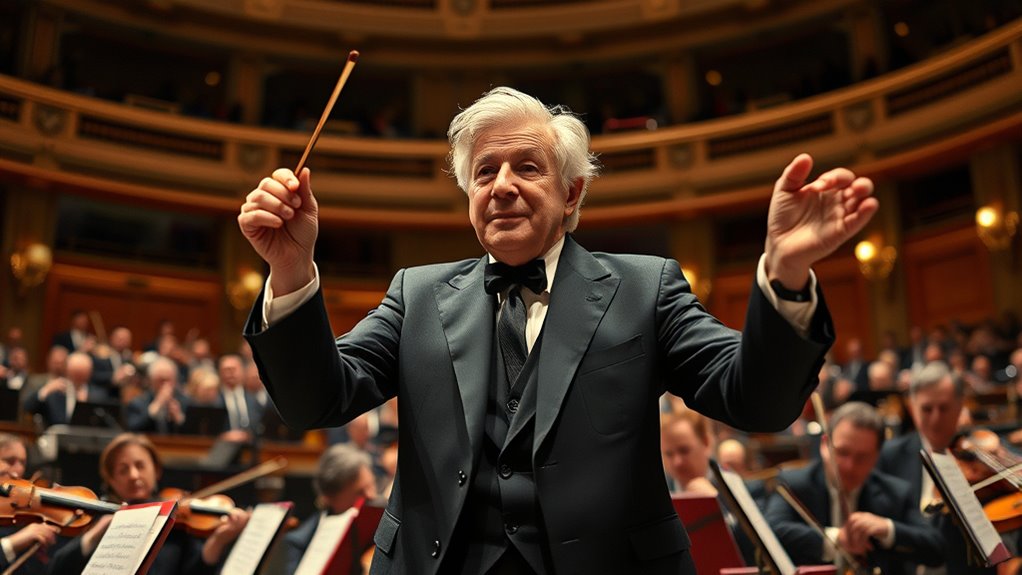
Have you ever wondered how one person could shape the landscape of 20th-century music? Leonard Bernstein did exactly that, blending musical innovation with a profound cultural influence that extended far beyond the concert hall. As you explore his work, you’ll see how he redefined what it meant to be a composer, conductor, and educator, making classical music accessible and relevant to a broad audience. Bernstein’s ability to fuse different styles and break down genre barriers was revolutionary. He didn’t just compose; he transformed the way music interacted with society. His innovative approach to musical storytelling, whether through symphonies, operas, or Broadway shows, pushed boundaries and inspired generations.
His musical innovation wasn’t limited to composing new works; it was about reimagining how music could communicate complex ideas and emotions. Bernstein often incorporated jazz, folk, and popular music into his compositions, creating a vibrant, eclectic sound that appealed to diverse audiences. This openness to different musical languages helped break down the elitism often associated with classical music. You might listen to his *West Side Story* or *Candide* and notice how he seamlessly blends classical techniques with musical theater and popular idioms. This approach not only broadened musical horizons but also made his works timeless, resonating across different cultures and eras.
Culturally, Bernstein became a towering figure because he used his platform to engage with social issues and foster a sense of community. He believed music was a powerful tool for education and social change, often speaking out on issues like civil rights and world peace. His concerts and broadcasts brought classical music into people’s living rooms, making it more than just an art form for the elite. You’d see him conducting with passion, explaining pieces in ways that connected deeply with audiences. His charismatic presence and commitment to outreach helped elevate the cultural significance of music in everyday life, inspiring countless listeners to find their own connection to the art. Additionally, his work highlighted the importance of musical accessibility in reaching broader audiences and fostering community engagement.
In essence, Bernstein’s legacy lies in how he bridged the gap between high art and popular culture, creating a space where music could serve as a unifying force. His musical innovation pushed the boundaries of traditional composition, while his cultural influence reshaped how society viewed and engaged with music. When you listen to his work or attend a performance, you’re witnessing the impact of a man who didn’t just shape music but transformed its role in culture itself. Leonard Bernstein remains a *testament* to the power of creativity and conviction in shaping the cultural fabric of the 20th century.
Frequently Asked Questions
What Was Bernstein’s Earliest Musical Influence?
Your earliest musical influence was your musical childhood, which greatly shaped your early inspirations. As a young person, you were exposed to a variety of music that sparked your passion for composition and conducting. These early experiences fueled your curiosity and love for music, setting the foundation for your future achievements. You can see how your early inspirations helped you develop the skills and dedication needed for a successful career in music.
How Did Bernstein Approach Conducting Different Musical Genres?
You see, Bernstein approached conducting different musical genres with remarkable versatility, adapting his interpretative style to fit each one. He seamlessly shifted from Broadway to classical concert halls, understanding the unique demands of each genre. His flexibility allowed him to bring fresh insights and emotional depth, engaging audiences across diverse musical worlds. This genre versatility made him a truly influential conductor, showcasing his ability to connect with varied musical traditions effortlessly.
Did Bernstein Compose for Any Notable Film Projects?
You might not realize it, but Bernstein did compose for notable film projects. His film scoring and cinematic compositions include work for “On the Waterfront” and “Trouble in Tahiti.” He brought his signature depth and emotion to these scores, demonstrating his versatility beyond the concert hall and Broadway. His ability to evoke mood and narrative through music truly shows he could wear many hats, proving he’s a jack of all trades in the music world.
What Awards and Honors Did Bernstein Receive Throughout His Career?
You’ll find that Leonard Bernstein received numerous award recognitions and honorary titles throughout his career. He earned multiple Grammys, a Pulitzer Prize, and the Presidential Medal of Freedom, highlighting his extraordinary influence. Additionally, he was honored with titles like conductor laureate of the New York Philharmonic and honorary degrees from prestigious institutions. These accolades reflect his exceptional contributions to music and his lasting legacy in both classical and popular genres.
How Did Bernstein Impact Music Education Worldwide?
You see, Bernstein transformed music education through his innovative approach to music pedagogy and global outreach. He made classical music accessible, inspiring students worldwide to appreciate and learn music. His programs, like Young People’s Concerts, reached diverse audiences, fostering a love for music. By actively promoting music education, Bernstein left a lasting legacy that continues to influence how music is taught and enjoyed around the globe.
Conclusion
As you reflect on Bernstein’s legacy, imagine his music as a vibrant tapestry weaving together the worlds of Broadway and concert halls. His genius sparks a fire within, illuminating the path for future generations. Just as a lighthouse guides ships through stormy seas, his melodies continue to lead us, inspiring hope and wonder. Bernstein’s spirit lives on, a shining star in the vast night sky of music, forever illuminating your journey through art and life.