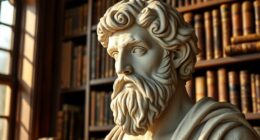
Michelangelo’s sculpting, both in the Sistine Chapel and beyond, showcases his mastery of transforming raw marble into emotionally powerful figures. His techniques emphasize confident chipping and intricate details, revealing inner forms and symbolism. Sculptures like David and the Pietà embody human strength, faith, and divine sacrifice, blending technical skill with spiritual depth. If you want to discover how his artistic philosophy shapes these masterpieces, there’s more to explore beneath the surface.
Key Takeaways
- Michelangelo mastered marble techniques to create realistic, emotionally powerful sculptures like David and Pietà.
- His approach emphasized confident chiseling, revealing inner forms and intricate symbolism within the stone.
- Sculptural details, such as anatomy and facial expressions, convey layered spiritual and human meanings.
- His work on the Sistine Chapel ceiling exemplifies his mastery of large-scale frescoes and complex iconography.
- Combining technical skill with symbolic depth, Michelangelo’s sculptures and paintings profoundly influence art history.
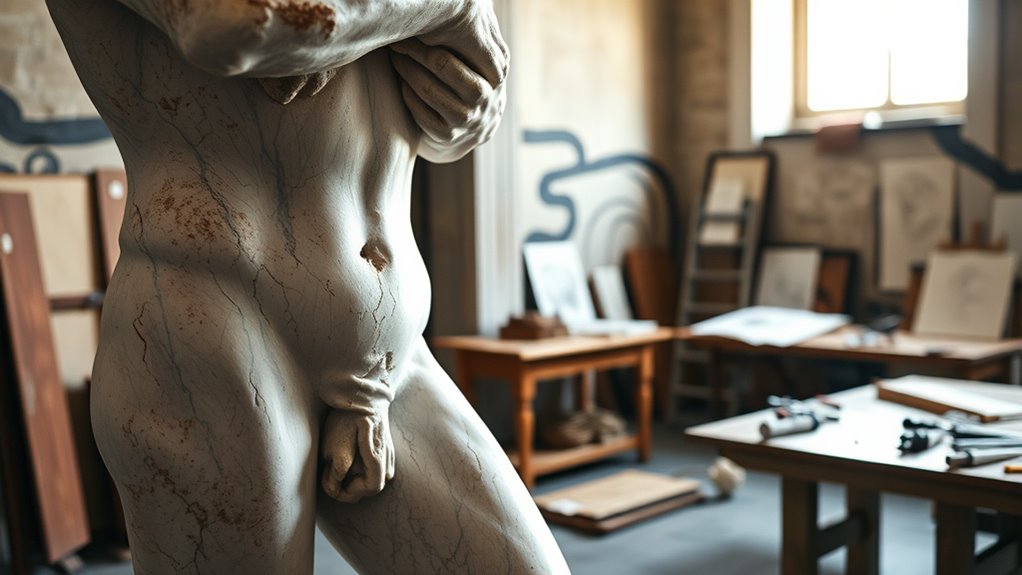
Have you ever wondered what makes Michelangelo’s sculptures so breathtaking? It’s not just the skill, but the mastery behind his marble techniques that bring his visions to life. When you look at his sculptures, you notice how the marble seems to breathe, almost alive, with every chisel mark carefully placed to reveal a hidden form within the stone. Michelangelo’s approach to marble wasn’t merely about carving; it was about transforming a solid block into a vessel of emotional and spiritual expression. He believed that marble held within it the figure, waiting to be freed, and his precise techniques allowed him to do just that. He often worked with a sense of immediacy, removing material with confidence, yet always respecting the integrity of the stone. This mastery over marble contributed to the sculptures’ sense of realism and power, making them appear as if they could step off their pedestals at any moment. His deep understanding of sculpture symbolism allowed him to infuse his work with layered meanings that resonate with viewers across centuries.
Beyond the technical mastery, Michelangelo’s sculptures are rich in sculpture symbolism. Every twist of the body, every expression carved into stone conveys deeper meanings, inviting you to interpret them. For instance, in *David*, you see more than just a biblical hero; you see a symbol of human strength, courage, and the ideal of youthful perfection. In *Pietà*, the tender sorrow expressed in Mary’s face symbolizes compassion and divine sacrifice. Michelangelo’s ability to embed sculpture symbolism into his work elevates his sculptures from mere art to profound statements about human nature, faith, and the divine. When you observe his figures, you sense the tension between the physical and spiritual worlds, a testament to his deep understanding of both anatomy and symbolism.
His sculptures also demonstrate how he used sculpture symbolism to communicate complex ideas. The exaggerated musculature, for example, isn’t just a display of anatomical precision but a way to emphasize strength, struggle, or divine power. Michelangelo’s genius lies in his capacity to fuse technical prowess with symbolic depth, making his sculptures resonate on multiple levels. His mastery of marble techniques allowed him to carve intricate details that enhance the symbolism, such as the veins running beneath the skin or the intense focus in a figure’s gaze. Each piece becomes a narrative in stone, a visual story that captures the viewer’s imagination and invites you to look closer, to find meaning in the details. Michelangelo’s sculptures are a testament to his ability to turn marble into a language of emotion, symbolism, and spiritual insight.
Frequently Asked Questions
What Inspired Michelangelo’s Unique Sculpting Style?
You’re inspired by Michelangelo’s unique sculpting style through his marble mastery and artistic innovation. He saw marble as a living material, revealing the figures within, which pushed him beyond traditional methods. His relentless pursuit of perfection and understanding of human anatomy allowed him to carve dynamic, realistic sculptures. This fearless experimentation and mastery of marble made his work stand out, shaping a distinctive, influential style that still captivates today.
How Did Michelangelo Choose His Sculpture Subjects?
You choose your sculpture subjects based on your passion for marble selection and artistic themes. Michelangelo often selected raw, high-quality marble that inspired him to bring out its natural beauty. He focused on artistic themes like human strength and emotion, which resonated deeply with him. By aligning his choices with these themes and the marble’s potential, he transformed raw stone into powerful, lifelike sculptures that captured the human form’s essence.
Did Michelangelo Ever Face Political Opposition?
Yes, Michelangelo faced political conflicts and artistic censorship during his career. You might find it surprising, but his work often clashed with powerful figures like the Pope and other political authorities. They sometimes limited or altered his projects, fearing controversy or opposition. Despite this, Michelangelo persisted, using his talent to navigate these challenges and produce masterpieces that defied censorship and political pressure.
What Tools Did Michelangelo Use for His Sculptures?
You’ll be fascinated to learn that Michelangelo used specialized tools for marble carving, including chisels, rasps, and hammers. He relied heavily on precise chiseling techniques to bring his sculptures to life, sometimes working with over 50 different types of chisels. His skill in mastering these tools allowed him to create intricate details and smooth surfaces, demonstrating his mastery of marble carving and shaping masterpieces like David and the Pietà.
How Did Michelangelo’s Sculptures Influence Later Artists?
You see Michelangelo’s sculptures as a catalyst for renaissance art and artistic innovation. His mastery of anatomy and expressive forms inspired later artists to push boundaries, emphasizing realism and emotional depth. By capturing movement and tension with remarkable detail, Michelangelo set new standards. His work encourages you to explore bold techniques and new ideas, shaping the evolution of sculpture and inspiring generations to come.
Conclusion
You’ve seen how Michelangelo’s sculptures capture the divine spirit within marble, transforming cold stone into living masterpieces. His work isn’t just art; it’s a declaration to human genius that leaves even the gods in awe. By carving the Sistine Chapel ceiling and shaping timeless sculptures, he reshaped history itself. Your appreciation for his mastery will only deepen, realizing that his talent is an unstoppable force that could move mountains and redefine eternity.