

Choosing the right surfboard size depends on your skill level and wave conditions. Beginners should opt for larger, stable boards in the 8-9 foot range to build confidence and improve paddling. For smaller, gentle waves, bigger boards help catch more waves easily, while shorter, more maneuverable boards suit powerful, larger waves. As you progress, you’ll want to adjust your board size and shape for better control. Keep going to discover how to fine-tune your choice for the best surfing experience.

Get art and craft supplies delivered free with Prime
- Fast, free delivery on millions of items
- Prime Video, Amazon Music and more included
- Member-only deals all year
Key Takeaways
- Match surfboard size to wave height: larger boards for small waves, shorter boards for powerful, bigger waves.
- Consider your skill level: beginners need longer, more stable boards; advanced surfers prefer shorter, maneuverable options.
- Use volume as a guide: higher volume provides better buoyancy and stability, essential for learning and smaller waves.
- Choose shape and profile based on conditions: wide noses for stability, narrower shapes for agility in challenging conditions.
- Evaluate additional factors like technology and design to ensure the board suits your surfing goals and environment.
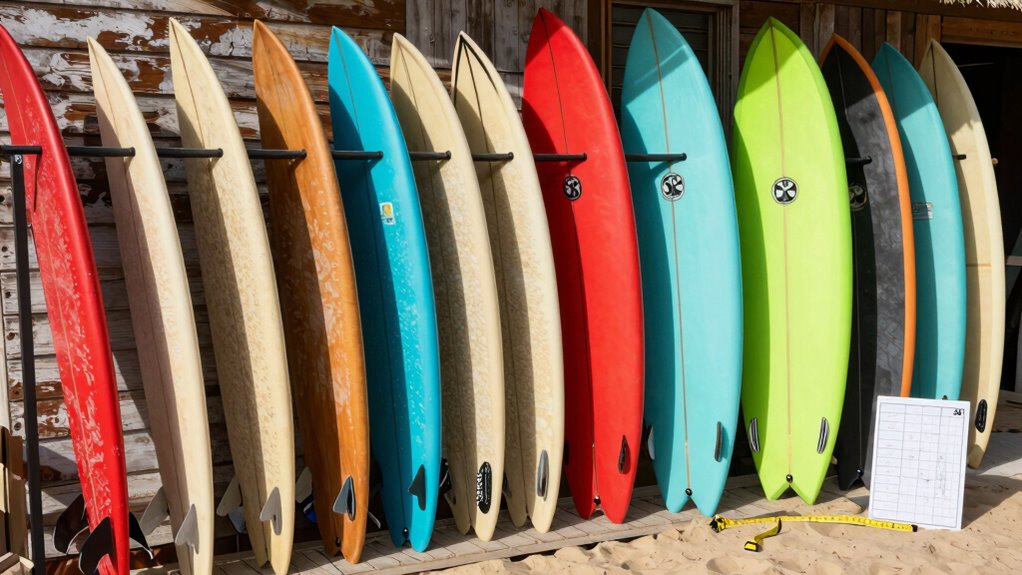
Choosing the right surfboard size is essential for a successful and enjoyable surfing experience. When you’re out in the water, your surfboard’s size directly affects how easily you can catch waves, maintain balance, and progress in your skills. A key factor to consider is wave height, which determines the type of board that will perform best. If you’re riding small, gentle waves, a larger, more stable board helps you stay afloat and catch those slower-moving swells. Conversely, if you’re surfing larger, powerful waves, you’ll need a shorter, more maneuverable board that can handle the speed and force. Your skill level plays a crucial role here—beginners generally benefit from bigger, more stable boards, while advanced surfers might prefer smaller, more agile boards that allow for quick turns and tricks.
As a beginner, selecting a longer, thicker board is often the best choice. These boards provide more buoyancy, making it easier to paddle, catch waves, and stay balanced. The increased volume acts as a safety net, giving you confidence in the water and helping you build foundational skills. If the wave height you’re dealing with is modest, a board in the 8-9 foot range is typically ideal. This size offers stability without sacrificing maneuverability, which is perfect for learning how to read waves and develop your technique. As you gain experience and start riding larger waves, you might want to transition to a slightly shorter board that’s still stable but allows for sharper turns and more control.
Your skill level influences not just the size but also the shape and profile of your surfboard. Beginners should stick with boards that have a wide nose and a rounded tail for extra stability, especially in smaller waves. More experienced surfers can experiment with narrower, more streamlined shapes that excel in bigger, more challenging surf conditions. Remember, the goal is to match your board’s size and shape with the wave height and your skill level to maximize fun and safety. Proper content formats and understanding how they relate to your surfing style can greatly enhance your experience. Picking the right size isn’t just about comfort—it’s about optimizing your ability to catch more waves, improve your skills, and enjoy every session in the water. Taking into account wave height and board size compatibility can help you make more informed decisions. Additionally, understanding the different types of surfboards and their specific uses can guide you toward the most suitable choice for your surfing goals. It’s also helpful to consider board volume as a key factor in your selection process, especially for ensuring adequate buoyancy and stability for your skill level. Knowing that technology and design advancements can influence performance helps you choose a board that matches your needs. Take the time to assess the typical wave height where you surf and honestly evaluate your skill level to make the best choice.
Products Worth Considering

Garmin vívosmart 5 Health and Fitness Tracker, Small/Medium, White

GoPro LIT HERO Waterproof Action Camera with Built-In Light

GoPro HERO12 Black Waterproof Action Camera with 5.3K60 Video and 27MP Photos
As an affiliate, we earn on qualifying purchases.
Frequently Asked Questions
How Do Wave Conditions Influence Surfboard Size Choices?
Wave conditions directly influence your surfboard size choices. If wave patterns are small or mushy, you’ll want a longer, wider board for stability and paddling power. During tide variations, the shape and size of waves change, so you might need a different board to match the shifting conditions. Larger boards perform better in slower, gentler waves, while shorter boards excel in fast, powerful surf.
What’s the Ideal Surfboard Length for Beginners?
Think of the beginner’s surfboard as your trusty steed—around 7 to 8 feet long. This size offers stability and easier paddling, perfect for learning. When choosing, consider surfboard materials like eco-friendly options that reduce environmental impact without sacrificing durability. These lightweight, sustainable boards help you progress while caring for the planet. Stick with this length, and you’ll build confidence riding gentle waves in no time.
How Does Weight Affect Surfboard Size Selection?
Your weight influences surfboard size because heavier riders need more volume for stability and buoyancy. Opt for a slightly larger board made from durable materials to guarantee longevity and support. Keep in mind, bigger boards can increase shipping costs due to their size and weight. Choosing the right size helps you ride confidently and comfortably, making your investment in a durable surfboard well worth it.
Are There Specific Sizes for Different Surfing Styles?
Did you know that 70% of advanced surfers prefer custom surfboard designs tailored to their style? For different surfing styles, specific sizes matter: shortboards for quick maneuvers, longboards for stability, and fish for versatility. Your choice depends on your skill level and preferred surf conditions. When selecting a surfboard, consider the material; lightweight foam is ideal for maneuverability, while durable fiberglass suits all styles.
How Often Should I Upgrade My Surfboard?
You should consider upgrading your surfboard when it no longer meets your skill level or surf conditions. Keep an eye on board aesthetics; cracks or delamination indicate it’s time for a new one. Additionally, surfboard materials wear out over time, affecting performance. If your current board feels less responsive or visually deteriorates, upgrading guarantees you enjoy peak performance and safety in the water.
Conclusion
Choosing the right surfboard size is like finding the perfect pair of shoes—you need comfort, support, and a fit that feels just right. With this guide, you’re now equipped to navigate the waves confidently, like a captain steering through open waters. Trust your instincts, consider your skill level, and don’t be afraid to experiment until you find your perfect match. Get ready to ride those waves with confidence—your ideal surfboard is waiting just beneath the surface!