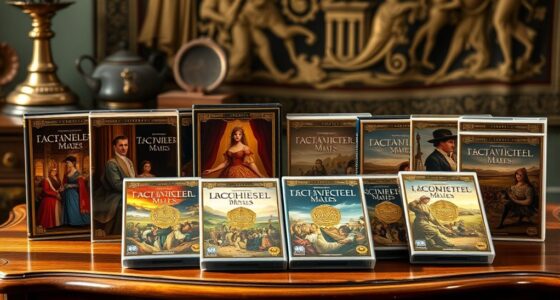
The best biography books about filmmakers pair a compelling life story with insight into how a director’s work took shape. My best overall pick is Rebel Without a Crew, which offers a distinctive first-person account of Robert Rodriguez’s resourceful path into filmmaking. For a broader view of cinema, The Story of Film connects filmmakers to the history and art of the medium, while Buster Keaton: A Filmmaker’s Life focuses on one director’s life and creative legacy. The main tradeoff is between intimate, individual portraits and books that offer wider context or a more reference-like overview. Read on for the full breakdown and guidance on choosing the right kind of film book for your interests.

Get art and craft supplies delivered free with Prime
- Fast, free delivery on millions of items
- Prime Video, Amazon Music and more included
- Member-only deals all year
Key Takeaways
- Rebel Without a Crew stands apart because Rodriguez tells his own story, making it the clearest choice for readers interested in the practical and personal realities of getting a film made.
- The Story of Film offers the widest historical scope, but readers seeking a focused life story may prefer a dedicated biography such as Frank Capra: A Life or Stanley Kubrick: A Biography.
- The three Iconic Filmmakers Series titles on Tarantino, Scorsese, and Burton share a subject-led format; choose among them by director rather than expecting the range of a full cinema history.
- Oscar Micheaux: The Great and Only fills a distinctive historical role by centering a pioneering Black filmmaker, offering a perspective not represented by the director-focused series titles.
- David Fincher: Interviews is a different kind of read: conversations can reveal a filmmaker’s own ideas, but they do not provide the same continuous life narrative as a conventional biography.
| Rebel without a Crew: Or How a 23-Year-Old Filmmaker With $7,000 Became a Hollywood Player |  | Best for Aspiring Independent Filmmakers | Author: Robert Rodriguez | Title subject: Robert Rodriguez and the making of El Mariachi | Format: Book | VIEW LATEST PRICE | See Our Full Breakdown |
| The Essential Directors: The Art and Impact of Cinema’s Most Influential Filmmakers (Turner Classic Movies) |  | Best for a Broad Director-by-Director Introduction | Author: John A. Gallagher | Title subject: Influential film directors and their work | Series: Turner Classic Movies | VIEW LATEST PRICE | See Our Full Breakdown |
| Quentin Tarantino: The iconic filmmaker and his work (Iconic Filmmakers Series) |  | Best for Tarantino Filmography Context | Author: Ian Nathan | Title subject: Quentin Tarantino and his work | Series: Iconic Filmmakers Series | VIEW LATEST PRICE | See Our Full Breakdown |
| Oscar Micheaux: The Great and Only: The Life of America’s First Black Filmmaker – A Vivid Biography of the Visionary Who Pioneered African-American Cinema |  | Best for Film History and Underrepresented Pioneers | Author: Patrick McGilligan | Title subject: Oscar Micheaux | Format: Book | VIEW LATEST PRICE | See Our Full Breakdown |
| The Story of Film: The history of cinema, filmmakers and their art, for students and movie lovers |  | Best for Cinema-History Context | Author: Mark Cousins | Title subject: The history of cinema, filmmakers, and film art | Format: Book | VIEW LATEST PRICE | See Our Full Breakdown |
| Martin Scorsese: The Iconic Filmmaker and His Work (Iconic Filmmakers Series) |  | Best for Film-by-Film Context | Subject: Martin Scorsese | Book title: Martin Scorsese: The Iconic Filmmaker and His Work | Series: Iconic Filmmakers Series | VIEW LATEST PRICE | See Our Full Breakdown |
| Tim Burton: The Iconic Filmmaker and His Work (Iconic Filmmakers Series) |  | Best for Burton’s Filmography | Subject: Tim Burton | Book title: Tim Burton: The Iconic Filmmaker and His Work | Series: Iconic Filmmakers Series | VIEW LATEST PRICE | See Our Full Breakdown |
| Steven Spielberg: The Iconic Filmmaker and His Work (Iconic Filmmakers Series) |  | Best for Spielberg Career Study | Subject: Steven Spielberg | Book title: Steven Spielberg: The Iconic Filmmaker and His Work | Series: Iconic Filmmakers Series | VIEW LATEST PRICE | See Our Full Breakdown |
| Buster Keaton: A Filmmaker’s Life |  | Best for a Life-Centered Biography | Subject: Buster Keaton | Book title: Buster Keaton: A Filmmaker’s Life | Stated focus: Filmmaker’s life | VIEW LATEST PRICE | See Our Full Breakdown |
| Frank Capra: A Life |  | Best for a Biography-First Read | Subject: Frank Capra | Book title: Frank Capra: A Life | Stated focus: Biography of Frank Capra | VIEW LATEST PRICE | See Our Full Breakdown |
| Stanley Kubrick: A Biography |  | Best for a Full-Scale Director Biography | Format: Book | Subject: Stanley Kubrick | Genre: Biography | VIEW LATEST PRICE | See Our Full Breakdown |
| David Fincher: Interviews (Conversations with Filmmakers Series) |  | Best for First-Person Filmmaker Perspectives | Format: Book | Subject: David Fincher | Content type: Interviews | VIEW LATEST PRICE | See Our Full Breakdown |
| biography books about filmmaker | Format | Language | Subject | Series |
|---|---|---|---|---|
| Rebel without a Crew: Or How a | Book | English | — | — |
| The Essential Directors: The A | Book | English | — | Turner Classic Movies |
| Quentin Tarantino: The iconic | Book | English | — | Iconic Filmmakers Series |
| Oscar Micheaux: The Great and | Book | English | — | — |
| The Story of Film: The history | Book | English | — | — |
| Martin Scorsese: The Iconic Fi | Not provided | — | Martin Scorsese | Iconic Filmmakers Series |
| Tim Burton: The Iconic Filmmak | Not provided | — | Tim Burton | Iconic Filmmakers Series |
| Steven Spielberg: The Iconic F | Not provided | — | Steven Spielberg | Iconic Filmmakers Series |
| Buster Keaton: A Filmmaker’s L | Not provided | — | Buster Keaton | — |
| Frank Capra: A Life | Not provided | — | Frank Capra | — |
| Stanley Kubrick: A Biography | Book | English | Stanley Kubrick | — |
| David Fincher: Interviews | Book | English | David Fincher | Conversations with Filmmakers |
More Details on Our Top Picks
Rebel without a Crew: Or How a 23-Year-Old Filmmaker With $7,000 Became a Hollywood Player
Rebel without a Crew is the most direct choice here for readers who want a filmmaker’s own account of making a first feature under severe constraints. Robert Rodriguez recounts the low-budget production of El Mariachi and the path that followed, so the emphasis is on decisions, resourcefulness, and career momentum rather than a full survey of his life. Compared with Oscar Micheaux: The Great and Only, which traces a much earlier pioneer’s life and industry barriers, Rodriguez’s book offers a closer view of one contemporary production story. Its practical, energetic perspective makes it especially useful to aspiring directors, but it is not a broad history of filmmaking or a neutral critical biography. Readers seeking extensive coverage of Rodriguez’s later career may prefer a longer life study.
Pros:- First-person account connects filmmaking choices to real production constraints.
- Focuses on the making of El Mariachi and the early career breakthrough.
- Accessible, energetic approach suits readers new to filmmaker biographies.
Cons:- Concentrates on a specific early-career episode rather than a complete life story.
- The motivational perspective may offer less critical distance than a conventional biography.
Best for: Aspiring independent filmmakers and film students interested in how a first feature can be made with limited resources.
Not ideal for: Readers seeking a full career-spanning biography, a detached critical study, or a broad history of cinema.
- Author:Robert Rodriguez
- Title subject:Robert Rodriguez and the making of El Mariachi
- Format:Book
- Publisher:Plume
- Publication date:1996
- Language:English
Our verdict“Choose this for an accessible, first-person account of low-budget filmmaking, not for a complete biography of Rodriguez.”
The Essential Directors: The Art and Impact of Cinema’s Most Influential Filmmakers (Turner Classic Movies)
The Essential Directors takes a wider view than the single-filmmaker biographies in this roundup, making it a useful starting point for readers who want to place directors within cinema history. Its focus on influential filmmakers and their work favors concise context and comparison over the intimate life narrative found in Rebel without a Crew. That breadth can help readers identify directors they want to explore in greater depth, but it also means individual lives receive less room than in dedicated biographies such as Oscar Micheaux: The Great and Only. This is best treated as an illustrated reference and orientation guide, rather than a substitute for a full biography. Readers who already know their preferred filmmaker may get more depth from a focused book.
Pros:- Covers multiple influential filmmakers in one volume.
- Connects directors’ work to their broader impact on cinema.
- Useful as a starting point for selecting more focused biographies.
Cons:- The broad scope limits the space available for each filmmaker’s personal story.
- Readers looking for a sustained narrative about one director may find it too concise.
Best for: Movie lovers and students who want a guided overview of influential directors before choosing individual biographies to read.
Not ideal for: Readers seeking an in-depth account of one filmmaker’s private life, career chronology, or firsthand production experience.
- Author:John A. Gallagher
- Title subject:Influential film directors and their work
- Series:Turner Classic Movies
- Format:Book
- Publisher:Running Press
- Publication year:2021
- Language:English
Our verdict“Pick this as a broad orientation to influential directors, then turn to a single-subject biography for deeper life history.”
Quentin Tarantino: The iconic filmmaker and his work (Iconic Filmmakers Series)
This volume is a focused guide to Quentin Tarantino’s work, suited to readers who want a compact account of the director’s career alongside discussion of his films. Its film-centered approach distinguishes it from Rebel without a Crew, where Robert Rodriguez’s own voice and production story drive the book. It also offers a narrower subject than The Essential Directors, which ranges across filmmakers but gives each less room. That makes this a strong fit for readers already interested in Tarantino’s style and filmography, though it may not satisfy anyone seeking an expansive, deeply sourced account of his personal life. The series format provides a clear entry point, but readers wanting a more exhaustive biography should look for a dedicated long-form study.
Pros:- Keeps attention on one filmmaker rather than dividing space among many directors.
- Pairs career context with discussion of Tarantino’s work.
- Compact series format suits readers seeking an accessible introduction.
Cons:- Film-focused coverage may leave personal history less developed.
- Less expansive than a dedicated long-form biography.
Best for: Tarantino fans who want a concise, film-focused introduction to his career and body of work.
Not ideal for: Readers who want a detailed personal biography or a first-person account of the filmmaking process.
- Author:Ian Nathan
- Title subject:Quentin Tarantino and his work
- Series:Iconic Filmmakers Series
- Format:Book
- Publisher:White Lion Publishing
- Publication year:2019
- Language:English
Our verdict“Choose this for a concise guide to Tarantino and his films, not as the deepest account of his life.”
Oscar Micheaux: The Great and Only: The Life of America’s First Black Filmmaker – A Vivid Biography of the Visionary Who Pioneered African-American Cinema
Oscar Micheaux: The Great and Only earns its place by centering a filmmaker whose life and work are essential to understanding early African-American cinema. Patrick McGilligan’s biography gives readers a historical life story, not simply a guide to films, setting it apart from the contemporary production-focused account in Rebel without a Crew. It also provides a more concentrated portrait than The Essential Directors, whose broad scope necessarily spreads attention across many figures. This pick suits readers interested in the social and industry conditions that shaped Micheaux’s filmmaking, as well as those expanding their reading beyond familiar Hollywood names. Its historical focus and substantial biographical detail may feel less immediately accessible to readers seeking a quick, film-by-film introduction.
Pros:- Centers Oscar Micheaux’s pioneering role in African-American cinema.
- Provides historical and social context alongside biographical narrative.
- Offers a deeper single-subject portrait than a multi-director overview.
Cons:- Its historical scope may be denser than a short introductory guide.
- Readers focused on contemporary production methods may find the subject less directly applicable.
Best for: Readers of cinema history who want a substantial biography of a foundational Black filmmaker and the industry around him.
Not ideal for: Readers seeking a brief overview, a contemporary filmmaker’s first-person account, or a broad survey of directors.
- Author:Patrick McGilligan
- Title subject:Oscar Micheaux
- Format:Book
- Publisher:Harper
- Publication year:2007
- Language:English
Our verdict“Choose this for a focused historical biography that brings a foundational Black filmmaker to the center of the story.”
The Story of Film: The history of cinema, filmmakers and their art, for students and movie lovers
The Story of Film is the broadest choice in this group: it puts filmmakers and their art into the larger history of cinema rather than following one director’s life from beginning to end. That makes it a useful companion to Oscar Micheaux: The Great and Only, which offers the deeper individual biography, and to Quentin Tarantino: The iconic filmmaker and his work, which concentrates on one modern director. Students and curious movie lovers can use its historical scope to see how filmmaking developed across eras. The tradeoff is clear: a history-led book cannot provide the personal depth or sustained character portrait of a dedicated biography. Readers choosing a book specifically for one filmmaker’s life should select a single-subject title instead.
Pros:- Frames filmmakers within the wider history of cinema.
- Serves as context for reading single-subject biographies.
- Designed for both students and general movie enthusiasts.
Cons:- The broad historical focus limits individual biographical depth.
- Readers seeking one director’s life story may find it less personal than dedicated biographies.
Best for: Film students and movie lovers who want historical context for filmmakers, cinema movements, and the development of film art.
Not ideal for: Readers seeking a detailed biography of one director or an intimate account of a particular production.
- Author:Mark Cousins
- Title subject:The history of cinema, filmmakers, and film art
- Format:Book
- Publisher:Pavilion Books
- Publication year:2020
- Language:English
Our verdict“Choose this for a cinema-history framework, but pair it with a single-filmmaker biography for personal detail.”
Martin Scorsese: The Iconic Filmmaker and His Work (Iconic Filmmakers Series)
I’d pick this volume for readers who want a guide to Scorsese’s work as well as his life, rather than a conventional cradle-to-career biography. Its place in the Iconic Filmmakers series suggests a focus on the director’s body of work, making it a useful companion for tracing recurring subjects and creative choices across films. Compared with Buster Keaton: A Filmmaker’s Life, which centers its scope on a filmmaker’s life, this title is the more work-focused choice. That distinction is also its tradeoff: readers seeking an intimate, fully documented account of Scorsese’s private life may prefer a dedicated biography. The supplied product information confirms the title and series, but gives no details on length, illustrations, or edition, so I can’t recommend it on those grounds.
Pros:- Centers on Scorsese and his body of work
- Series framing suits readers comparing a director’s films and creative approach
- A more work-oriented option than a life-centered biography such as Buster Keaton: A Filmmaker’s Life
Cons:- The available product information does not establish how much personal biography it includes
- No format, length, or illustration details are supplied
Best for: Readers studying Scorsese’s films who want a filmmaker-focused overview that connects his work across a career.
Not ideal for: Readers seeking a detailed account of Scorsese’s personal life, or buyers who need verified details about format, length, or illustrations before choosing.
- Subject:Martin Scorsese
- Book title:Martin Scorsese: The Iconic Filmmaker and His Work
- Series:Iconic Filmmakers Series
- Format:Not provided
- Length:Not provided
- Publication date:Not provided
Our verdict“Choose this if you want a Scorsese-focused guide to his work more than a detailed personal-life biography.”
Tim Burton: The Iconic Filmmaker and His Work (Iconic Filmmakers Series)
This is the pick I’d place with readers interested in Tim Burton’s films and filmmaking identity, rather than those looking for a conventional, life-spanning biography. The series subtitle, “The Iconic Filmmaker and His Work,” points toward a work-centered approach. That makes it a different kind of read from Frank Capra: A Life, whose title promises a biography organized around a person’s life. Burton’s volume makes more sense if you want to consider how a director’s body of work defines his reputation; the tradeoff is that the supplied information doesn’t confirm how much it covers his background or personal history. I also can’t verify the book’s length, format, or visual content from the available data, so buyers wanting an illustrated reference should check the edition details first.
Pros:- Clearly identifies Burton as the subject and his work as the focus
- Series framing supports a director-centered reading of a filmography
- Offers a useful contrast to life-focused titles such as Frank Capra: A Life
Cons:- Available information does not specify how deeply it covers Burton’s personal life
- Format, length, and illustration details are not provided
Best for: Tim Burton fans and film students seeking a director-centered account of his work rather than a broad history of cinema.
Not ideal for: Readers whose main priority is a detailed personal biography, or buyers who require confirmed information about illustrations and book format.
- Subject:Tim Burton
- Book title:Tim Burton: The Iconic Filmmaker and His Work
- Series:Iconic Filmmakers Series
- Format:Not provided
- Length:Not provided
- Publication date:Not provided
Our verdict“Pick this for a work-focused look at Burton, but choose a dedicated biography if you want his personal history in depth.”
Steven Spielberg: The Iconic Filmmaker and His Work (Iconic Filmmakers Series)
I’d choose this volume when the main question is how Spielberg’s body of work defines him as a filmmaker. The supplied description identifies it as a book about Spielberg and his work, so its clearest distinction is its director-and-film focus—not a verified promise of exhaustive personal biography. Compared with Martin Scorsese: The Iconic Filmmaker and His Work, it shares the same series framing; the choice between them comes down to which director’s career you want to study, not a confirmed difference in format or depth. That shared approach suits readers who want a focused filmmaker title, but it may leave biographical readers wanting more detail about Spielberg’s life beyond his work. The product data does not state length, format, or publication date.
Pros:- Explicitly focuses on Spielberg and his body of work
- The series offers a director-centered alternative to general film-history books
- Easy to compare with the Scorsese and Burton volumes in the same series
Cons:- The supplied description does not establish the depth of personal biography
- No length, format, or publication date is provided
Best for: Spielberg fans, film students, and readers who want a book centered on his filmmaking and body of work.
Not ideal for: Readers seeking a fully documented personal biography or buyers who need verified edition and physical-format details.
- Subject:Steven Spielberg
- Book title:Steven Spielberg: The Iconic Filmmaker and His Work
- Series:Iconic Filmmakers Series
- Stated focus:Filmmaker and body of work
- ASIN:0711295239
- Format:Not provided
- Length:Not provided
Our verdict“Choose this for a Spielberg-centered study of his work, not as a confirmed substitute for a detailed life biography.”
Buster Keaton: A Filmmaker’s Life
The title signals a biography that puts Buster Keaton’s life at the center, which makes this the clearest choice here for readers who want more than a guide to a director’s work. Set beside the Iconic Filmmakers books on Scorsese, Burton, and Spielberg, its stated framing is distinctly life-focused rather than simply “filmmaker and his work.” That difference gives it a strong role for biography readers, while the series volumes may better suit someone comparing a director’s films. The available product data doesn’t tell me how much film-by-film analysis, archival material, or personal detail the book contains, so the title alone can’t establish its depth. Readers wanting a broad overview of cinema history may be better served by The Story of Film instead.
Pros:- Explicitly presents itself as a filmmaker’s life
- Provides a life-centered contrast to the Iconic Filmmakers series titles
- A focused choice for readers specifically interested in Buster Keaton
Cons:- The available information does not specify its coverage of individual films
- No format, length, or publication details are supplied
Best for: Readers seeking a biography centered on Buster Keaton’s life, especially those who prefer a life-led account to a director-and-work series book.
Not ideal for: Readers primarily seeking a broad film-history survey or a verified, detailed analysis of Keaton’s complete filmography.
- Subject:Buster Keaton
- Book title:Buster Keaton: A Filmmaker’s Life
- Stated focus:Filmmaker’s life
- ASIN:0385354215
- Format:Not provided
- Length:Not provided
Our verdict“Choose this when Keaton’s life is your priority; opt for a general film-history book if you want wider cinema coverage.”
Frank Capra: A Life
Frank Capra: A Life is my biography-first pick in this group: its title promises a life-centered account, not just a survey of films. That makes it a different proposition from Steven Spielberg: The Iconic Filmmaker and His Work, where the stated emphasis falls on the director’s work. Readers choosing Capra’s book are likely looking for a portrait organized around the filmmaker as a person; those more interested in tracing a filmography may prefer the Spielberg or Scorsese series entries. The tradeoff is that the supplied information gives no details about the book’s scope, sources, or balance between personal history and career, so I can’t claim how thoroughly it delivers on that promise. It is also a narrower choice than The Story of Film, which covers cinema more broadly.
Pros:- Title clearly signals a biography-focused approach
- Offers a life-centered alternative to work-focused filmmaker series books
- Keeps the subject focused on Frank Capra rather than cinema as a whole
Cons:- Available product information does not describe the biography’s scope or sources
- No format, length, or publication details are supplied
Best for: Readers who want a life-centered book about Frank Capra rather than a general guide to filmmaking or cinema history.
Not ideal for: Readers seeking a film-by-film study, broad history of cinema, or verified details about the biography’s scope and edition.
- Subject:Frank Capra
- Book title:Frank Capra: A Life
- Stated focus:Biography of Frank Capra
- ASIN:0063291134
- Format:Not provided
- Length:Not provided
Our verdict“Choose this for a Capra-centered life story; pick a filmmaker-and-work title if film analysis matters more to you.”
Stanley Kubrick: A Biography
Stanley Kubrick: A Biography is the more direct choice here for readers who want a filmmaker’s life treated as a sustained biography rather than a set of career conversations. Its subject’s reputation for control and privacy makes the biographical approach especially suited to readers curious about the person and the path behind the films. Compared with David Fincher: Interviews, this is the pick for a continuous life narrative, not a collection of the director’s own remarks across different moments.
The tradeoff is that the title alone does not establish a particular edition’s length, illustrations, or research apparatus, so I would not choose it for those features without checking the listing. Readers seeking a broader survey of cinema history may get more range from The Story of Film; this book keeps its focus on one filmmaker.
Pros:- Devotes its subject focus to Stanley Kubrick rather than dividing space among multiple filmmakers.
- Biography format suits readers interested in life and career together.
- Provides a clear contrast to the interview-led David Fincher volume.
- A focused choice for readers already interested in Kubrick’s films.
Cons:- The supplied product data gives no details about edition, length, illustrations, or supplementary material.
- Its single-director focus offers less breadth than books surveying cinema history or several filmmakers.
- Readers seeking a first-person account may prefer an interview collection.
Best for: Readers seeking a dedicated, book-length biographical account of Stanley Kubrick and his filmmaking career.
Not ideal for: Readers who want a filmmaker’s story in the subject’s own interview answers, or a broad history spanning many directors.
- Format:Book
- Subject:Stanley Kubrick
- Genre:Biography
- Topic:Filmmaking and cinema
- Language:English
- ASIN:0306809060
Our verdict“Choose this for a focused biographical account of Stanley Kubrick, not for a multi-director overview or interview-based portrait.”
David Fincher: Interviews (Conversations with Filmmakers Series)
David Fincher: Interviews offers a different kind of portrait from a conventional life narrative: readers encounter Fincher through interviews gathered in the Conversations with Filmmakers series. That format makes it a strong fit for people interested in how a director discusses creative choices and working methods. Compared with Stanley Kubrick: A Biography, it gives priority to the filmmaker’s recorded voice rather than a continuous account of his life.
That distinction is also its main limitation. An interview collection may leave chronology, personal history, and context less connected than a dedicated biography, and the supplied product details do not specify which interviews or periods are included. Readers wanting a broad guide to influential directors should look instead to The Essential Directors; this book is a narrower, subject-specific conversation record.
Pros:- Interview format foregrounds Fincher’s own words and perspectives.
- Concentrates on one contemporary filmmaker rather than surveying many directors.
- Useful counterpart to conventional biographies such as Stanley Kubrick: A Biography.
- The series framing makes its conversation-based approach clear.
Cons:- Interviews may not provide a continuous narrative of the director’s life.
- The supplied product data does not identify interview dates, topics, or contributors.
- Its focus on one filmmaker offers little coverage of cinema beyond Fincher.
Best for: David Fincher fans, film students, and readers who prefer a director’s own interview responses over a third-person biography.
Not ideal for: Readers who want a chronological account of Fincher’s life, or a wide-ranging introduction to many filmmakers.
- Format:Book
- Subject:David Fincher
- Content type:Interviews
- Series:Conversations with Filmmakers
- Genre:Filmmaker interviews
- Topic:Filmmaking and cinema
- Language:English
- ASIN:1496802683
Our verdict“Pick this for David Fincher’s interview-based perspective, but choose a traditional biography if you want a connected life story.”
How We Picked
I compared these books by how directly they serve readers looking for a filmmaker’s life, creative approach, or influence. The main criteria were the focus and depth of the subject, whether the book offers a personal account or a biographer’s narrative, how much film history it provides, and how approachable its format is for a general reader. I also considered whether a title covers an underrepresented figure or offers a useful alternative to standard biography.
The ranking favors books with a clear, distinctive payoff for their intended reader, not simply famous subjects. Rebel Without a Crew leads for its unusual first-person filmmaking perspective; broad contextual works and focused biographies follow according to the needs they meet. The series volumes remain useful for readers drawn to a specific director, while David Fincher: Interviews ranks as a specialist choice because interview collections offer a different structure from a cradle-to-career biography. No single format suits every reader, so the order reflects usefulness across a range of interests.
| biography books about filmmaker | Format | Series |
|---|---|---|
| Rebel without a Crew: Or How a | Book | — |
| The Essential Directors: The A | Book | Turner Classic Movies |
| Quentin Tarantino: The iconic | Book | Iconic Filmmakers Series |
| Oscar Micheaux: The Great and | Book | — |
| The Story of Film: The history | Book | — |
| Martin Scorsese: The Iconic Fi | Not provided | Iconic Filmmakers Series |
| Tim Burton: The Iconic Filmmak | Not provided | Iconic Filmmakers Series |
| Steven Spielberg: The Iconic F | Not provided | Iconic Filmmakers Series |
| Buster Keaton: A Filmmaker’s L | Not provided | — |
| Frank Capra: A Life | Not provided | — |
| Stanley Kubrick: A Biography | Book | — |
| David Fincher: Interviews | Book | Conversations with Filmmakers |
Factors to Consider When Choosing Biography Books About Filmmakers
Before choosing a title, decide what you want the book to explain: a filmmaker’s life, the craft behind the films, or the history surrounding their work. These books use different forms and scopes, so matching the format to your reading goal matters more than choosing the most famous name.
Choose Between a Life Story and a Film-Centered Study
A biography usually follows a person’s life over time, while a film-centered study may give more space to themes, techniques, and career landmarks. Those goals overlap, but they are not interchangeable. If you want personal context and a continuous narrative, check that the book is explicitly framed as a biography or life story. If you want help thinking about how a director’s work fits together, a study of their films may suit you better. A common mistake is to buy based on the director’s name alone and find that the book spends less time on personal history than expected. Read the subtitle and description for clues about the balance.
Decide How Much Cinema History You Want
Some books stay close to one filmmaker; others place directors within a wider history of cinema. A broad survey can help newcomers connect movements, eras, and creative influences, but it may give each individual less space. A single-subject biography provides more room for detail, though it may assume you already know the films or their historical setting. Think about whether you want a starting map of film history or a closer study of one life. Choosing a broad book when you want personal detail—or a focused biography when you need context—can leave a real gap in what you learn. Your preferred scope should guide the purchase before the subject does.
Match the Format to Your Reading Style
A continuous narrative is often easier to read from beginning to end, while a reference-style overview or collection of interviews may work better in short sessions. Interview books can preserve a filmmaker’s own voice, but they may jump between topics and leave gaps in chronology. An illustrated or survey-oriented book may support browsing and comparison rather than sustained storytelling. Consider whether you want a book to read straight through, revisit while watching films, or consult for specific names and topics. Buyers sometimes assume every book labeled around a filmmaker is a conventional biography. Checking the format first helps set accurate expectations.
Look for the Perspective the Book Adds
Filmmaker biographies can differ sharply in whose experiences and contributions they foreground. A book centered on a pioneering figure such as Oscar Micheaux can add historical perspectives missing from familiar accounts of Hollywood directors. A director’s own account, like Rodriguez’s, gives a different kind of access than a biographer’s reconstruction. Before choosing, ask whether you want a personal voice, researched life narrative, or an account that broadens the history you already know. A familiar subject is not automatically the most informative choice. Readers seeking a fuller picture of cinema may benefit from pairing a focused biography with a title that widens the historical frame.
Pay for Depth Only When You Want Depth
Longer or more specialized biographies can be rewarding when you want sustained attention to a filmmaker’s life and career, but they may be more detail than a casual reader needs. Shorter, series-based books can offer a more approachable route into a director’s work, though they may not provide the same depth as an extended biography. Think about whether you want an introduction, a substantial reading project, or a book to accompany a film course or watchlist. A common mistake is to treat page count or scholarly tone as a stand-in for fit. Choose depth based on how much time and context you want to invest, not on the assumption that more detail always means a better match.
Frequently Asked Questions
Which book is the best starting point if I am new to filmmaker biographies?
Start with a book whose format and subject already interest you, rather than assuming you need a broad survey first. Rebel Without a Crew is a direct entry into one filmmaker’s account of making his way into the industry, while The Story of Film is better if you want the history of cinema alongside its creators. If you prefer a familiar director, one of the Iconic Filmmakers Series titles offers a subject-specific route. Check whether you want personal narrative or context before deciding. That distinction will shape your reading experience more than the director’s level of fame.
Is The Story of Film a biography or a history book?
It is best approached as a broad account of cinema, its filmmakers, and their art rather than as a single person’s biography. That wider scope can help readers connect directors to film movements and historical developments. The tradeoff is that it cannot provide the same concentrated life narrative as a dedicated biography. If one filmmaker’s background is your main interest, pair a history-oriented book with a focused title about that person. Choose this one when context across cinema matters as much as individual lives.
Should I choose a filmmaker’s own account or a biography written by someone else?
A first-person account offers the filmmaker’s own framing of events and creative decisions, which can make the process feel immediate. It also reflects one person’s memory and point of view, rather than a full outside account. A biography may provide more distance and a broader narrative, though its interpretation comes from the author. For a practical, personal account of making films, Rodriguez’s Rebel Without a Crew is the standout here. If you want a sustained life story or historical perspective, a conventional biography may fit better.
Are interview collections a good substitute for a full biography?
Not usually, because interviews tend to present a filmmaker’s thoughts in separate conversations rather than tracing a complete life. They can be especially useful if you want to hear how a director discusses craft, influences, and individual projects. They may leave gaps in chronology or personal background, so readers seeking a complete narrative may find them fragmentary. David Fincher: Interviews suits readers interested in his expressed ideas more than those seeking a conventional biography. Treat an interview collection as a complementary perspective, not a guaranteed replacement for a life story.
How can I choose between a focused director biography and a broader cinema book?
Pick a focused biography when you want to follow one filmmaker’s life, career, and working world in greater detail. Choose a broader cinema book when you want to compare directors or understand how film history developed across periods and movements. A broad book can offer useful context but may give less space to any one person. A focused title provides depth but may not explain the larger history around its subject. If both goals matter, start with the book that answers your strongest question and use the other format to fill the gap.
Conclusion
For the strongest all-around choice, I recommend Rebel Without a Crew: its first-person account gives this roundup a distinctive view of how filmmaking happens. Readers seeking the broadest historical frame should choose The Story of Film, while Oscar Micheaux: The Great and Only is the best fit for a focused account of a pioneering Black filmmaker. For beginners, the Iconic Filmmakers Series offers approachable director-specific starting points—choose Tarantino, Scorsese, or Burton according to your interests. Readers who want an extended life narrative can look to Buster Keaton: A Filmmaker’s Life, Frank Capra: A Life, or Stanley Kubrick: A Biography; those who value a director’s own words should consider David Fincher: Interviews. The right pick depends on whether you want personal testimony, a detailed biography, or cinema-wide context.
Fall Picks

Theragun Mini 3rd Generation Massage Gun – Travel Essential (Black)
As an affiliate, we earn on qualifying purchases.