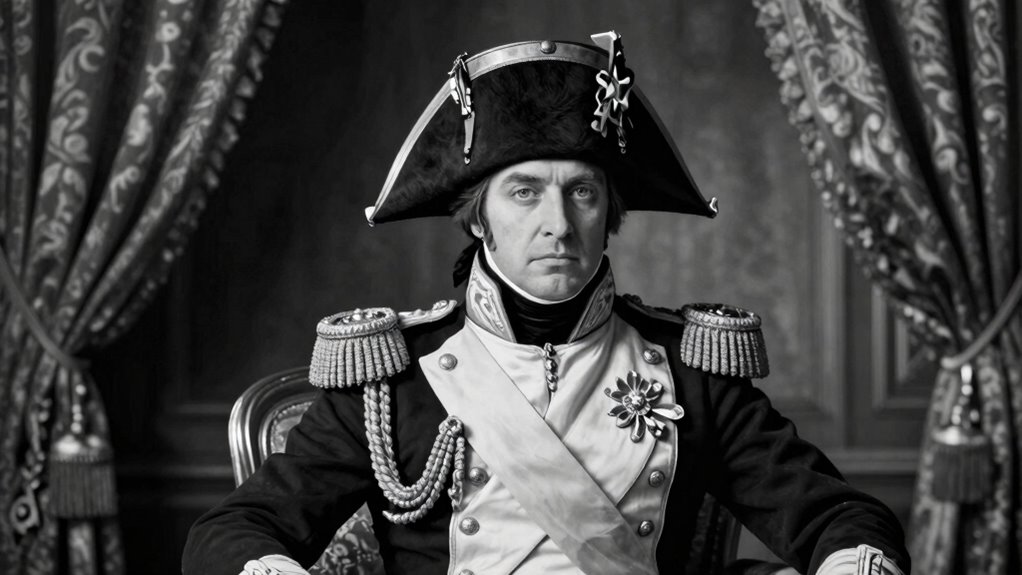

You see Napoleon’s rise as a master of military innovation and political reform, turning chaos into order through strategic genius and bold campaigns across Europe. His swift victories in Italy and Egypt made him famous, but his ambition also led to overreach—most significantly, the disastrous invasion of Russia. His ability to centralize power and reshape society left a lasting mark. If you follow his story further, you’ll uncover how his brilliance also sowed the seeds of his downfall.
Listen free for 30 days with Audible
Thousands of audiobooks and originals — cancel anytime.
As an affiliate, we earn on qualifying purchases.
Key Takeaways
- Napoleon rose to power through military successes in Italy and Egypt, leveraging strategic innovation and psychological tactics.
- He established the Napoleonic Code, centralizing authority and reforming France’s legal and political institutions.
- His rapid expansion across Europe led to overconfidence, culminating in the disastrous 1812 invasion of Russia.
- The Coup of 18 Brumaire marked his political rise, eventually making him Emperor of France.
- His military brilliance and reforms profoundly influenced modern warfare, despite his downfall and exile to Saint Helena.
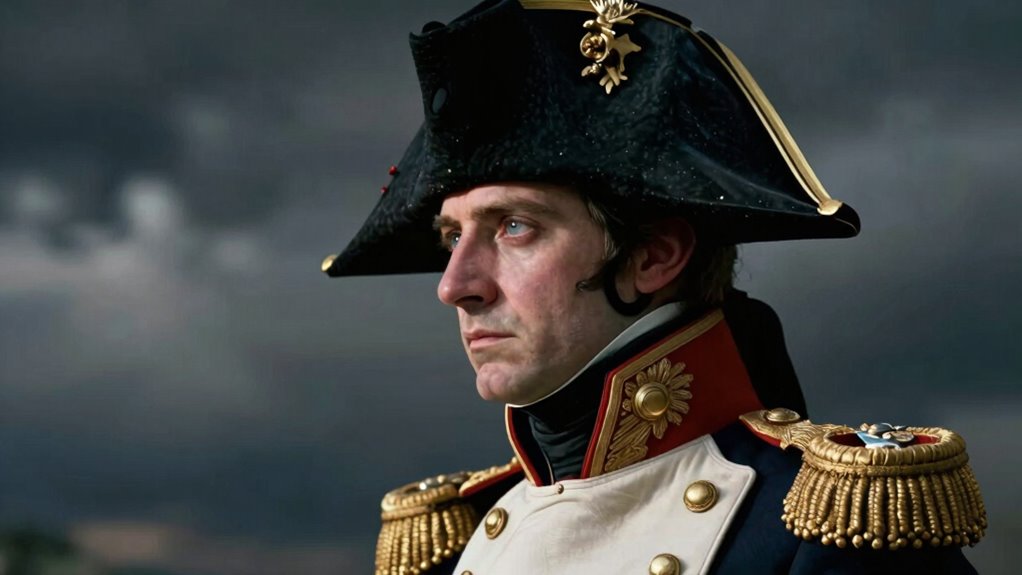
Napoleon Bonaparte was a French military leader and emperor who rose to prominence during the late 18th and early 19th centuries. You might recognize him as a master of military strategies, constantly adapting tactics to outsmart his opponents on the battlefield. His innovative approach to warfare revolutionized how armies fought, emphasizing rapid movements, aggressive assaults, and strategic deception. These military strategies allowed him to win numerous battles and expand France’s influence across Europe. But Napoleon’s impact wasn’t limited to the battlefield; he also initiated sweeping political reforms that reshaped France’s government and society. Recognizing the importance of stability, he centralized power, establishing the Napoleonic Code, which streamlined laws and promoted equality before the law. These reforms helped solidify his authority, but they also aimed to modernize France, making its institutions more efficient and consistent. As you study his rise, you’ll see how he used his military prowess not just to conquer, but also to secure political control, often intertwining military success with his political ambitions. His strategic use of military innovations significantly influenced modern warfare practices. His rise to power was swift and calculated. After leading successful campaigns in Italy and Egypt, he gained fame and influence, which he cleverly used to position himself as a leader capable of restoring order in France amidst chaos. When the Revolution destabilized the country, Napoleon capitalized on the unrest, presenting himself as a savior. His coup d’état in 1799, known as the Coup of 18 Brumaire, marked a turning point, allowing him to establish the Consulate and eventually declare himself Emperor. Throughout this process, his political reforms aimed to stabilize France, reduce the influence of corrupt nobles, and create a unified national identity. His reforms weren’t just about tightening control; they were about laying a foundation for a stronger, more centralized state, which in turn supported his military campaigns. Additionally, his understanding of sound vibrations and their influence on health and mental states could have helped him maintain the morale and resilience of his forces. His keen insight into military tactics and their psychological impact was crucial in maintaining discipline and motivation among his troops. However, Napoleon’s military strategies, brilliant as they were, ultimately contributed to his downfall. His relentless expansion stretched French resources thin and led to overconfidence. His invasion of Russia in 1812, a brutal campaign marked by harsh winter and scorched earth tactics, proved disastrous. The combination of military overreach and failed political alliances weakened his empire. You can see how his desire for dominance, driven by both military ambition and political reforms, created a double-edged sword. His fall was brutal and swift, culminating in exile on Saint Helena. Despite his downfall, Napoleon’s influence endures, as his military innovations and political reforms continue to shape history and military thought.
Napoleon Bonaparte biography book
As an affiliate, we earn on qualifying purchases.
As an affiliate, we earn on qualifying purchases.
Frequently Asked Questions
What Was Napoleon’s Childhood Like in Corsica?
Your childhood in Corsica was marked by a Corsican upbringing, which shaped Napoleon’s strong sense of identity and resilience. You faced childhood hardships, including limited resources and cultural conflicts with French authorities. Growing up in a turbulent environment, you learned to be resourceful and determined. These early experiences fueled your ambition and desire to rise beyond Corsican confines, ultimately influencing your future leadership and strategic prowess.
Did Napoleon Have Any Significant Hobbies or Interests Outside Politics?
You’ll find Napoleon’s hobbies as grand as his ambitions. His art collection was legendary, filled with masterpieces worthy of kings, reflecting his taste for power and beauty. His fascination with chess was even more intense—he played tirelessly, strategizing like he was planning battles on a board. These interests weren’t just pastimes; they were extensions of his relentless pursuit of mastery and control, shaping his mind as much as his empire.
How Did Napoleon Influence Modern Military Strategies?
You see, Napoleon profoundly influenced modern military strategies through his innovative use of military tactics and strategic innovations. He emphasized rapid movement, coordinated artillery, and flexible battlefield maneuvers that changed warfare. By reorganizing armies and introducing corps systems, he made armies more agile and responsive. His emphasis on strategic planning and surprise attacks laid the foundation for contemporary military doctrines, shaping warfare long after his reign.
Were There Any Secret Societies Supporting Napoleon’s Rise?
You might think secret societies and hidden societies played a direct role in Napoleon’s rise, but there’s little concrete evidence to support that. Instead, he built strong secret alliances with influential political and military figures, which helped him climb power. While rumors of clandestine groups existed, most historians agree his success stemmed from strategic brilliance and political savvy, not secret societies. So, no solid proof links hidden societies directly supporting him.
What Was Napoleon’s Relationship With His Family Members?
You see, Napoleon’s relationship with his family was complex, often marked by family loyalty and sibling rivalry. He valued his family deeply and appointed relatives to key positions, but he also kept a tight grip on power, which sometimes caused tension. His siblings were both allies and rivals, vying for influence. Overall, Napoleon’s family ties both supported and challenged his ambitions, shaping his rule and legacy.
Napoleonic Wars strategy board game
As an affiliate, we earn on qualifying purchases.
As an affiliate, we earn on qualifying purchases.
Conclusion
You stand at the crossroads of history, witnessing Napoleon’s empire like a mighty ship caught in a storm. His brilliance guides the crew, but hubris stirs the tempest, tearing the vessel apart. His rise is the dawn’s first light, and his fall, the night’s chilling shadow. Remember, even the brightest stars can burn out when fueled by arrogance. Napoleon’s story reminds you that power, like fire, must be handled with care or it’ll consume everything in its path.
French legal reform history book
As an affiliate, we earn on qualifying purchases.
As an affiliate, we earn on qualifying purchases.
military strategy training course
As an affiliate, we earn on qualifying purchases.
As an affiliate, we earn on qualifying purchases.
Flea & tick season Picks
flea and tick prevention
As an affiliate, we earn on qualifying purchases.