
TL;DR
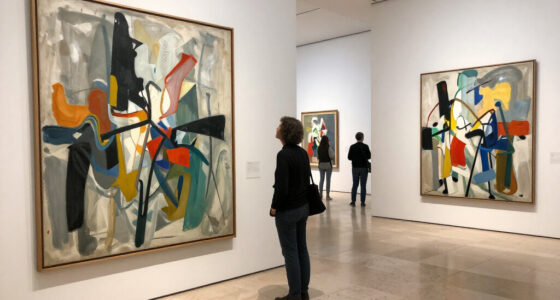
Marc Straus Gallery in New York is showing “The Prime of Your Life,” an exhibition of works by 18 women artists over 75. A Hyperallergic review uses the show to question how age, artistic reputation and delayed institutional or market recognition shape the idea of an artist’s “prime.”
Marc Straus Gallery in New York is presenting “The Prime of Your Life,” an exhibition of work by 18 women artists over 75 that asks when an artist reaches her “prime” and who gets to define it. In a Hyperallergic review, the show becomes a prompt to consider how museum and market recognition can come late in women artists’ careers, and how later work changes the way earlier work is understood.

Get art and craft supplies delivered free with Prime
- Fast, free delivery on millions of items
- Prime Video, Amazon Music and more included
- Member-only deals all year
The exhibition brings together painting, drawing, sculpture and installation in varied scales and styles. The review describes the works less as a unified statement by one generation than as a set of distinct artistic practices placed in conversation. Age is the common thread, but the range of materials and approaches resists a single definition of what older artists’ work should look like.
One work highlighted in the review is Marina Abramović’s “Standing with Skeleton” (2008/2016), a large-scale color photograph near the gallery entrance. It shows Abramović dressed in black with a skeleton positioned on her back. The reviewer compares the image with the artist’s performance-based practice, which has used her body for more than five decades, and questions whether the photograph’s effect differs from the force of her live work.
The review also considers whether a work that seems less successful than an artist’s best-known pieces should alter the standing of those earlier works. It leaves open whether “Standing with Skeleton” should be understood as a late work and whether Abramović, now 79 according to the source, may still have significant work ahead. The exhibition’s central question is not answered by age alone: “prime” can refer to artistic achievement, public attention or commercial success, which do not necessarily occur at the same time.
Recognition Can Arrive Late
The exhibition’s question matters because artistic reputation is not formed only by the work itself. Museums, galleries and art markets shape which artists receive attention, when their work is shown and how their careers are narrated. The review raises the concern that women artists may be more fully valued only in older age, making “prime” as much a question about recognition as about artistic capacity.
Putting artists of different practices in one exhibition also complicates familiar career narratives built around a single peak or a clear progression from early promise to late mastery. A career can contain changes, repetitions and uneven works. The reviewer’s discussion of Abramović points to a related issue: judging a later work against an artist’s most celebrated work may reveal differences, but it does not settle what the later work means or whether it changes the interpretation of the earlier career.
Products Worth Considering

Therabody SleepMask Blackout Eye Mask with Vibration

Garmin inReach Mini 2 Satellite Communicator Bundle, Black

YETI Tundra Haul Wheeled Cooler
As an affiliate, we earn on qualifying purchases.
Late Style and Earlier Work
The review frames the exhibition through feminist art historian Linda Nochlin’s 2008 essay, “Old-Age Style: Late Louise Bourgeois.” Nochlin asks whether an “old-age style” is the same as a “late style,” considering how an artist’s work at the end of life can reshape the understanding of work made earlier. Her discussion of Bourgeois follows continuities in the artist’s interests as well as changes in form and tone.
Drawing on literary theorist Edward Said, Nochlin describes late styles as involving disruption and unresolved contradiction, rather than a smooth connection between periods of an artist’s work. The Hyperallergic review applies that framework to the Marc Straus exhibition, whose works do not resolve into one shared style. It treats the show as a question for 21st-century feminist art history, not as proof that artists of a particular age make a common kind of work.
“What is an ‘old-age style’? Is it the same as a ‘late style’?”
— Linda Nochlin, in her 2008 essay “Old-Age Style: Late Louise Bourgeois,” as quoted in the Hyperallergic report
The Meaning of Abramović’s Photograph
The source material does not provide the exhibition’s opening or closing dates, attendance, sales figures or responses from the gallery and participating artists. It also does not establish whether the artists share a view of what “prime” means or whether their careers have followed comparable paths.
The review’s reading of Abramović’s photograph is an interpretation, not a settled account of the work’s intention or reception. It remains unclear how the artist herself would describe the photograph’s relationship to her performance practice, whether it should be classified as a late work, and how future work may affect readings of her career. The question of whether women artists are recognized later than men is raised by the review, but the supplied material does not include comparative data to measure that claim.
The Exhibition’s Ongoing Conversation
“The Prime of Your Life” is presented at Marc Straus Gallery in New York, but the source material gives no exhibition schedule or announced public program. Readers seeking to visit will need to check the gallery for current dates and access information.
The immediate next step is interpretive rather than a scheduled announcement: viewers can compare the artists’ works without assuming that age makes them a single generation or that every career has a definable peak. Further details about the show, including its duration and any artist or gallery responses to the review’s questions, are not included in the report.
Key Questions
What is “The Prime of Your Life”?
It is an exhibition at Marc Straus Gallery in New York featuring work by 18 women artists over 75. The works include painting, drawing, sculpture and installation.
What question does the exhibition raise?
It asks what “prime” means for a woman artist, particularly when market and museum recognition may come later in life. The review raises the issue but does not establish a universal timeline for recognition.
Why does the review discuss Marina Abramović?
It highlights her photograph “Standing with Skeleton” (2008/2016) and compares its effect with her long-standing performance practice. The reviewer uses that contrast to ask how a later or less celebrated work relates to an artist’s wider reputation.
Does the exhibition define a late style?
No single definition is given. The review draws on Linda Nochlin’s writing about Louise Bourgeois to consider how later work can contain changes, disruptions and unresolved contradictions, rather than simply completing an artist’s earlier style.
When can visitors see the exhibition?
The supplied report identifies Marc Straus Gallery in New York but does not give the exhibition dates. Check the gallery’s current information for its schedule.
Source: rss