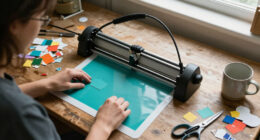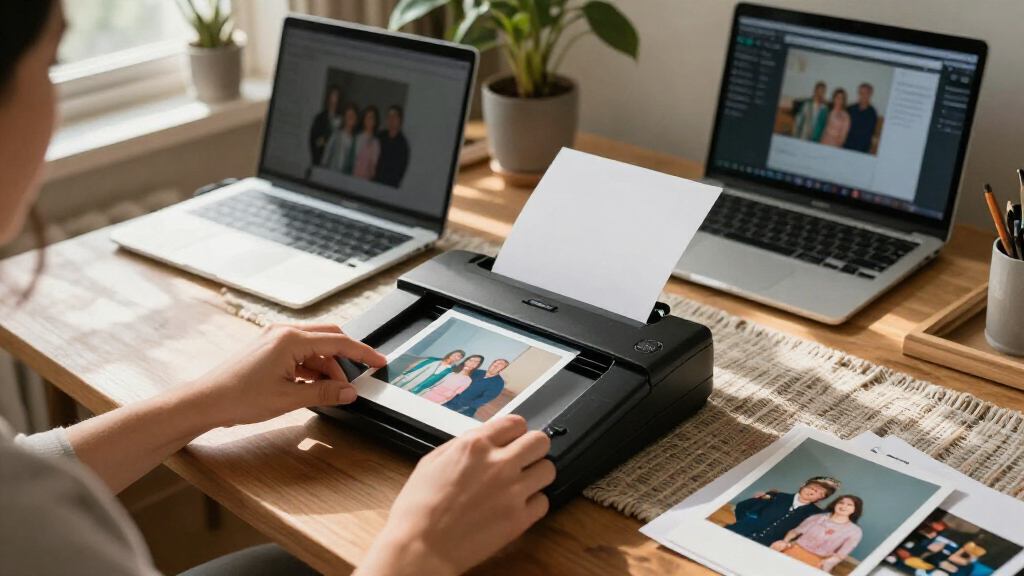

Among these portable photo scanners, the Plustek ePhoto Z300 is my best overall pick for scanning loose prints, while the Epson FastFoto FF-680W stands out for large batches and the handheld models suit occasional, on-the-go captures. The main tradeoff is between photo-friendly handling and speed: a guided feed or desktop-style unit is easier to use consistently, while a handheld wand packs smaller but asks more of your technique. Resolution settings and included memory also shape convenience, but a high DPI number alone does not guarantee a better-looking scan. I compare all seven options by how well their design fits real photo-digitizing needs, not just their listed features. Continue reading for the full breakdown and a guide to choosing the right scanner for your prints.

Get art and craft supplies delivered free with Prime
- Fast, free delivery on millions of items
- Prime Video, Amazon Music and more included
- Member-only deals all year
Key Takeaways
- The Plustek ePhoto Z300 is the most photo-focused middle ground: its dedicated print-scanning design makes more sense for loose photos than handheld A4 wand scanners.
- The Epson FastFoto FF-680W is the batch-work pick: its high-speed duplex workflow is better suited to a sizable print archive than scanners intended for occasional captures.
- Handheld models trade guided handling for portability: the Hczrc, MUNBYN, and AOZBZ options can work across photos and documents, but keeping a steady, even pass matters.
- The HP HPPS100 is a simpler USB-based alternative: it avoids the memory-card-centered approach of the handheld picks, which may appeal to buyers who prefer a computer-connected workflow.
- The two MUNBYN listings are the same core model in different colors: buyers should choose between silver and black based on preference rather than expecting a scanning-performance difference.
| Plustek ePhoto Z300 Photo Scanner |  | Best for Fast, Careful Desktop Photo Scanning | Scanner type: Document and photo | Optical resolution: Up to 600 dpi | Resolution settings: 300 dpi and 600 dpi | VIEW LATEST PRICE | See Our Full Breakdown |
| Hczrc Portable Handheld Scanner for A4 Documents, Photos, Receipts, and Books, 300/600/900 DPI, JPEG/PDF, 16GB MicroSD Card |  | Best for Battery-Powered Scanning Away from a Desk | Scanner type: Receipt, photo, and document | Resolution: 300, 600, or 900 dpi | File formats: JPEG and PDF | VIEW LATEST PRICE | See Our Full Breakdown |
| MUNBYN Portable Handheld Scanner, 900 DPI, A4, 16GB SD Card, Silver |  | Best for Scanning Delicate Prints Flat | Model: IDS001 | Scanner type: Photo | Scanning resolution: 900 dpi | VIEW LATEST PRICE | See Our Full Breakdown |
| Epson FastFoto FF-680W High-Speed Duplex Photo and Document Scanner |  | Best for Large Photo Archives | Scanner type: Photo and document; duplex | Resolution: 600 dpi listed; options include 300 dpi sharing, 600 dpi TIFF archiving, and 1200 dpi interpolated enlargements | Batch capacity: Up to 36 photos | VIEW LATEST PRICE | See Our Full Breakdown |
| HP HPPS100 Portable USB Document and Photo Scanner |  | Best Compact USB-Powered Pick | Model: HPPS100 | Scanner type: Sheetfed, simplex | Connection: USB 2.0 | VIEW LATEST PRICE | See Our Full Breakdown |
| AOZBZ Portable Handheld Document Scanner, 900 DPI, with 16 GB SD Card |  | Best for Lightweight, Software-Free Scanning | Scanner type: Document | Resolution: 300, 600, or 900 dpi | Connection: USB 2.0 | VIEW LATEST PRICE | See Our Full Breakdown |
| MUNBYN Portable Handheld Scanner, 900 DPI, A4, 16GB SD Card, Black |  | Best for Scanning Photos Away from a Desk | Scanner type: Handheld | Maximum scan size: Up to A4 | Resolution: 300, 600, or 900 dpi | VIEW LATEST PRICE | See Our Full Breakdown |
| portable photo scanner | Scanner type | Dimensions and weight | Connection | Resolution |
|---|---|---|---|---|
| Plustek ePhoto Z300 Photo Scan | Document and photo | 19.3 × 4 × 11.4 inches; 1.5 kg | USB | — |
| Hczrc Portable Handheld Scanne | Receipt, photo, and document | 2 × 11 × 1.5 inches; 9.6 ounces | — | 300, 600, or 900 dpi |
| MUNBYN Portable Handheld Scann | Photo | 10 inches long; 145 g | — | — |
| Epson FastFoto FF-680W High-Sp | Photo and document; duplex | 11.7 × 11.7 × 6.9 inches; 8.2 pounds | — | 600 dpi listed; options include 300 dpi sharing, 600 dpi TIFF archiving, and 1200 dpi interpolated enlargements |
| HP HPPS100 Portable USB Docume | Sheetfed, simplex | 2 × 11.6 × 1.4 inches; 3 ounces | USB 2.0 | — |
| AOZBZ Portable Handheld Docume | Document | — | USB 2.0 | 300, 600, or 900 dpi |
| MUNBYN Portable Handheld Scann | Handheld | 0.84 × 10 × 0.7 in; 145 g | Wireless scanning; USB connection for computer transfer | 300, 600, or 900 dpi |
More Details on Our Top Picks
Plustek ePhoto Z300 Photo Scanner
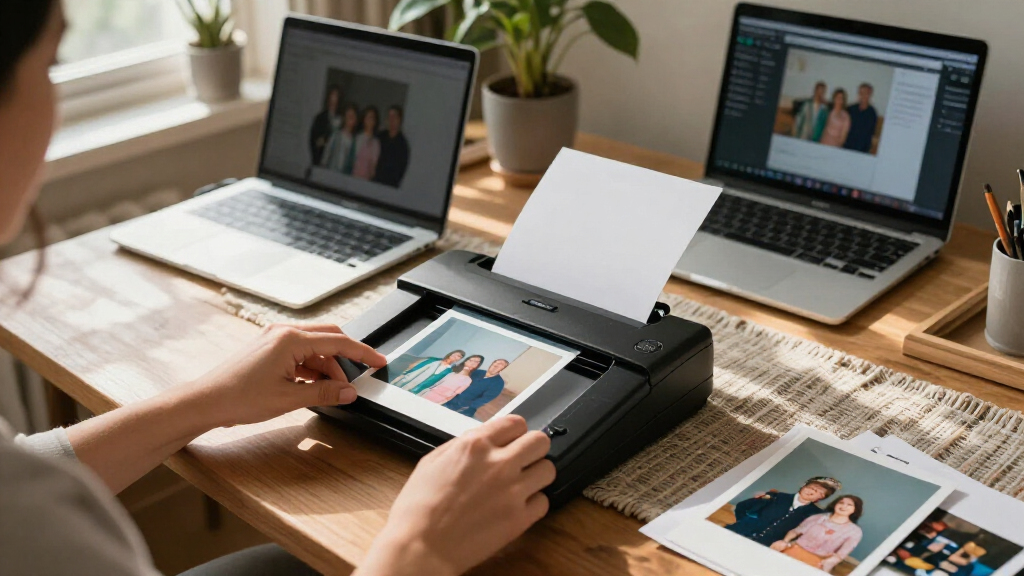
The Plustek ePhoto Z300 is the better fit for a steady photo-digitizing session than either handheld scanner here: it feeds photos one at a time, so you do not have to sweep a device across each image by hand. A 4×6 scan takes about two seconds at 300 dpi, while auto-crop, deskew, and image enhancement can reduce cleanup afterward. Its support for prints up to 8×10 inches and letter- or A4-size paper adds flexibility beyond photo-only use. The tradeoff is its desktop footprint and single-photo workflow; unlike the Epson FastFoto FF-680W, it cannot batch-feed a stack, and its listed speeds apply to 300 dpi. Choose it for manageable photo batches, not a large archive that needs hands-off throughput.
Pros:- Scans a 4×6-inch photo in about two seconds at 300 dpi
- Handles photo sizes from 3×5 through 8×10 inches, plus letter and A4 paper
- Auto-crop, deskew, and image enhancement can cut down on manual corrections
- Offers selectable 300 and 600 dpi resolution with a CCD sensor
Cons:- Requires inserting photos one at a time
- Advertised scan speeds apply to 300 dpi, not the higher setting
- Its 19.3-inch length makes it less convenient to store or carry than handheld models
Best for: People digitizing a modest collection of mixed-size prints who want consistent, guided scanning without handheld movement.
Not ideal for: Anyone processing thousands of photos in batches or needing a scanner that fits easily in a small bag.
- Scanner type:Document and photo
- Optical resolution:Up to 600 dpi
- Resolution settings:300 dpi and 600 dpi
- Sensor:CCD
- Supported media:3×5, 4×6, 5×7, and 8×10-inch photos; letter and A4 paper
- Scan speed:About 2 seconds for a 4×6 photo and 5 seconds for an 8×10 photo at 300 dpi
- Connection:USB
- Dimensions and weight:19.3 × 4 × 11.4 inches; 1.5 kg
Our verdict“Pick the Plustek for quick, controlled scanning of smaller photo collections, but choose the Epson FastFoto FF-680W for batch work.”
Hczrc Portable Handheld Scanner for A4 Documents, Photos, Receipts, and Books, 300/600/900 DPI, JPEG/PDF, 16GB MicroSD Card
The Hczrc handheld scanner is the most self-contained choice here for scanning away from a desk: it saves JPEG or PDF files to an included 16GB MicroSD card and does not require software installation. Its 300, 600, and 900 dpi settings give buyers options for quick reference scans or more detailed captures, while its 9.6-ounce weight suits a travel bag or file drawer. That freedom comes with a manual technique requirement. You move the scanner across each photo, so speed and alignment depend on a steady hand; the HP HPPS100 instead feeds media through a USB-connected scanner. The Hczrc also needs two AA batteries, which are not included. It makes more sense for occasional, location-flexible scanning than for a polished archive workflow.
Pros:- Battery-powered operation and a 9.6-ounce body make it easy to carry
- Includes a 16GB MicroSD card and supports storage up to 32GB
- Offers 300, 600, and 900 dpi settings
- Saves files as JPEG or PDF without requiring software installation
Cons:- Requires two AA batteries, which are not included
- Manual sweeping can produce uneven alignment or scan speed
- Does not provide the feed-based workflow of the HP HPPS100 or Plustek ePhoto Z300
Best for: Travelers, students, and family researchers who need to scan photos or documents where a computer and outlet are not handy.
Not ideal for: Buyers digitizing many treasured prints who want repeatable alignment and minimal hands-on correction.
- Scanner type:Receipt, photo, and document
- Resolution:300, 600, or 900 dpi
- File formats:JPEG and PDF
- Storage:Included 16GB MicroSD card; supports up to 32GB
- Sensor and light source:CIS sensor; LED light
- Power:Two AA batteries, not included
- Dimensions and weight:2 × 11 × 1.5 inches; 9.6 ounces
- Compatibility:Windows XP/7/Vista and Mac OS 10.4 or later
Our verdict“Choose the Hczrc when battery-powered, computer-free capture matters more than consistent results across a large stack of photos.”
MUNBYN Portable Handheld Scanner, 900 DPI, A4, 16GB SD Card, Silver
The silver MUNBYN IDS001 suits fragile or older photos that a buyer would rather not push through a feed mechanism. Its handheld design scans the image flat, and the included 16GB SD card lets it capture files without a computer nearby. At 145 g, it is lighter than the Hczrc and offers 900 dpi capture, with USB transfer to Mac, Windows, or Linux systems. The catch is that the user controls the scan path: steady movement takes practice, and the product information warns that cleaning or white-balance calibration may be needed for image quality. By comparison, the Plustek ePhoto Z300 offers a more guided process and automatic correction tools, but requires feeding each photo into a desktop unit. Choose MUNBYN for portability and delicate originals, not effortless consistency.
Pros:- Flat handheld scanning avoids sending delicate originals through a feed path
- Includes a 16GB SD card for computer-free capture
- Weighs 145 g and transfers scans by USB
- Works with Mac, Windows, and Linux systems
Cons:- Consistent movement takes practice and can affect alignment
- Image quality may call for cleaning or white-balance calibration
- Manual scanning is slower and less repeatable than the Epson FastFoto FF-680W batch workflow
Best for: People digitizing older, delicate prints or magazine pages who need a lightweight scanner that can work without a computer.
Not ideal for: Anyone who wants automatic feeding, predictable alignment, or minimal image correction after scanning.
- Model:IDS001
- Scanner type:Photo
- Scanning resolution:900 dpi
- Color depth:24 bits
- Sensor and light source:CIS sensor; LED light
- Storage and output:Included 16GB SD card; JPG and PDF
- Scan size:A4
- Dimensions and weight:10 inches long; 145 g
- Compatibility and warranty:Mac, Windows 7/8/10/XP, and Linux; 2-year warranty
Our verdict“Choose the MUNBYN for portable, flat capture of delicate originals if you are willing to guide each scan and check the resulting image.”
Epson FastFoto FF-680W High-Speed Duplex Photo and Document Scanner
For a large family archive, the Epson FastFoto FF-680W is the clear throughput pick: it can batch up to 36 photos and is specified to scan a 4×6 print in about one second at 300 dpi under stated conditions. Duplex capture preserves notes written on the back in the same pass, while Wi-Fi, USB, and automatic image tools make this a more connected workflow than the Plustek ePhoto Z300, which handles one photo at a time. It also accepts prints up to 8×10 inches and offers settings for sharing, archiving, and enlargements. The tradeoff is size and dependence on a connected computer or mobile setup; at 8.2 pounds, it is portable only in a relative sense. Its feed-based design may also be less reassuring for fragile originals than the flat-scanning MUNBYN.
Pros:- Batch-scans up to 36 photos, with a stated 4×6 scan speed of about one second at 300 dpi
- Duplex scanning can capture handwritten notes on photo backs
- Handles prints up to 8×10 inches, postcards, panoramas, and documents
- Offers USB and Wi-Fi connectivity with image enhancement and correction tools
Cons:- At 8.2 pounds, it is much less portable than handheld scanners
- Feed-based scanning may not suit fragile, curled, or easily damaged originals
- Wireless scanning requires the stated software or mobile app setup
Best for: Families and archivists digitizing large stacks of prints who want batch feeding, back-side notes, and wireless transfer options.
Not ideal for: People scanning only a few delicate photos, or anyone who needs a genuinely lightweight scanner for travel.
- Scanner type:Photo and document; duplex
- Resolution:600 dpi listed; options include 300 dpi sharing, 600 dpi TIFF archiving, and 1200 dpi interpolated enlargements
- Batch capacity:Up to 36 photos
- Photo scan speed:About 1 photo per second at 300 dpi under stated test conditions
- Maximum photo size:Up to 8 × 10 inches
- Connections:USB and Wi-Fi
- Dimensions and weight:11.7 × 11.7 × 6.9 inches; 8.2 pounds
- Included items:Carrier sheet, cleaning cloth, power cable, and USB 3.0 cable
- Warranty:1-year limited warranty in the U.S.
Our verdict“Pick the Epson FastFoto FF-680W for high-volume family archives, but choose a handheld model for delicate originals or travel.”
HP HPPS100 Portable USB Document and Photo Scanner
The HP HPPS100 is the compact, computer-connected option for someone who scans photos alongside receipts, cards, and short documents. Its sheetfed design and stated speed of up to 15 pages per minute make it more practical for paper stacks than the manually guided Hczrc handheld scanner, while HP WorkScan offers previewing, cropping, size detection, and editing. A listed 1200 dpi resolution gives room for detailed captures, and its 3-ounce weight is easy to pack. This is not a self-contained photo scanner, though: it uses USB 2.0 and needs a compatible computer, unlike the Hczrc or MUNBYN, which save directly to included memory cards. It also scans one side at a time, so it is a poor match for double-sided documents or a hands-off family-photo archive.
Pros:- Weighs 3 ounces and measures 11.6 inches long, making it easy to carry
- Scans photos, documents, receipts, and cards
- HP WorkScan includes preview, cropping, size detection, and image editing
- Supports PDF, JPG, and other file formats
Cons:- Requires a compatible computer and USB connection
- Scans only one side at a time
- The 15-page-per-minute speed is specified for pages, not photo batch scanning
Best for: Mobile workers and students who need a very light USB scanner for occasional photos, receipts, cards, and single-sided paperwork.
Not ideal for: People who need computer-free scanning, duplex capture, or a batch workflow for a large photo collection.
- Model:HPPS100
- Scanner type:Sheetfed, simplex
- Connection:USB 2.0
- Scanning speed:Up to 15 pages per minute
- Resolution and color depth:1200 dpi; 24 bits
- Supported paper size:2 × 2.9 inches minimum; 8.5 × 14 inches maximum
- File formats:PDF, JPG, and others
- Dimensions and weight:2 × 11.6 × 1.4 inches; 3 ounces
- Compatibility and software:Windows 7 or later and macOS; HP WorkScan
Our verdict“Choose the HP HPPS100 for lightweight, computer-connected scanning across mixed media, not for standalone or high-volume photo archiving.”
AOZBZ Portable Handheld Document Scanner, 900 DPI, with 16 GB SD Card
The AOZBZ suits photo owners who want a small scanner they can carry and operate without installing scanning software. Its 300, 600, and 900 dpi settings give some control over file detail, while direct storage to the included card means scans do not need to go through a computer first. At 170 g, it is slightly heavier than the MUNBYN handheld model, though still easy to pack.
The tradeoff is the handheld method: you move it across each photo yourself, so steady passes take practice and may be less consistent than using a feed-through photo scanner such as the Epson FastFoto FF-680W. The listed computer support also focuses on older Windows and Mac versions, making it a less suitable choice for buyers who need clearly stated newer-system compatibility.
Pros:- Three resolution settings, up to 900 dpi, let users choose between scan detail and file size.
- Saves scans as JPEG or PDF directly to a microSD card.
- Lightweight 170 g handheld body is easy to carry.
- Can operate without preinstalled software.
Cons:- Manual movement across each photo requires a steady hand and practice.
- Listed operating-system compatibility centers on older Windows and Mac versions.
- No automated photo feeding, so scanning a large batch takes time.
Best for: Travelers and occasional photo archivists who want card-based scans, multiple resolution settings, and no software installation.
Not ideal for: Buyers digitizing large photo collections quickly, or those who need stated compatibility with current computer operating systems.
- Scanner type:Document
- Resolution:300, 600, or 900 dpi
- Connection:USB 2.0
- File formats:JPEG, PDF
- Storage:Includes 16 GB SD card; supports microSD cards up to 32 GB
- Sensor and light source:CIS sensor; LED
- Weight and dimensions:170 g; 10 × 1 × 1 in
- Compatibility:Windows XP, Windows 7, Vista; Mac OS 10.4 or later
- Warranty:2 years
Our verdict“Choose the AOZBZ for lightweight, software-free scans stored on a card, but pick a feed-through model such as the Epson FastFoto FF-680W for faster batch work.”
MUNBYN Portable Handheld Scanner, 900 DPI, A4, 16GB SD Card, Black
The MUNBYN handheld is the more flexible pick for people who need to scan photos alongside book pages and documents. It handles material up to A4 size, stores JPG or PDF files on its included 16 GB card, and transfers them over USB without a driver. Its stated support for Windows, Mac, and Linux is broader than the older operating-system list supplied for the AOZBZ.
That portability comes with a hands-on learning curve: you guide the scanner across each image, so smooth movement matters for consistent results. Unlike a feed-through model such as the Epson FastFoto FF-680W, it does not automate a stack of photos. OCR software is also not included, so buyers who need searchable text must source that separately. For occasional scans in varied locations, its broader media range is more useful than a dedicated batch workflow.
Pros:- Scans photos, documents, and book pages up to A4 size without feeding or folding them.
- Offers 300, 600, and 900 dpi settings.
- Includes a 16 GB SD card for standalone storage.
- USB file transfer does not require a driver, with Windows, Mac, and Linux listed as supported.
Cons:- Manual scanning takes practice and can produce uneven results if movement is unsteady.
- OCR software is not included and must be obtained separately.
- Scanning a large photo stack is slower than using an automated feed-through scanner.
Best for: Students, researchers, and family archivists who need to scan photos, book pages, and A4 documents in places without a desktop scanner.
Not ideal for: People digitizing many loose prints in one session, or buyers who want included OCR and an automated feed.
- Scanner type:Handheld
- Maximum scan size:Up to A4
- Resolution:300, 600, or 900 dpi
- Connection:Wireless scanning; USB connection for computer transfer
- Storage and output:Includes 16 GB SD card; JPG and PDF
- Sensor and color depth:CIS; 48 bpp
- Dimensions and weight:0.84 × 10 × 0.7 in; 145 g
- System requirements:Windows XP or later, Mac OS X 10.4, or Linux
- Warranty:2-year manufacturer warranty
Our verdict“Pick the MUNBYN when you need a portable scanner for mixed A4 materials and broad computer compatibility, not when batch speed is the priority.”
How We Picked
I ranked these scanners by how well their design serves people digitizing physical photos—not by headline resolution alone. I weighed photo handling, the likelihood of consistent results, scanning speed for small versus large collections, portability, file and storage workflow, and usefulness beyond prints. A scanner that makes it easier to keep photos aligned or process a batch earns a different role from a wand that is easier to carry but depends more on a steady hand.
The ranking favors a useful balance for typical print scanning, then gives dedicated strengths their own place: the Plustek leads for a straightforward photo-focused workflow, while the Epson moves ahead for high-volume batches. Handheld options rank lower for photo work because their compact form can make even coverage more technique-dependent, though they remain practical for mixed, occasional scanning. The MUNBYN silver and black versions are treated as one model family; color alone does not justify a meaningful performance distinction.
| portable photo scanner | Connection |
|---|---|
| Plustek ePhoto Z300 Photo Scan | USB |
| Hczrc Portable Handheld Scanne | — |
| MUNBYN Portable Handheld Scann | — |
| Epson FastFoto FF-680W High-Sp | — |
| HP HPPS100 Portable USB Docume | USB 2.0 |
| AOZBZ Portable Handheld Docume | USB 2.0 |
| MUNBYN Portable Handheld Scann | Wireless scanning; USB connection for computer transfer |
Factors to Consider When Choosing Portable Photo Scanners
Before choosing a scanner, match the device to the way your photos are stored and the amount of work you plan to do. A portable body is only one part of portability: setup, feeding, file transfer, and the effort needed to keep scans consistent can matter just as much.
Match the scanner to the size of your photo project
For a few prints at a time, a compact or simple feed workflow may be more convenient than a machine designed for continuous batches. A large family archive changes the calculation: loading, repositioning, and restarting after every image can become the main source of friction. Estimate how many photos you will scan in a typical session, not just the total collection. If you expect repeated long sessions, give more weight to a guided or batch-oriented workflow. A handheld scanner can be easy to store yet slow to use across dozens of prints. Avoid choosing solely by the word “portable”; think about how much work the device saves once it is on your desk.
Choose photo handling over a high DPI headline
Resolution settings describe how much image detail a scanner captures, but they do not tell you whether a photo is easy to position or whether a handheld pass will stay even. For family prints meant for sharing or ordinary reprints, consistent alignment and clean handling can matter more than selecting the largest number on the spec sheet. Higher-resolution files also take more storage and can slow down transfer and organization. Decide how you will use the scans before choosing a setting: casual sharing, archival storage, and large reprints have different needs. Check whether your workflow lets you preview results and rescan an image without much setup. Do not treat a maximum DPI figure as a substitute for good scanning technique.
Account for the condition and format of your prints
Flat, loose prints are easier to scan than curled, fragile, or unusually sized photographs. A feed-based design can make repeat scanning more orderly, but delicate originals may call for slower, more hands-on handling. Before buying, check the supported print and document sizes against the items you actually own. Albums, mounted photos, and thick or damaged prints may not suit a scanner that expects a loose sheet. For mixed collections, consider whether you will need a flatbed or a camera-based method for items a portable scanner cannot accept. A versatile document scanner is not automatically the safest choice for every old photograph.
Think through where scans will be stored and edited
A scanner’s file workflow can determine whether finished images are easy to find later. Models that save to a memory card can work away from a computer, but you will need a reliable way to move files and keep backups. A USB-connected workflow may make transfers more direct, though it ties scanning to a compatible computer and cable setup. Check the file formats and software support you need before starting a large project. Plan a folder and naming system in advance so dates, people, and events do not disappear into a pile of generic filenames. Storage capacity is useful, but it is not the same as having a second copy of irreplaceable scans.
Decide how much portability you actually need
For regular scanning at home, a device that stays on a desk can be more comfortable than the smallest scanner you can pack. Handheld models have a clear advantage when you need to scan documents or prints in different locations, but their results rely more on a controlled pass. USB-powered models reduce the need for a separate power arrangement, while memory-card models may offer more freedom from a computer during capture. Consider the whole setup, including cables, computer access, memory cards, and the surface needed for photos. If you will rarely leave home with the scanner, favor repeatable handling over the smallest footprint. If travel or field use is central, accept that portability can mean more manual work.
Spend more for workflow, not just extra features
Paying more can make sense when it removes repeated effort: batch handling, faster capture, or a workflow that fits a large archive can save time across many sessions. For a handful of prints, those advantages may never repay the extra complexity or space. A low-cost handheld can cover mixed document and photo tasks, but only if you are comfortable guiding each scan and reviewing the result. Compare the cost of your time, the size of your collection, and the value of dependable handling. Also leave room in your plan for storage, backups, and image cleanup. The best fit is the scanner whose workflow you will use consistently, not the one with the longest feature list.
Frequently Asked Questions
Is a handheld scanner a good choice for scanning a large box of family photos?
It can work, but a handheld scanner usually asks you to guide each pass carefully, so a large collection may take patience. For a box of prints, a photo-focused or batch-oriented design is often easier to keep moving through a session. Handheld models make more sense when you need occasional scans, mixed documents, or a device that stores easily. Before committing, think about whether you are willing to review scans and repeat any uneven passes. If speed and consistent handling are priorities, compare those benefits against the handheld model’s smaller footprint.
Does a 900 DPI setting mean a handheld scanner will capture better photos?
Not by itself. A high DPI setting can capture more detail, but the final result also depends on steady movement, alignment, lighting, and the condition of the original print. A handheld scanner that moves unevenly may produce a less consistent image than a lower-resolution scan made with controlled handling. Larger files can also take more storage and time to transfer. Choose a setting based on whether you plan to share, preserve, or enlarge the scans, then prioritize repeatable technique.
Should I choose the Plustek ePhoto Z300 or Epson FastFoto FF-680W?
My choice depends on the collection and the pace you want. The Plustek ePhoto Z300 is the more balanced photo-focused pick for buyers who want a straightforward way to scan loose prints. The Epson FastFoto FF-680W is better aligned with large batches, where a high-speed duplex workflow can matter more than keeping the setup compact. If you only scan a small number of photos now and then, the Epson’s batch strengths may be more than you need. If you are digitizing an archive, its workflow deserves closer attention.
Can I use a portable photo scanner for documents as well?
Several options in this roundup are designed for both photos and documents, especially the handheld A4 scanners. That flexibility is useful if you want one device for receipts, pages, and occasional prints. The tradeoff is that a document-first design may not make photo positioning and repeatable print scans as simple as a photo-focused model. Check the supported page and print sizes, file formats, and transfer method against your normal tasks. If photos are the main purpose, do not let document versatility outweigh handling quality.
Are the silver and black MUNBYN scanners different in performance?
The listings identify the same MUNBYN handheld scanner in two color options, with matching core specifications. I would choose between them based on appearance or availability rather than expecting a difference in image quality or scanning workflow. Both remain handheld devices, so the same practical tradeoff applies: portability comes with more responsibility for keeping the scanner steady. If you want a more guided approach to prints, compare either color with the Plustek or Epson instead. Color choice should not decide the purchase when workflow is the real difference.
Conclusion
For most people scanning loose prints, I recommend the Plustek ePhoto Z300 as the best overall balance of photo-focused handling and practical use. Choose the Epson FastFoto FF-680W as the best premium pick when you have a sizable archive and value batch speed. The Hczrc, MUNBYN, or AOZBZ handheld scanners are the best value-style options for buyers who want a compact tool for occasional photos and documents and are comfortable guiding each pass; the MUNBYN silver and black versions are color choices, not separate performance tiers. For a straightforward photo-first starting point, the Plustek is also my best pick for beginners. If computer-connected USB use matters most, consider the HP HPPS100 for that specific workflow. Choose based on your collection size and preferred handling method—not portability or DPI alone.