For readers choosing among CIA memoirs, my best overall pick is The Art of Intelligence, which focuses on lessons from a career in the clandestine service. In True Face offers a woman’s account of agency life, while The Master of Disguise centers on espionage operations and tradecraft. The main tradeoff is whether you want personal career stories, accounts tied to counterterrorism, or a wider historical look at intelligence and politics. These books differ in focus and perspective, so the right choice depends on what you hope to learn. Continue reading for the full breakdown and a guide to choosing.

Get art and craft supplies delivered free — and shop member deals
- Fast, free delivery on millions of items
- Access to Prime Big Deal Days deals on October 6–7
- Prime Video, Amazon Music and more included
Key Takeaways
- The Art of Intelligence is the strongest starting point for readers seeking career lessons from the clandestine service rather than a single operation.
- In True Face stands apart for its focus on a woman’s life inside the CIA, adding a perspective that is less prominent across the other selections.
- The Master of Disguise and Blown Cover point toward operational memoirs, but readers should choose between an emphasis on espionage operations and a broader personal CIA account.
- Reluctant Spy, The Unexpected Spy, and See No Evil cluster around counterterrorism and the war on terror, making them better fits for readers interested in that period and mission.
- Mafia Spies offers a different historical lane, connecting intelligence, organized crime, JFK, and Castro rather than focusing mainly on an individual career inside the agency.
| In True Face: A Woman’s Life in the CIA, Unmasked |  | Best for a Personal Perspective on Women in Intelligence | Format: Book | Subject: A woman’s life and experiences in the CIA | Genre: Memoir | VIEW ON AMAZON | See Our Full Breakdown |
| No Cloak, No Dagger: A Professor’s Secret Life Inside the CIA |  | Best for an Unusual Dual-Life Story | Format: Book | Subject: A professor’s secret life inside the CIA | Genre: Memoir | VIEW ON AMAZON | See Our Full Breakdown |
| Reluctant Spy: My Secret Life in the CIA’s War on Terror | 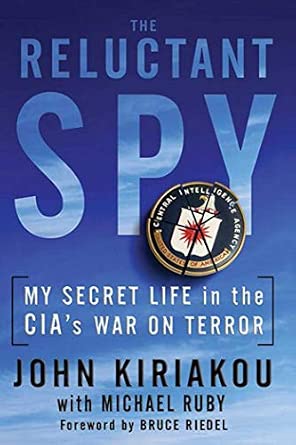 | Best for a War-on-Terror CIA Account | Format: Book | Subject: CIA service during the War on Terror | Genre: Memoir | VIEW ON AMAZON | See Our Full Breakdown |
| The Unexpected Spy: From the CIA to the FBI, My Secret Life Taking Down Some of the World’s Most Notorious Terrorists |  | Best for Cross-Agency Counterterrorism | Format: Book | Subject: Undercover work in the CIA and FBI | Genre: Memoir | VIEW ON AMAZON | See Our Full Breakdown |
| The Art of Intelligence: Lessons from a Life in the CIA’s Clandestine Service | 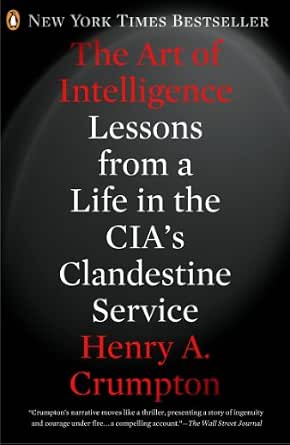 | Best for Career Lessons from the Clandestine Service | Format: Book | Subject: A life in the CIA’s clandestine service | Genre: Memoir | VIEW ON AMAZON | See Our Full Breakdown |
| Blown Cover: A CIA Memoir |  | Best for Undercover Service | Format: Memoir | Subject: Undercover CIA service | Focus: Covert activities and national security | VIEW ON AMAZON | See Our Full Breakdown |
| Mafia Spies: The Inside Story of the CIA, Gangsters, JFK, and Castro |  | Best for Cold War History | Format: Historical narrative | Subject: CIA, organized crime, JFK, and Castro | Focus: Covert operations and criminal alliances | VIEW ON AMAZON | See Our Full Breakdown |
| See No Evil: The True Story of a Ground Soldier in the CIA’s War on Terrorism |  | Best for Ground-Level Counterterrorism | Format: True-story memoir | Subject: CIA counterterrorism | Role described: Ground soldier | VIEW ON AMAZON | See Our Full Breakdown |
| The Master of Disguise: My Secret Life in the CIA – The First CIA-Authorized Memoir of International Espionage Operations |  | Best for Operational Detail | Format: Memoir | Authorization: CIA-authorized account | Subject: International espionage operations | VIEW ON AMAZON | See Our Full Breakdown |
| cia memoir | Format | Subject | Focus | Genre |
|---|---|---|---|---|
| In True Face: A Woman’s Life i | Book | A woman’s life and experiences in the CIA | Personal stories and behind-the-scenes intelligence work | Memoir |
| No Cloak | Book | A professor’s secret life inside the CIA | Espionage and personal experiences in intelligence work | Memoir |
| Reluctant Spy: My Secret Life | Book | CIA service during the War on Terror | Covert intelligence work and national security | Memoir |
| The Unexpected Spy: From the C | Book | Undercover work in the CIA and FBI | Counterterrorism and intelligence operations | Memoir |
| The Art of Intelligence: Lesso | Book | A life in the CIA’s clandestine service | Intelligence operations and strategic thinking | Memoir |
| Blown Cover: A CIA Memoir | Memoir | Undercover CIA service | Covert activities and national security | — |
| Mafia Spies: The Inside Story | Historical narrative | CIA, organized crime, JFK, and Castro | Covert operations and criminal alliances | — |
| See No Evil: The True Story of | True-story memoir | CIA counterterrorism | Covert operations and field challenges | — |
| The Master of Disguise: My Sec | Memoir | International espionage operations | — | — |
More Details on Our Top Picks
In True Face: A Woman’s Life in the CIA, Unmasked
In True Face is the most personally focused choice in this group, centering a woman’s experience inside the CIA rather than presenting intelligence work chiefly as strategy or counterterrorism. Its account of workplace realities and life in the agency gives readers a perspective that is less prominent in The Art of Intelligence, which emphasizes lessons from a clandestine-service career. The behind-the-scenes stories and emphasis on female empowerment suit readers who want the human dimension of service, not a procedural manual.
The tradeoff is limited operational detail: readers seeking specific methods or technical explanations may find Reluctant Spy a closer fit. This memoir’s appeal depends more on interest in the author’s personal perspective than on a broad survey of intelligence history, so it is a more focused pick than a general introduction to the CIA.
Pros:- Offers a personal account of a woman’s experience in the CIA.
- Shares behind-the-scenes stories about intelligence work.
- Emphasizes the human and professional dimensions of service.
- Provides a distinct perspective compared with career-and-strategy-focused memoirs.
Cons:- Does not provide extensive technical or operational detail.
- Its personal focus may not suit readers looking for a broad intelligence history.
Best for: Readers seeking a woman officer’s personal account of CIA work and the human experience of serving in intelligence.
Not ideal for: Readers prioritizing detailed tradecraft, operational explanations, or a broad historical account of the CIA.
- Format:Book
- Subject:A woman’s life and experiences in the CIA
- Genre:Memoir
- Focus:Personal stories and behind-the-scenes intelligence work
- Perspective:Female CIA officer
- Operational detail:Limited technical and operational information
Our verdict“Choose this memoir for a personal account of a woman’s life in the CIA rather than a detailed guide to covert operations.”
No Cloak, No Dagger: A Professor’s Secret Life Inside the CIA
No Cloak, No Dagger stands apart through its professor-with-a-secret-life premise: its central appeal is the contrast between an academic identity and clandestine CIA work. That makes it a different kind of read from In True Face, which foregrounds a woman officer’s personal experience, and from The Art of Intelligence, which is framed around career lessons from the clandestine service. The account offers an accessible route into the author’s experiences and the broader world of intelligence without promising a technical handbook.
Readers should choose it for that unusual personal angle and reported insight, not for a close operational breakdown. The supplied description gives little indication of the author’s particular assignments or the scope of the operations covered, so buyers seeking detailed case studies may prefer The Unexpected Spy for its explicit counterterrorism focus. Its strongest fit is someone interested in how professional identities can overlap with secret work.
Pros:- Distinctive perspective built around a professor’s secret CIA life.
- Connects personal experience with clandestine intelligence work.
- Offers an accessible narrative rather than presenting itself as a technical manual.
Cons:- The available description does not specify operational methods or technical detail.
- Readers looking for a focused account of particular missions may want a more mission-specific memoir.
Best for: Readers drawn to memoirs about balancing a public academic career with a concealed life in intelligence.
Not ideal for: Readers who want detailed tradecraft, clearly specified counterterrorism missions, or fiction rather than nonfiction.
- Format:Book
- Subject:A professor’s secret life inside the CIA
- Genre:Memoir
- Focus:Espionage and personal experiences in intelligence work
- Author perspective:Professor with a concealed CIA life
- Operational detail:Limited technical information
Our verdict“Pick this for the contrast between academic life and CIA service, not for granular operational instruction.”
Reluctant Spy: My Secret Life in the CIA’s War on Terror
Reluctant Spy is the clearest pick here for readers specifically interested in the CIA’s role in the War on Terror. Its insider perspective and personal anecdotes keep the focus on intelligence work in that security context, setting it apart from The Unexpected Spy, which spans CIA and FBI service and is described as a counterterrorism account. This narrower framing can help readers who want a memoir tied to a particular era and mission area rather than a general account of life in the agency.
The limitation is that its personal narrative does not amount to a detailed operational guide, and CIA terminology may be less approachable for readers without background in the subject. Compared with No Cloak, No Dagger, its stated focus is more directly tied to national security, but buyers seeking an explanation of tradecraft should keep expectations modest. It suits readers who value a first-person view of the period over technical instruction.
Pros:- Focuses directly on CIA work during the War on Terror.
- Uses personal anecdotes to convey an insider perspective.
- Connects intelligence work to national security concerns.
Cons:- Provides limited technical and operational specifics.
- CIA terminology may challenge readers without background in intelligence.
Best for: Readers interested in a CIA insider’s personal account of intelligence work during the War on Terror.
Not ideal for: Readers unfamiliar with intelligence terminology who want extensive explanation, or readers seeking technical tradecraft details.
- Format:Book
- Subject:CIA service during the War on Terror
- Genre:Memoir
- Focus:Covert intelligence work and national security
- Narrative approach:Insider perspective with personal anecdotes
- Operational detail:Limited technical and operational specifics
Our verdict“Choose this for a first-person War-on-Terror perspective, while expecting memoir rather than a tradecraft manual.”
The Unexpected Spy: From the CIA to the FBI, My Secret Life Taking Down Some of the World’s Most Notorious Terrorists
The Unexpected Spy has the broadest agency scope in this group: its account moves from the CIA to the FBI and centers on undercover counterterrorism work. That makes it a stronger match for readers curious about how intelligence and domestic law enforcement intersect than Reluctant Spy, whose stated lens is the CIA’s War on Terror. Personal stories bring the author’s work into focus, while the counterterrorism theme gives the memoir a clear subject beyond career history alone.
That breadth comes with a tradeoff: readers looking for detailed procedures or a systematic explanation of agency methods are unlikely to get one, and the narrative may lean too heavily on personal experience for some. Unlike The Art of Intelligence, which is presented as a career’s lessons from the clandestine service, this pick is anchored in undercover work and terrorist cases. Choose it for that cross-agency, mission-centered angle, not as a technical reference.
Pros:- Covers experience across both the CIA and FBI.
- Centers on undercover counterterrorism work.
- Uses personal stories to make the author’s intelligence career accessible.
- Offers a different agency scope from CIA-only memoirs in this selection.
Cons:- Does not provide extensive technical detail about intelligence operations.
- The personal-story emphasis may not satisfy readers seeking systematic analysis.
Best for: Readers interested in undercover counterterrorism and the contrast between CIA and FBI work.
Not ideal for: Readers who want a technical account of intelligence procedures or prefer a broad career-and-strategy memoir.
- Format:Book
- Subject:Undercover work in the CIA and FBI
- Genre:Memoir
- Focus:Counterterrorism and intelligence operations
- Agencies covered:CIA and FBI
- Narrative approach:Personal stories and behind-the-scenes account
Our verdict“Pick this for a personal, cross-agency account of undercover counterterrorism rather than a procedural guide.”
The Art of Intelligence: Lessons from a Life in the CIA’s Clandestine Service
The Art of Intelligence is the most explicitly lesson-oriented choice here, drawing on a CIA veteran’s clandestine-service career to discuss intelligence work and strategic thinking. That framing gives it a different purpose from In True Face, which centers on a woman officer’s personal story, and from The Unexpected Spy, which is defined by undercover counterterrorism across two agencies. Readers who want reflections on a career in clandestine service may find this more useful than a memoir built mainly around one personal angle.
It still is not a technical manual: the description points to expert insight and anecdotes, but also notes limited technical detail. Its broad career perspective may feel less tightly tied to a specific era or mission than Reluctant Spy. I would choose it for reflective lessons about intelligence work, while skipping it if the main goal is detailed operational explanation or a tightly focused mission narrative.
Pros:- Offers reflections from a CIA clandestine-service career.
- Emphasizes lessons and strategic thinking alongside personal anecdotes.
- Provides a broader career perspective than a narrowly mission-focused account.
Cons:- Does not supply extensive technical information.
- Its career-wide framing may be less focused than memoirs centered on a particular operation or period.
Best for: Readers seeking a CIA veteran’s reflections on clandestine service, intelligence work, and strategic thinking.
Not ideal for: Readers who want granular tradecraft, a specific War-on-Terror narrative, or a memoir centered on one undercover mission.
- Format:Book
- Subject:A life in the CIA’s clandestine service
- Genre:Memoir
- Focus:Intelligence operations and strategic thinking
- Narrative approach:Career lessons and personal anecdotes
- Operational detail:Limited technical information
Our verdict“Choose this for career-spanning lessons from the clandestine service, not for detailed operational instructions.”
Blown Cover: A CIA Memoir
Blown Cover is the pick for readers most interested in the personal realities of working undercover. Its memoir format puts the focus on the author’s experiences and perspective, making covert work feel grounded in an individual life rather than presented as a broad survey of intelligence history. Compared with The Master of Disguise, which is described as offering operational detail and international missions, this book is better suited to readers who want a more personal account than a tactical one. That focus is also its limitation: the account does not promise extensive technical explanations, and its reach is bounded by one person’s experiences. I’d choose it over See No Evil for an undercover-service angle, but skip it if you want a detailed guide to intelligence methods.
Pros:- Offers a personal account of undercover CIA work
- Provides perspective on covert activities and national security
- Engaging storytelling gives the subject an individual point of view
Cons:- Does not provide extensive technical information
- The scope is limited to the author’s personal experiences
Best for: Readers who want a personal memoir centered on undercover CIA work and the human perspective on covert service
Not ideal for: Readers seeking technical explanations of intelligence tradecraft or a wide-ranging history across multiple operations
- Format:Memoir
- Subject:Undercover CIA service
- Focus:Covert activities and national security
- Perspective:Personal account
- Operational detail:Limited technical information
- Scope:Author’s experiences
Our verdict“Choose this memoir for a personal account of undercover service, not for a technical survey of CIA operations.”
Mafia Spies: The Inside Story of the CIA, Gangsters, JFK, and Castro
Mafia Spies takes a wider historical route than the personal-service memoirs in this group, tracing covert connections among the CIA, organized crime, JFK, and Castro. That makes it a strong match for readers who want the political and criminal backdrop to espionage, rather than a single operative’s career. Compared with Blown Cover, its emphasis is on a tangled historical story, not an individual’s undercover experience; compared with The Master of Disguise, it foregrounds alliances and political context over one memoirist’s operational perspective. The tradeoff is density: readers looking for a quick, intimate first-person account may find this less direct. The description also notes no visual supplements, so the narrative must carry the history on its own.
Pros:- Connects CIA activity with organized crime and major political figures
- Provides historical context around covert operations
- Research-driven narrative is described as engaging
Cons:- The historical material may feel dense to casual readers
- No visual aids or supplementary materials are specified
Best for: History-minded readers interested in CIA ties to organized crime and the political conflicts involving JFK and Castro
Not ideal for: Casual readers who prefer a short, straightforward personal memoir or visual aids to help organize complex history
- Format:Historical narrative
- Subject:CIA, organized crime, JFK, and Castro
- Focus:Covert operations and criminal alliances
- Historical setting:A turbulent political era
- Approach:In-depth exploration
- Supplementary materials:No visual aids specified
Our verdict“Pick this for a history-rich account of CIA, gangster, and political connections rather than a narrowly personal memoir.”
See No Evil: The True Story of a Ground Soldier in the CIA’s War on Terrorism
See No Evil stands apart by centering on a ground soldier’s firsthand experience in the CIA’s fight against terrorism. Readers get a view of covert work from the field, rather than the undercover-service focus of Blown Cover or the Cold War political history of Mafia Spies. That makes this the clearest fit for someone curious about the personal demands and challenges faced by intelligence personnel in counterterrorism. The perspective is the main draw, but also the boundary: it is an account of one person’s experiences, not a technical handbook or a full institutional history. If you want a broader operational portrait, The Master of Disguise is described as including more operational insight; if you want ground-level perspective, this is the more direct choice.
Pros:- Offers a firsthand ground-level perspective
- Focuses on the CIA’s fight against terrorism
- Addresses the challenges faced by intelligence personnel
Cons:- Does not provide detailed technical information
- The account is limited to personal experiences
Best for: Readers seeking a firsthand account of field work and the personal challenges of CIA counterterrorism
Not ideal for: Readers who want detailed technical instruction, a broad institutional history, or an account centered on Cold War operations
- Format:True-story memoir
- Subject:CIA counterterrorism
- Role described:Ground soldier
- Perspective:Firsthand account
- Focus:Covert operations and field challenges
- Technical detail:Limited
Our verdict“Choose this for a ground-level counterterrorism memoir, while readers after broader operational detail may prefer The Master of Disguise.”
The Master of Disguise: My Secret Life in the CIA – The First CIA-Authorized Memoir of International Espionage Operations
The Master of Disguise is the strongest match here for readers who want a CIA insider’s account with an emphasis on international missions and operational detail. Its CIA-authorized status and first-person framing distinguish it from Mafia Spies, which concentrates on historical links among the agency, gangsters, and political figures. It also reaches beyond the narrower personal-service focus of Blown Cover, though both offer an individual perspective on covert work. That added operational texture may be rewarding for committed espionage readers, but the description warns that dense detail can overwhelm casual ones. As a memoir, it remains one insider’s account rather than a complete view of agency activity, so I’d pick it for mission-focused reading, not as a neutral, all-encompassing history.
Pros:- Presents a firsthand, CIA-authorized perspective
- Focuses on covert missions around the globe
- Combines personal anecdotes with operational and historical insight
Cons:- Operational detail may overwhelm casual readers
- A memoir offers an individual perspective rather than a complete agency history
Best for: Espionage readers who want a CIA-authorized first-person account with international missions and operational insight
Not ideal for: Casual readers who prefer a light narrative, or readers looking for a broad, independent history of the CIA
- Format:Memoir
- Authorization:CIA-authorized account
- Subject:International espionage operations
- Perspective:First-person insider account
- Content:Personal anecdotes and operational insights
- Scope:Covert missions around the globe
Our verdict“Choose this for mission-focused operational detail; opt for Mafia Spies if historical political alliances matter more to you.”

How We Picked
I compared these nine books by the perspective they offer, the scope of their subject matter, and how clearly each suits a particular reader. I gave more weight to memoirs with a distinct point of view or a useful organizing focus: career lessons, a specific operational experience, a personal account of agency life, or a defined historical episode. Because the list spans different eras and missions, I also considered whether a book’s subject is narrow or broad enough to serve as an introduction to CIA memoirs.
The order reflects usefulness for the widest range of readers, not a claim that one personal account is more truthful or authoritative than another. Books with a clear angle and broad relevance rank ahead of titles that are better matched to readers already interested in a particular mission or historical subject. I also treated scope as a tradeoff: a focused account can provide a more specific view, while a broader memoir may offer more context but less attention to one operation.
| cia memoir | Format | Operational detail |
|---|---|---|
| In True Face: A Woman’s Life i | Book | Limited technical and operational information |
| No Cloak | Book | Limited technical information |
| Reluctant Spy: My Secret Life | Book | Limited technical and operational specifics |
| The Unexpected Spy: From the C | Book | — |
| The Art of Intelligence: Lesso | Book | Limited technical information |
| Blown Cover: A CIA Memoir | Memoir | Limited technical information |
| Mafia Spies: The Inside Story | Historical narrative | — |
| See No Evil: The True Story of | True-story memoir | — |
| The Master of Disguise: My Sec | Memoir | — |
Factors to Consider When Choosing Cia Memoirs
Before choosing a CIA memoir, decide what kind of account you want. The title and agency connection alone do not tell you whether a book centers on personal experience, operational work, career lessons, or a historical episode. These distinctions can help you avoid picking a well-known subject that does not match your reason for reading.
Choose a personal story or a work-focused account
A memoir can spend more time on the author’s path through agency life or on the work and lessons associated with intelligence service. These approaches satisfy different kinds of curiosity: a personal story gives more attention to perspective and career, while a work-focused account may better suit readers drawn to methods, decisions, and mission context. Do not assume that a book about the CIA will explain how the whole agency operates; one person’s account is necessarily limited. If you want a broad introduction, favor a book with a clearly stated career or service focus. If you want intimate recollection, accept that the scope may be narrower.
Match the subject to the era or mission you care about
Several titles here connect directly to the war on terror, while Mafia Spies focuses on an older intersection of intelligence, organized crime, and political history. Picking by period can make a larger difference than picking by the word “spy” in a subtitle. Readers interested in counterterrorism should look for that subject explicitly, rather than expecting every CIA memoir to cover it. A history-centered reader may prefer a book tied to a defined set of events, while a career-focused reader may want a wider span of service. A common mistake is to choose by dramatic topic alone without checking whether the book is mainly personal memoir or event-focused history.
Think about perspective, not just job title
Memoirs can differ sharply in the experiences and vantage points they foreground, even when they share an agency setting. In True Face is a distinct option for readers seeking a woman’s perspective on life in the CIA; other books may place more emphasis on operations, counterterrorism, or career lessons. Ask whose experience you want to hear and what parts of agency life the author is positioned to describe. One person’s account cannot stand in for every role or view within an institution. Choosing for perspective can make a memoir more relevant than choosing only for a high-profile operation.
Check how much historical context you want
Some readers want a close personal account; others want a story that connects intelligence work to political events and public history. Those aims are not interchangeable. A focused memoir may keep attention on the author’s own experiences, while a book built around a subject such as JFK and Castro may appeal to readers seeking a wider historical frame. If you already know the events, a personal perspective may add more than another overview. If you are new to the topic, look for a clearly signposted subject and avoid assuming that a memoir will provide a full history of the agency.
Decide whether tradecraft or career lessons matter more
Titles that foreground clandestine service, disguise, or intelligence lessons signal different reading priorities. Readers drawn to how intelligence work is presented may favor an operations-oriented account, while readers considering the professional side of service may get more from a book organized around career lessons. Memoirs remain personal accounts, not manuals or complete operational records. Treat claims about methods as one author’s account, not a universal description of agency practice. Paying for a more specialized subject makes sense when you know which lens you want; otherwise, a broader career perspective may be a more satisfying first choice.
Choose a first CIA memoir with a clear point of entry
For a first book in this category, clarity of focus is often more useful than choosing the most dramatic-sounding title. A defined subject helps you follow the account without needing extensive background, while a broad career memoir can show how an author connects individual experiences to a longer professional life. If you are already familiar with intelligence history, a narrower account may be more rewarding. If not, choose a book whose stated focus matches your existing interests, such as agency life, counterterrorism, or a specific historical episode. This avoids a common mismatch: expecting a sweeping institutional history from a memoir centered on one person.
Frequently Asked Questions
Which CIA memoir is the best first read if I have little background in intelligence?
I would start with The Art of Intelligence if you want a career-centered account and lessons from the clandestine service. Its stated focus offers a clearer entry point than beginning with a book tied to a specific historical controversy or mission. If you are more interested in an individual’s agency experience, In True Face offers a distinct personal perspective. Choose based on whether you want professional lessons or a personal life story. Neither should be treated as a complete guide to the CIA.
Which books in this roundup focus most directly on the war on terror?
Reluctant Spy, The Unexpected Spy, and See No Evil are the clearest matches because their titles and subtitles explicitly connect them to the war on terror or counterterrorism. They are better starting points if that era or mission is your main interest than books centered on career lessons, disguise, or older political history. Compare the individual descriptions before choosing, since a shared subject does not mean each memoir covers the same role or events. If you want a broader CIA career perspective, consider a title outside this cluster.
Should I choose a CIA memoir or a book focused on an intelligence-related historical episode?
Choose a memoir when you chiefly want one author’s account of their experiences and perspective. Choose a history-centered title when you want events and their political connections to carry more of the story. Mafia Spies is the clearest fit here for readers drawn to the CIA, organized crime, JFK, and Castro. A memoir may offer personal detail but a limited view; a more event-focused book may offer context without representing every agency viewpoint. Decide whether you want to understand a person’s service or a specific chapter of history.
Are these memoirs suitable if I want practical instruction in espionage tradecraft?
These books are memoirs, so I would not choose any of them as a substitute for a practical training guide or a complete account of intelligence methods. The Master of Disguise is the clearest match for readers curious about espionage operations, while The Art of Intelligence emphasizes lessons from a life in clandestine service. Both are personal accounts shaped by their authors’ experiences and the subjects they address. If you want operational detail, check the book’s stated focus before buying and keep expectations grounded. A memoir can provide perspective without functioning as an instruction manual.
Which title should I choose if I want a perspective on women’s experiences in the CIA?
In True Face: A Woman’s Life in the CIA, Unmasked is the most direct fit in this lineup because its focus is a woman’s life inside the agency. The other selections emphasize different lenses, including counterterrorism, career lessons, espionage operations, and historical events. Choosing this title makes sense if that perspective is your main reason for reading. It remains one author’s account, not a full picture of every woman’s experience in intelligence work. Pair it with a differently focused memoir if you want to compare viewpoints.
Conclusion
For the broadest starting point, I recommend The Art of Intelligence as best overall: its career-and-lessons focus makes it relevant beyond one mission or historical episode. For a best-value choice in reading scope, I would pick the title whose subject most closely matches your interests rather than choosing by agency name alone; Mafia Spies is a strong fit for readers seeking a defined historical story. My best premium-style pick for a specialized subject is The Master of Disguise, for readers chiefly interested in espionage operations. Beginners should start with The Art of Intelligence or In True Face, depending on whether they prefer career lessons or personal experience. For specific needs, choose In True Face for a woman’s CIA perspective, the war-on-terror titles for counterterrorism, or Mafia Spies for CIA history tied to organized crime, JFK, and Castro.
Halloween Picks
halloween
As an affiliate, we earn on qualifying purchases.